For nearly two decades, ranking on Google meant one thing: showing up as a blue link on page one. That definition of success is quietly breaking apart in 2026. A growing share of searches now get answered directly by AI systems like Google’s AI Overviews and standalone tools like Perplexity, which summarise an answer and cite a handful of sources rather than presenting a list of links for someone to click through. For a Noida business, this shift changes the entire question a digital marketing strategy needs to answer. It is no longer just ‘how do I rank on page one,’ but ‘how do I become one of the sources an AI system actually cites when someone asks about my industry.’
What Generative Engine Optimization Actually Means
Generative Engine Optimization, often shortened to GEO, is the emerging discipline of structuring content so that AI systems can understand, trust, and cite it when generating an answer. This is meaningfully different from traditional SEO, which optimises primarily for keyword matching and backlink authority. AI systems tend to favour content that answers a question directly and clearly near the top of a page, uses genuine structure like proper headings and lists rather than dense unbroken paragraphs, and demonstrates real expertise through specifics rather than vague generalities. A page written to satisfy a search engine crawler and a page written to earn an AI citation are not always the same thing, which is exactly why businesses that only optimise for the old rules risk becoming invisible in the new ones.
Why Hyper-Local Targeting Still Matters More Than Ever
Even as AI-driven search grows, hyper-local intent has not gone anywhere, and if anything has become more important as a differentiator. A search for ‘best dentist in Sector 62 Noida’ carries a completely different level of buying intent than a generic search for ‘dentist near me,’ and a business that has built genuinely sector-specific content, rather than a single generic service page covering all of Noida, tends to capture that high-intent traffic far more reliably. This same logic extends into how AI systems handle local queries: a business with clear, specific, locally-anchored content is simply easier for an AI system to confidently cite as a local authority than one with thin, generic pages that could describe a business in any city.
Voice Search Adds Another Layer to the Same Shift
The way people phrase a voice query to an assistant differs noticeably from how they type a search into a browser. A typed search might be a short fragment like ‘dentist Sector 62,’ while a spoken query is more likely to be a full, natural question like ‘what’s the best dentist near me in Sector 62 Noida.’ Content built around answering complete, natural-language questions directly tends to perform better across both traditional search and the growing share of voice-driven queries, since the underlying systems increasingly reward content that reads like a genuine answer to a genuine question rather than a keyword-stuffed fragment.
Why Full-Stack Coordination Beats Running Channels in Isolation
A pattern that shows up consistently across well-run digital marketing programs is that channels reinforce each other rather than operating independently. Paid search costs tend to ease once organic rankings start pulling in some of that same traffic for free, since a business no longer needs to pay for every single click on a keyword it now ranks for naturally. Social media activity that builds general brand awareness tends to show up later as an increase in people searching for that business by name, which is a signal search engines and AI systems both weigh favourably. Running SEO, paid advertising, social media, and content as one coordinated strategy, with a shared content calendar and consistent messaging across every channel, tends to produce a compounding effect that isolated, single-channel efforts rarely match on their own.
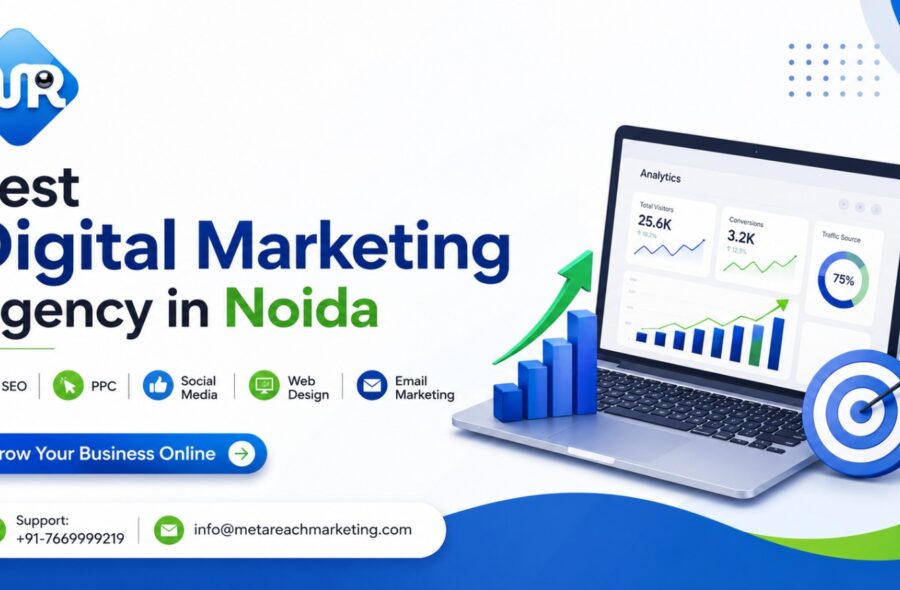
For a detailed look at how a Noida-based agency is applying GEO, Perplexity AI optimisation, and hyper-local strategy in practice, including real client case studies across e-commerce, healthcare, and real estate, this best digital marketing agency in Noida page walks through the full range of services and results in detail.
What to Actually Ask an Agency About AI Search Readiness
Given how new this shift genuinely is, it is worth asking a prospective agency some direct, specific questions rather than accepting a vague claim of being ‘AI-optimised.’ Ask whether they can show any examples of a client’s content actually being cited in an AI Overview or a Perplexity answer, since this is measurable and verifiable rather than a matter of opinion. Ask how their content structure differs specifically for AI-citation purposes compared to traditional SEO, since a genuine answer should go beyond simply adding more keywords. And ask how they are tracking this newer kind of visibility, since standard analytics tools were not originally built to measure AI citation and a genuinely forward-looking agency should have some method, even an imperfect one, for tracking this emerging channel.
Why Noida-Specific Market Knowledge Still Matters in an AI-Driven World
Businesses across Noida and the wider Delhi NCR region wanting a digital marketing partner that is actively adapting to AI-driven search rather than only optimising for the search engines of a few years ago can explore what MetaReach Marketing offers across SEO, PPC, social media, and content, built around both local Noida market expertise and the newer realities of AI-generated search results.