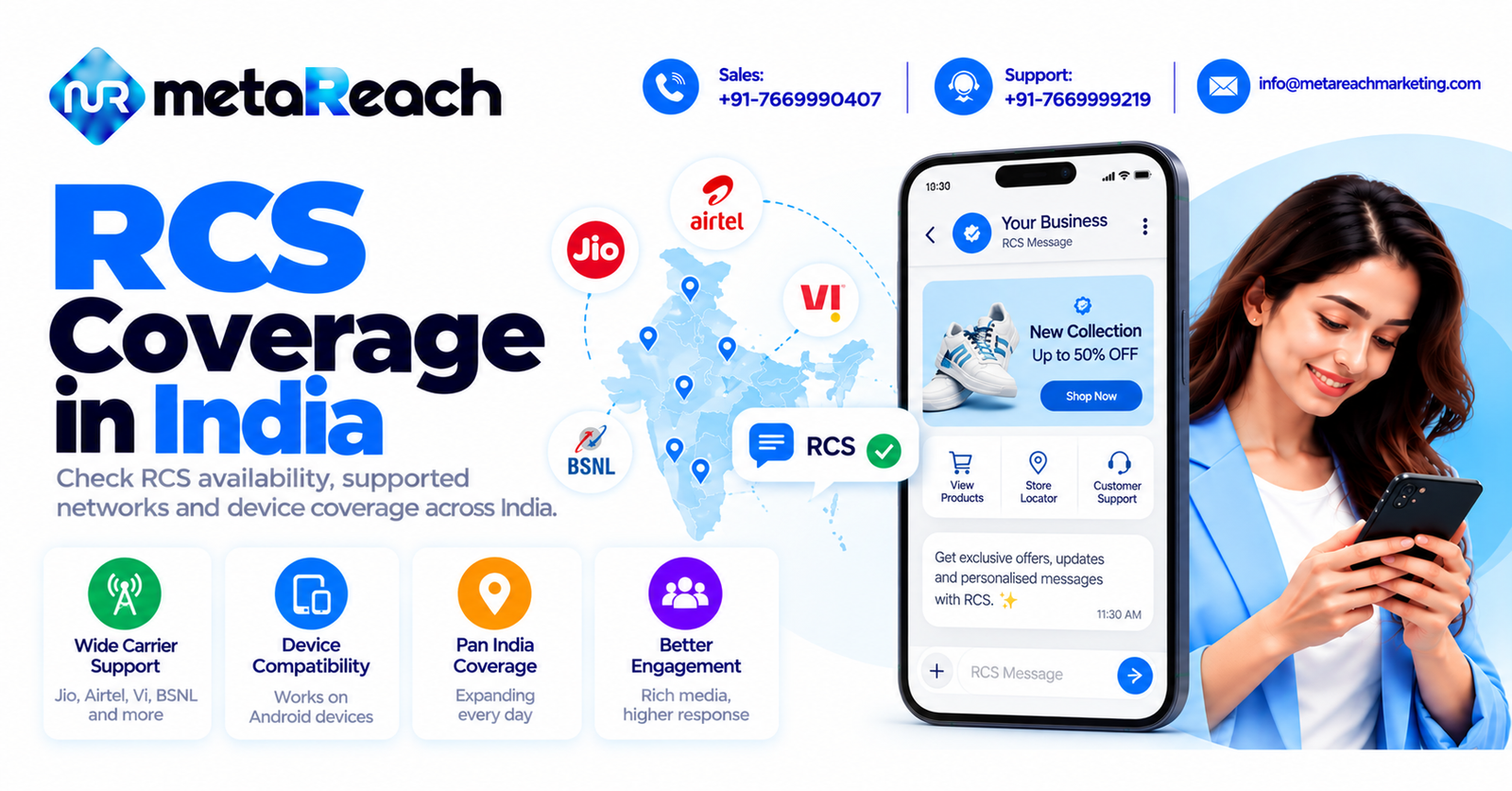
For years, SMS was the default way Indian businesses reached customers. It was fast, cheap, and reliable — but it was also plain, easy to ignore, and increasingly mistaken for spam. Today, a newer channel is quietly taking over the space that SMS used to own: RCS, or Rich Communication Services. With Jio, Airtel, and Vi now supporting it natively across more than 450 million Android devices, RCS has moved from “emerging technology” to a mainstream marketing tool that Indian brands can no longer afford to overlook.
What Makes RCS Different From Regular SMS
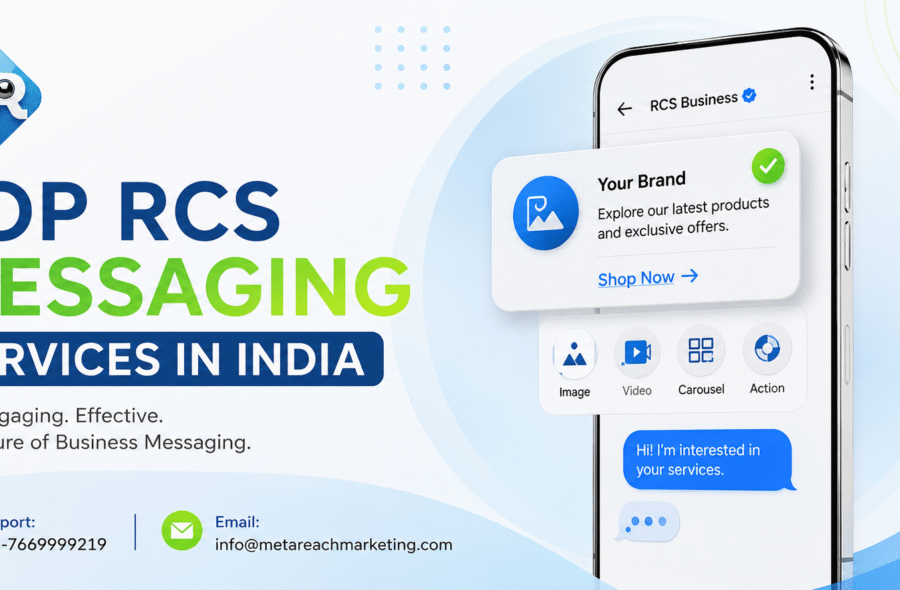
At its core, RCS is what SMS always wanted to be. Instead of a plain grey text bubble from an unknown ten-digit number, customers receive a message from a verified business name, complete with a logo, a blue tick, and the ability to include images, video thumbnails, carousels, and clickable action buttons. There’s no shortened link to second-guess and no anonymous sender ID to raise suspicion. The result is a level of trust that plain SMS simply cannot replicate, and it shows in the numbers — RCS campaigns typically see click-through rates between 25 and 40 percent, compared to just 5 to 8 percent for standard SMS.
Why Indian Businesses Are Making the Switch
Three things are driving the shift. First, reach: with all major telecom operators on board, RCS is no longer limited to a niche audience — it’s practical at national scale. Second, engagement: interactive buttons and rich media make it far easier for a customer to act on a message rather than just glance at it. Third, safety net: a properly built RCS setup automatically falls back to SMS on devices that don’t support it, so no lead is ever lost simply because someone hasn’t updated their phone. Real estate firms are using RCS carousels to showcase property listings, fintech companies are running verified OTP and loan-application flows through it, and healthcare providers are using it to cut down appointment no-shows with richer, more visible reminders.
What to Check Before Picking a Provider
Not every RCS platform delivers on its promises, and the gap between providers is often bigger than businesses expect. Before signing up with anyone, it’s worth evaluating a few specific things: how the provider handles Google brand verification, whether TRAI DLT registration is managed in-house or outsourced to a third party, how long the actual setup takes (some providers genuinely activate in hours, others take weeks), whether automatic SMS fallback is built in by default, and whether you get a dedicated account manager or just a support ticket queue when something needs urgent attention. These details rarely show up in a sales pitch, but they’re exactly what separates a smooth campaign launch from a frustrating one. For businesses that want a side-by-side breakdown of how India’s leading platforms actually compare on these points, this detailed comparison of the top RCS messaging service providers in India is a useful place to start before making a decision.
Getting the Compliance Piece Right
One thing that often catches businesses off guard is that RCS messaging in India isn’t exempt from the same regulatory framework that governs bulk SMS. TRAI’s DLT (Distributed Ledger Technology) registration is mandatory for any commercial RCS traffic, and skipping or mishandling this step is one of the most common reasons campaigns get delayed or blocked. Providers that manage this registration in-house, rather than routing it through a third party, tend to get brands live noticeably faster and with far fewer compliance headaches down the line.
Where This Is Heading
RCS isn’t replacing SMS or WhatsApp Business messaging outright — it’s filling a gap between the two. It carries more visual weight and interactivity than plain SMS, while remaining lighter and faster to deploy for many use cases than a full WhatsApp Business API integration. For Indian businesses building a 2026 messaging strategy, the smart approach is usually a hybrid one: RCS for verified, high-engagement campaigns on Android, with automatic SMS fallback ensuring nobody gets left out.
The Bottom Line
Customer attention is harder to earn than it used to be, and plain text messages are losing ground fast. RCS gives businesses a way to show up looking like a legitimate, recognizable brand instead of an anonymous sender — and the engagement data backs it up. Agencies like MetaReach Marketing have built their entire messaging stack around getting this right for Indian businesses, from same-day activation to in-house DLT compliance, which is worth keeping in mind as more brands make the move from SMS to RCS over the coming year.