For years, businesses in India treated RCS (Rich Communication Services) as a promising but half-finished technology — a nice idea that most customers simply couldn’t receive. That has changed. Between growing 4G and 5G penetration, Android’s dominance in the Indian smartphone market, and Apple finally adding native RCS support to iPhones, the messaging channel has quietly matured into something marketers can actually rely on in 2026.
The shift matters because RCS isn’t just SMS with a fresh coat of paint. It brings verified sender badges, rich media, interactive buttons, and read receipts into a channel that customers already trust — their default messaging app, with no extra download required. But none of that matters if the network doesn’t reach the audience you’re trying to talk to. That’s the question worth asking before you build a campaign around it: does RCS actually work across India’s telecom landscape today?
The Short Answer: Yes, and It’s Broader Than Most People Think
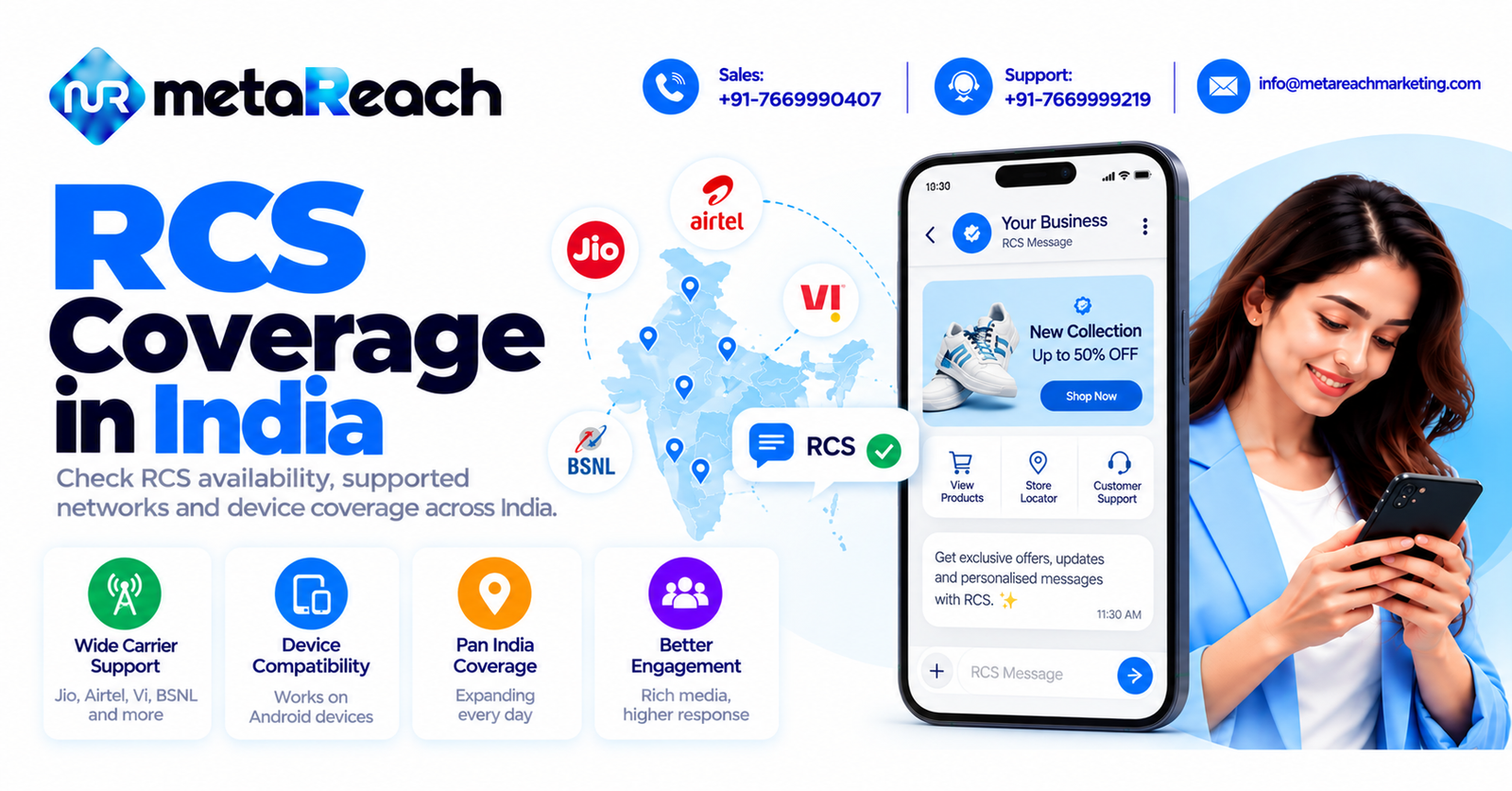
India’s three largest operators — Jio, Airtel, and Vodafone Idea (Vi) — have all rolled out full RCS Business Messaging support. Jio was first to the table back in 2021, and Airtel and Vi followed within a year. Combined, these three networks account for the overwhelming majority of Indian mobile subscribers, which means a well-configured RCS campaign has a genuinely national reach rather than being limited to a handful of metro pockets.
That reach isn’t confined to Delhi, Mumbai, or Bangalore either. Coverage works at the network level rather than the city level, so any Jio, Airtel, or Vi subscriber running Google Messages can receive an RCS message whether they’re in a metro, a Tier 2 city, or a smaller town — a detail that changes how far a single campaign can realistically travel. There’s a detailed breakdown of exactly how coverage maps across metros, Tier 2 cities, and rural pockets in this RCS coverage guide for India, which is worth reading before you plan a rollout, since operator support and device compatibility both play a role in how much of your audience you’ll actually reach.
What About iPhones?
This used to be the biggest gap in the Indian RCS story. Apple didn’t support RCS at all until iOS 18 arrived in September 2024, which meant a meaningful chunk of premium smartphone users were invisible to the channel. That’s no longer the case. iPhones on iOS 18 and above now receive RCS messages with a verified sender badge and basic rich-media support, even if some of the more advanced interactive features are still ahead of where Android has landed. Combined with Android’s much larger footprint in India, the two platforms together now cover the vast majority of smartphones in the country.
The Part Marketers Actually Care About: What Happens When RCS Doesn’t Reach Someone
No channel has 100% device coverage, and RCS is no exception — older phones, patchy connectivity in rural areas, and partial BSNL rollout all create gaps. The businesses getting the most value out of RCS right now aren’t the ones ignoring that reality; they’re the ones pairing RCS with an automatic SMS fallback, so that every contact on a list still receives the message even if they can’t get the rich version of it. That one design decision is often the difference between an RCS pilot that quietly underperforms and one that delivers consistent, measurable results.
This is really the core lesson for anyone evaluating RCS for the first time: it’s not a channel you switch to instead of SMS, it’s a channel you layer on top of SMS. Customers on modern Android phones or recent iPhones get the richer, more engaging experience — branded sender badges, images, quick-reply buttons — while everyone else still gets your message through the fallback. Nobody falls through the cracks, and you’re not forced to choose between reach and quality.
Getting the Details Right Before You Launch
Before committing budget to an RCS campaign, it’s worth checking a few basics: which operators your target audience is actually on, whether your audience skews Android or iOS, and how much of your contact list sits in Tier 3 or rural areas where coverage is still catching up. None of these are dealbreakers — they’re just inputs that determine how you should structure the campaign and how much you should lean on fallback delivery.
For businesses that want a full walkthrough — operator-by-operator support, city coverage tables, device compatibility, and how automatic fallback actually works — MetaReach Marketing has put together a comprehensive resource on the current state of RCS across India. It’s a useful reference point whether you’re launching your first RCS campaign or auditing an existing one to see how much of your audience you’re really reaching.
The Bottom Line
RCS in India has moved past the experimental stage. With Jio, Airtel, and Vi all fully on board, iPhone support finally in place, and fallback delivery solving the coverage gaps, the channel now offers a genuinely reliable way to reach customers with richer, more trustworthy business messages — without sacrificing the near-universal reach that SMS has always offered. For any business that hasn’t looked at RCS seriously yet, 2026 is a reasonable time to start.