One of the more confusing things about DLT registration for a first-time bulk SMS sender in India is that the process itself costs nothing on most telecom platforms, yet businesses routinely spend weeks stuck in rejection cycles trying to get it right. The registration fee is not the obstacle. The obstacle is that DLT’s rules are precise, occasionally counterintuitive, and easy to get wrong in ways that are not obvious until a submission comes back rejected with a reason that assumes prior knowledge most new applicants simply do not have yet.
What DLT Actually Requires, in Plain Terms
Distributed Ledger Technology registration exists because TRAI mandates it for every business sending commercial SMS in India, whether promotional, transactional, or service-related. The process happens in three distinct stages that build on each other. First, a business registers as an entity to receive a Principal Entity ID, the foundational identifier without which nothing else can proceed. Second, the business registers a Sender ID, the short alphanumeric code that appears as the sender name on an outgoing message. Third, every individual SMS template a business intends to use gets registered and mapped to that Sender ID and Principal Entity ID. Skipping or rushing any one of these three stages tends to cause problems at the next one, which is why understanding the sequence matters as much as understanding each individual step.
Why Category Mismatches Cause the Most Rejections
A large share of DLT rejections trace back to a single root cause: a business classifying a message under the wrong category. A template meant for order confirmations submitted under a promotional category, or an OTP template accidentally filed as transactional without matching TRAI’s exact expectations for that category, gets flagged during review. TRAI’s automated and manual review systems check this category consistency closely, and a mismatch typically results in outright rejection rather than a request for clarification. Getting this right requires understanding the practical difference between transactional messages reserved specifically for banking OTPs, service messages covering both implicit updates like order confirmations and explicit consent-based offers, and promotional messages that require documented user acceptance. Businesses that take time to map each planned message to the correct category before submitting anything tend to avoid the majority of rejection cycles entirely.
The Small Formatting Details That Cause Outsized Delays
Beyond category classification, a handful of small technical details cause a disproportionate share of rejections. Variable placeholders within a template need to follow the exact syntax a specific DLT platform expects, and getting this format even slightly wrong triggers rejection. Every variable also needs a genuine sample value filled in during submission, since reviewers need to see what an actual message will look like rather than a placeholder like ‘sample text’ that gives no real indication of the final content. Sender IDs themselves must be exactly six alphanumeric characters, and submissions using special characters, incorrect length, or spaces get bounced back immediately. None of these individual requirements are complicated once known, but a business encountering them for the first time, with no prior DLT experience, often loses days simply figuring out what specifically triggered a rejection notice that does not always explain itself clearly.
The Step Almost Nobody Remembers Until Messages Stop Sending
Even after a Principal Entity ID is successfully approved, it needs to be manually updated inside a business’s actual SMS sending platform or API configuration. This is an easy step to overlook entirely, since the approval notification focuses on the registration itself rather than this necessary follow-up action. A business that completes DLT registration correctly but forgets this configuration step will find every message blocked at the operator level regardless of how properly the templates themselves were approved, which is a frustrating and entirely avoidable failure mode that only becomes obvious once real campaigns start failing to send.
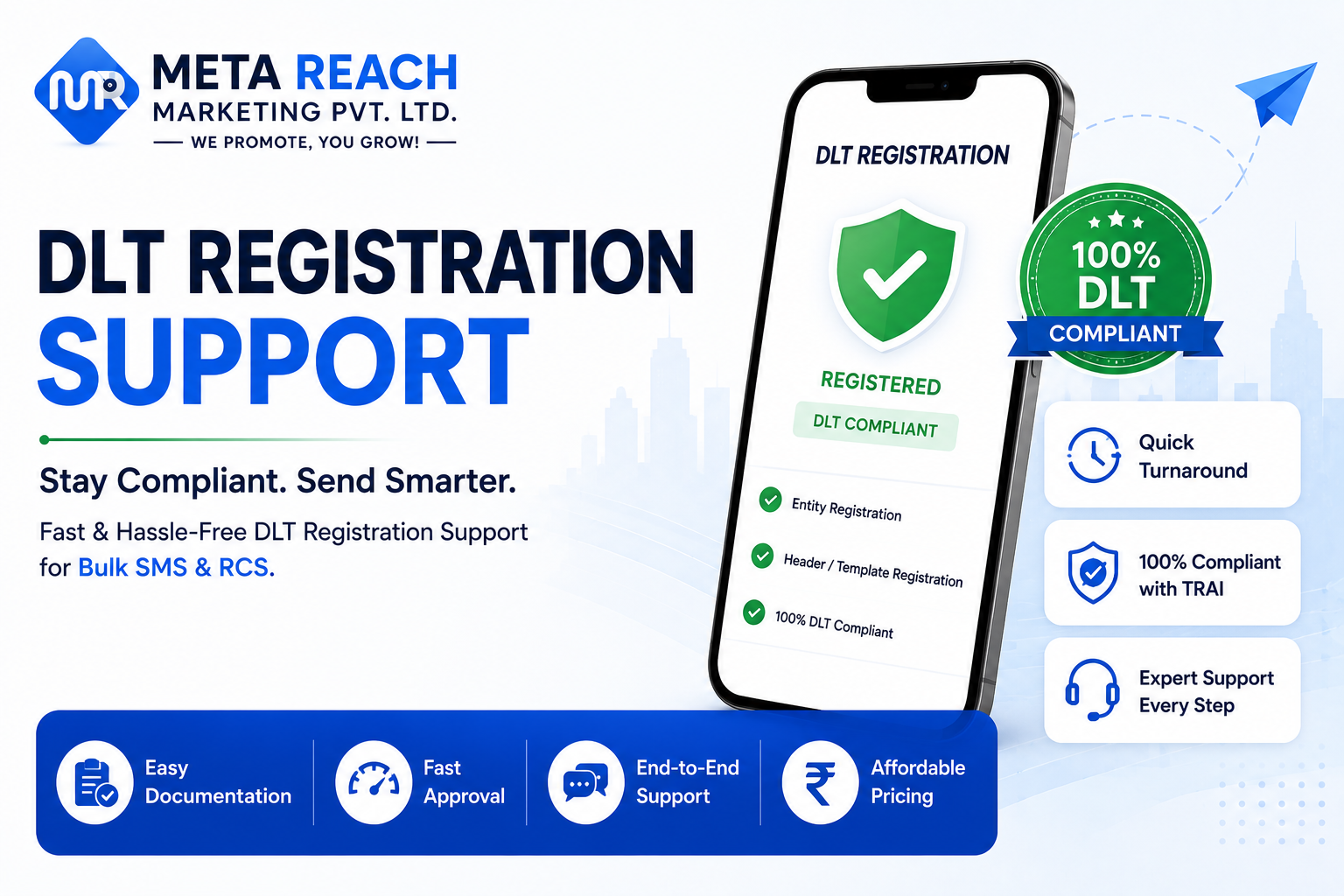
For complete, end-to-end DLT registration support covering entity registration, Sender ID approval, and template registration handled by people who navigate this process daily, this DLT registration support page walks through the full process, common mistakes, and realistic timelines in detail.
The DND Compliance Layer That Sits Alongside DLT
Separate from the registration process itself, businesses running promotional campaigns need to actively check their contact lists against India’s Do Not Disturb registry before every send. Promotional SMS to a DND-registered number is a genuine TRAI violation carrying real penalty risk, while transactional messages, correctly classified, are exempt from this restriction entirely. This is precisely why getting message classification right during DLT registration connects directly to ongoing compliance afterward, since a business that has not thought carefully about which of its messages are genuinely transactional versus promotional risks both delivery failures and regulatory exposure at the same time.
Businesses across India looking to complete DLT registration without losing weeks to avoidable rejection cycles can explore what MetaReach Marketing offers with free, end-to-end DLT registration support handled as a standard part of onboarding for every bulk SMS client.