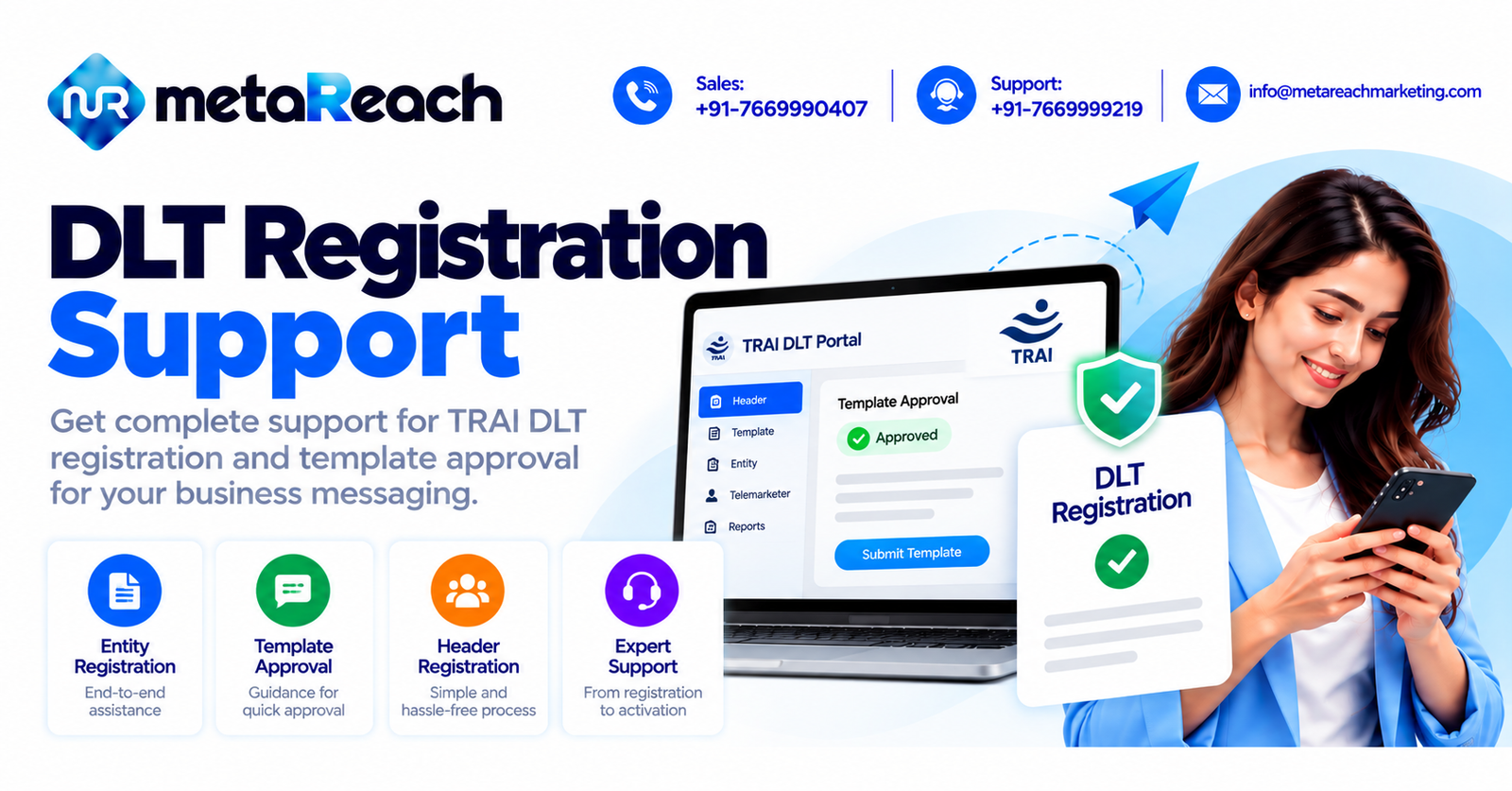
If you have ever tried to send a business SMS in India and found your messages blocked or rejected, there is a good chance DLT was the reason. The term sounds technical, but the idea behind it is simple: telecom operators want to know who is sending commercial messages and what those messages say. This guide explains the process in everyday language, and points to the DLT registration support offered by MetaReach Marketing for businesses that want help getting through it.
Why DLT Registration Matters
DLT is the system used in India to register the businesses, sender names and message templates that send commercial SMS. Without it, messages can be rejected or blocked during telecom validation, and that can hurt more than just a marketing campaign. Failed OTPs and missed order alerts frustrate customers fast. If you want the background first, the complete DLT registration guide is a good place to start.
The Three Steps in Plain Language
Registration usually happens in three parts, and each one builds on the last.
First comes entity registration. You register your business on the DLT platform of your chosen telecom operator and receive a Principal Entity ID, often called a PE ID. This ID is then added to your SMS provider’s dashboard so your messages can be linked to your business.
Second is the sender header. This is the short name your customers see instead of a phone number. It is an alphanumeric string of up to 11 characters, and it should match your business type and purpose. Production messages must use the header you registered.
Third is template registration. Every type of message you plan to send needs its own approved template, mapped to your header and PE ID. Many businesses end up registering somewhere between five and twenty templates, covering things like OTPs, order updates and offers. Need ideas on wording? These DLT SMS template examples show how templates are usually structured.
Documents to Keep Ready
Having paperwork ready saves days of back-and-forth. Companies and registered businesses typically need a GST certificate, company PAN, incorporation documents, and the authorised signatory’s Aadhaar and PAN. Sole proprietors and individuals usually need their own Aadhaar and PAN, plus a GST certificate or shop certificate where applicable. You will also need a short description of your business, the type of SMS you plan to send, your proposed sender header and a few sample templates. Requirements can differ by platform, so check the portal you plan to use.
Mistakes That Cause Rejections
Most delays come from small errors rather than big problems. Choosing the wrong business category at the start, picking the wrong template category, getting variable formatting wrong, or using a header that does not match your registration can all trigger a rejection. Another common slip is forgetting to update the PE ID or template ID in the SMS gateway after approval, so messages keep failing even though everything is registered. A detailed list is available in this guide to common DLT registration mistakes.
Cost and Timing: What to Expect
Charges for registering your entity, header and templates are set by each operator’s platform, and they can change, so confirm the current amounts on the portal. Any service fee from a provider should be disclosed before you begin. Timing is harder to predict. It depends on how complete your documents are, how quickly the platform reviews them and whether corrections are requested. Be wary of any provider that promises a fixed approval date or a guaranteed result, since the final decision is not theirs to make.