Most businesses shopping for a bulk SMS provider make the same mistake: they compare one number across vendors — the per-SMS rate — and pick whoever quotes the lowest figure. Then the first invoice arrives, and it includes a setup fee, a DLT processing charge, and a GST line item nobody mentioned on the call. None of this is illegal or even unusual, but it does mean the headline rate rarely tells the whole story. If you are evaluating providers for the first time, the goal is not to find the cheapest quote, it is to find the quote that stays the same once you actually start sending.
This matters more in India than in most markets, because SMS pricing here is shaped almost entirely by regulation rather than just supply and demand. TRAI’s DND rules, mandatory DLT registration, and the split between promotional and transactional routing all push the price in different directions depending on what you are sending and when. A provider that understands this will usually walk you through it before you even ask. One that does not is more likely to hand you a single flat number that quietly assumes the easiest, cheapest type of traffic — which is rarely what a growing business actually sends.
Start With What You Are Actually Sending
Before comparing a single price, work out what proportion of your messages will be promotional versus transactional. A real estate firm sending festive offers and an e-commerce brand sending delivery OTPs have completely different cost profiles, even if they send the same number of messages a month. Promotional SMS is cheaper per message but restricted to daytime hours and blocked on DND numbers, while transactional and OTP SMS cost a little more because they run on priority routes that work around the clock on every number. Quoting your provider an honest mix, instead of just a total volume number, is the single best way to get a price that will not move later.
The Three Questions That Reveal a Provider’s Real Pricing
- What is included in the per-SMS rate, and what is billed separately — DLT support, template approval, API access, and delivery reports should ideally all be bundled in.
- Does the rate change at higher volumes, and if so, at what slabs — most providers offer meaningfully better rates once you cross 50,000 or 1 lakh SMS a month.
- Is GST shown separately on the quote, or is it already baked into the number you were given — this single detail explains most of the gap between a verbal quote and the final invoice.
One Cost Every Vendor Will Mention Eventually — So Ask Upfront
Every legitimate bulk SMS sender in India has to complete DLT (Distributed Ledger Technology) registration with TRAI before sending a single commercial message. This involves a one-time fee paid to the telecom operator, and it exists regardless of which provider you choose, since it is a regulatory requirement and not a vendor markup. What separates providers is whether they handle this registration as part of onboarding at no extra charge, or whether they quote it as a separate line item after you have already signed up. Asking about this on day one, rather than discovering it on the invoice, avoids one of the most common sources of pricing confusion in this industry.
Reading a Pricing Page the Right Way
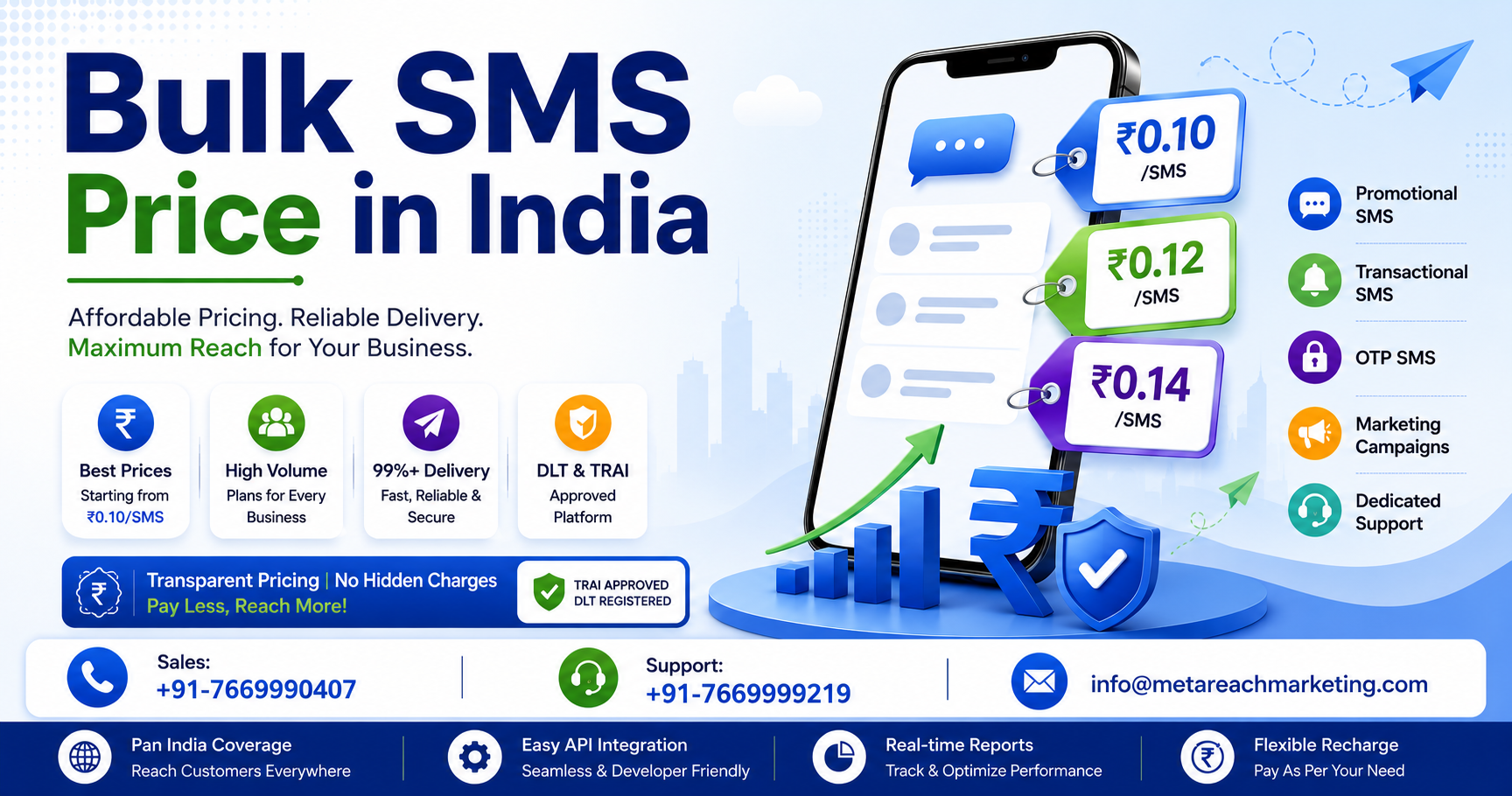
A trustworthy pricing page should let you see exact rates by message type and volume slab without having to book a sales call first. For a current example of what a transparent, slab-wise breakdown looks like for promotional, transactional and OTP traffic in India, MetaReach’s bulk SMS pricing breakdown lays out rates at multiple volume tiers along with what is included at each level, which makes it a useful reference point even if you end up shortlisting other vendors alongside it.
A Quick Way to Sanity-Check Any Quote
Once you have a quote in hand, run it through a simple checklist: does it state the rate separately for promotional, transactional and OTP messages, does it mention which volume slab the rate applies to, is GST called out explicitly, and does it say in writing whether DLT registration is free or chargeable? If a provider can answer all four clearly and in writing, the relationship is likely to be straightforward. If you have to ask twice or get a vague answer on any of these, treat that as useful information about how the rest of the engagement might go.
Bringing It Together
Bulk SMS pricing in India is not complicated once it is broken into its actual components: message type, route, volume and what is bundled in. The cheapest quote on paper is not always the cheapest one in practice, and the only way to know for sure is to ask the right four questions before signing anything. Providers such as MetaReach Marketing that publish clear, itemised pricing rather than gating it behind a sales pitch make this comparison considerably easier, and that transparency is usually worth factoring into the decision as much as the rate itself.