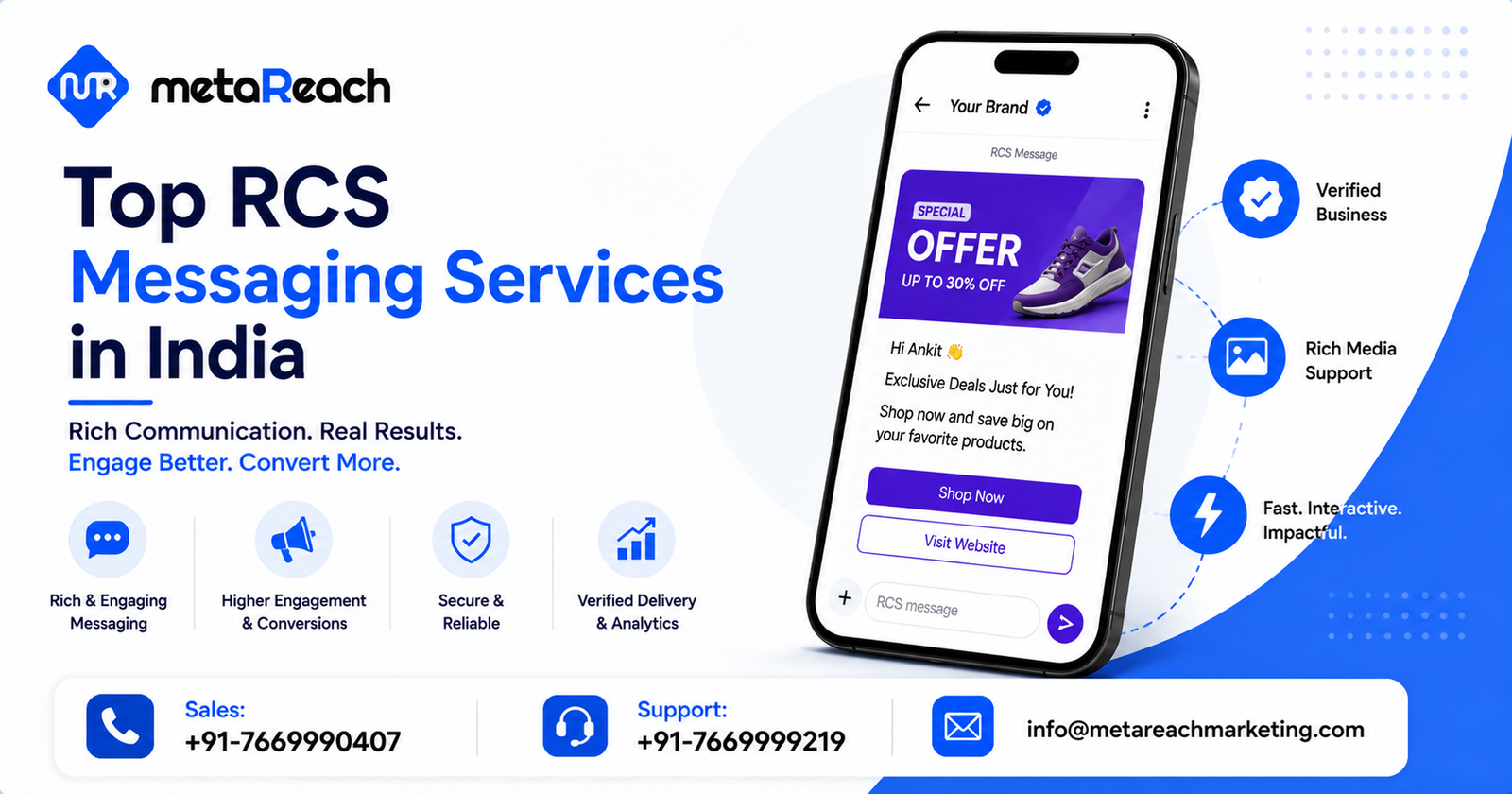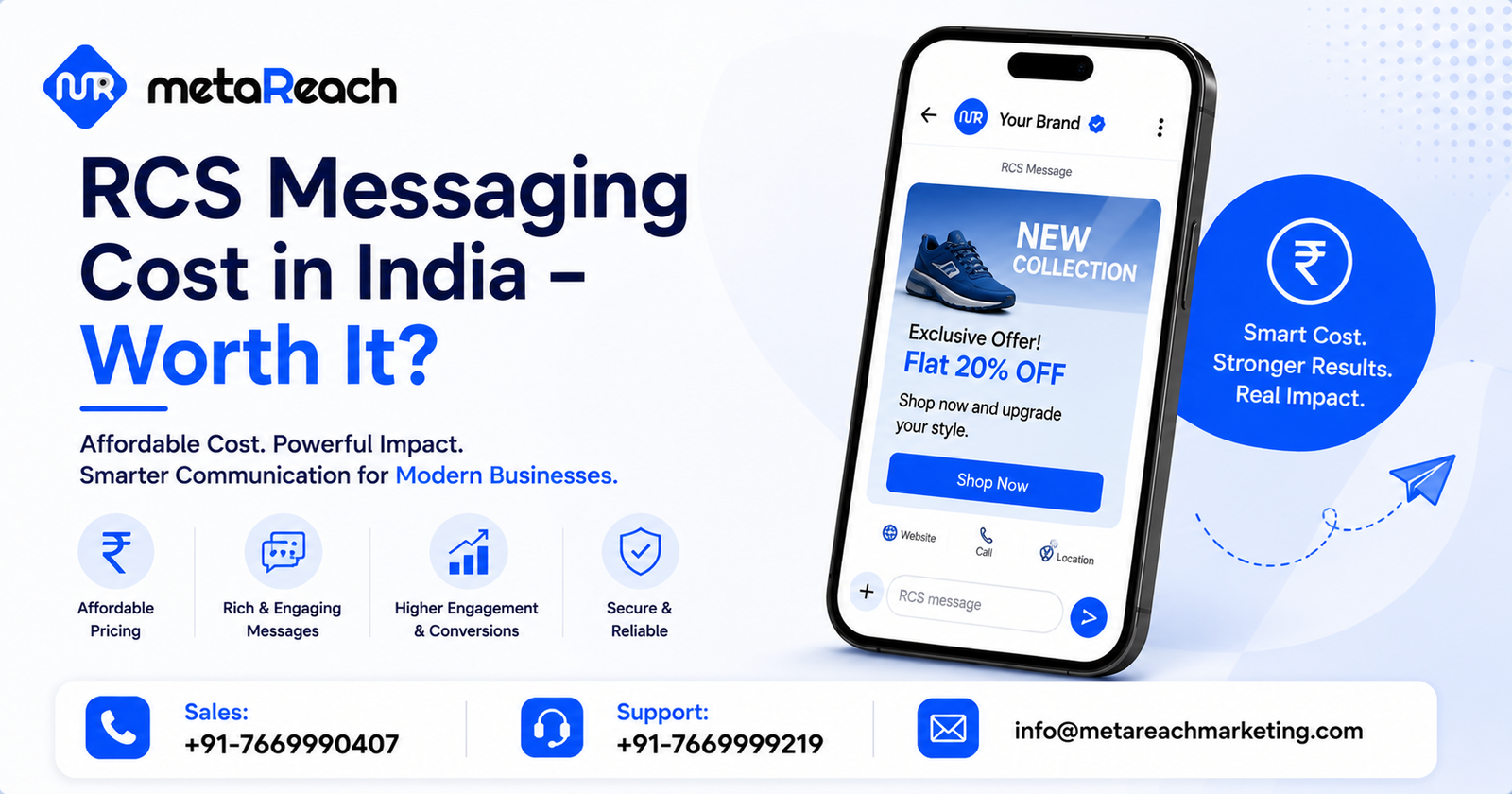
Every marketer evaluating RCS eventually runs into the same objection: it costs more per message than SMS. That’s true, and it’s worth saying plainly rather than glossing over. What’s less obvious — and what actually decides whether the extra cost makes sense — is what you get in return. Instead of a plain text alert, RCS delivers images, tappable buttons, product carousels, and full conversations, all inside the phone’s native messaging app with no extra download required. Whether that upgrade is worth paying for depends almost entirely on what you’re trying to get the customer to do.
Where RCS Stands in India Right Now
All three major Indian telecom operators — Jio, Airtel, and Vodafone Idea — now support RCS through Google’s platform, so the infrastructure question is largely settled. What’s still evolving is pricing. Unlike SMS, which runs through TRAI’s regulated DLT framework, RCS doesn’t have a single fixed tariff. Each operator sets its own business messaging rate, and the CPaaS providers who sell API access add their own margin on top. That’s why quotes from different vendors can vary meaningfully even for the same message type, and why it’s worth comparing more than one provider before committing to a plan.
What RCS Messages Actually Cost
Pricing generally splits into three buckets. Basic RCS — essentially a cleaner, verified version of a text message — tends to sit close to standard SMS pricing, which makes it an easy upgrade for simple alerts. Rich Card messages, which include an image, a headline, and action buttons, run somewhat higher, reflecting the added visual and interactive elements. Conversational RCS, priced as a flat session fee rather than per message, covers unlimited back-and-forth exchanges over a set window — often a strong value when a customer needs multiple steps to complete something like a booking or a support query, since one session fee can replace what would otherwise be a dozen separate transactional messages.
The Real Comparison Isn’t Cost-Per-Message
This is where most cost objections to RCS fall apart on closer inspection. Comparing RCS and SMS purely on price-per-send misses the point, because the two channels don’t produce the same results per message. Richer presentation and tappable buttons tend to drive meaningfully higher engagement than plain text, which means fewer messages are often needed to get a customer to actually complete an action — click, book, or buy. The number that actually matters for a marketing budget is cost per outcome, not cost per message. A campaign that costs more per send but converts at a noticeably higher rate can easily end up cheaper overall once you count the full customer journey.
When the Extra Spend Makes Sense
RCS earns its premium when the customer needs to do something inside the message itself — browse a product, pick a delivery slot, confirm a booking, or work through a support issue. The richer format shortens the distance between someone noticing a message and actually acting on it. Cart recovery campaigns, financial offer messages that benefit from a verified sender badge, post-purchase upsells with product carousels, and guided onboarding flows are the kinds of use cases where businesses tend to see real returns from the switch.
When It’s Harder to Justify
On the other hand, RCS is a weaker fit for pure one-way notifications with nothing for the customer to interact with — a plain OTP delivery being the clearest example. If the message is simply informing someone rather than asking them to do something, the added cost of a rich card or a conversational session rarely earns its keep. Businesses sending low volumes each month, or whose audience skews heavily toward iOS devices where RCS’s richer features aren’t guaranteed the way they are on Android, may also find the standard economics don’t tilt strongly in RCS’s favor yet.
A Practical Cost Breakdown to Reference
For businesses trying to actually budget this out rather than guess, MetaReach Marketing has published a detailed
RCS messaging cost breakdown for India that walks through indicative pricing across message types, additional setup and platform costs to plan for, and a simple framework for estimating monthly spend before requesting a quote. It also compares RCS against SMS and WhatsApp Business API side by side, which is useful groundwork for any business trying to decide which channel — or combination of channels — fits a given campaign.
A Framework for Deciding
Before committing budget, it helps to run through a short internal checklist. Does the message genuinely need a visual or a button, or is it purely informational? Is the target audience large enough that the one-time bot setup and any platform subscription cost gets amortised across meaningful volume? Is the journey something a customer completes in one step, or does it involve back-and-forth that would benefit from a conversational session? Answering these honestly usually makes the RCS-versus-SMS decision far more obvious than staring at a rate card in isolation.
The Bottom Line
RCS costs more than SMS — that part isn’t in dispute. But treating that as the end of the analysis misses what actually drives marketing ROI: how many of the people who receive a message end up taking the action you wanted. For interactive, decision-heavy customer journeys, the richer format frequently pays for itself through higher engagement and fewer follow-up messages needed. For simple, one-way alerts, plain SMS often remains the more sensible choice. Most businesses that get this right aren’t picking one channel over the other — they’re running SMS for broad reach and reserving RCS for the journeys where richness genuinely changes the outcome.
Meta Reach Marketing, a Noida-based enterprise communication agency, breaks down exactly this kind of decision-making on its RCS pricing and ROI guide — a solid starting point before running your first RCS pilot.