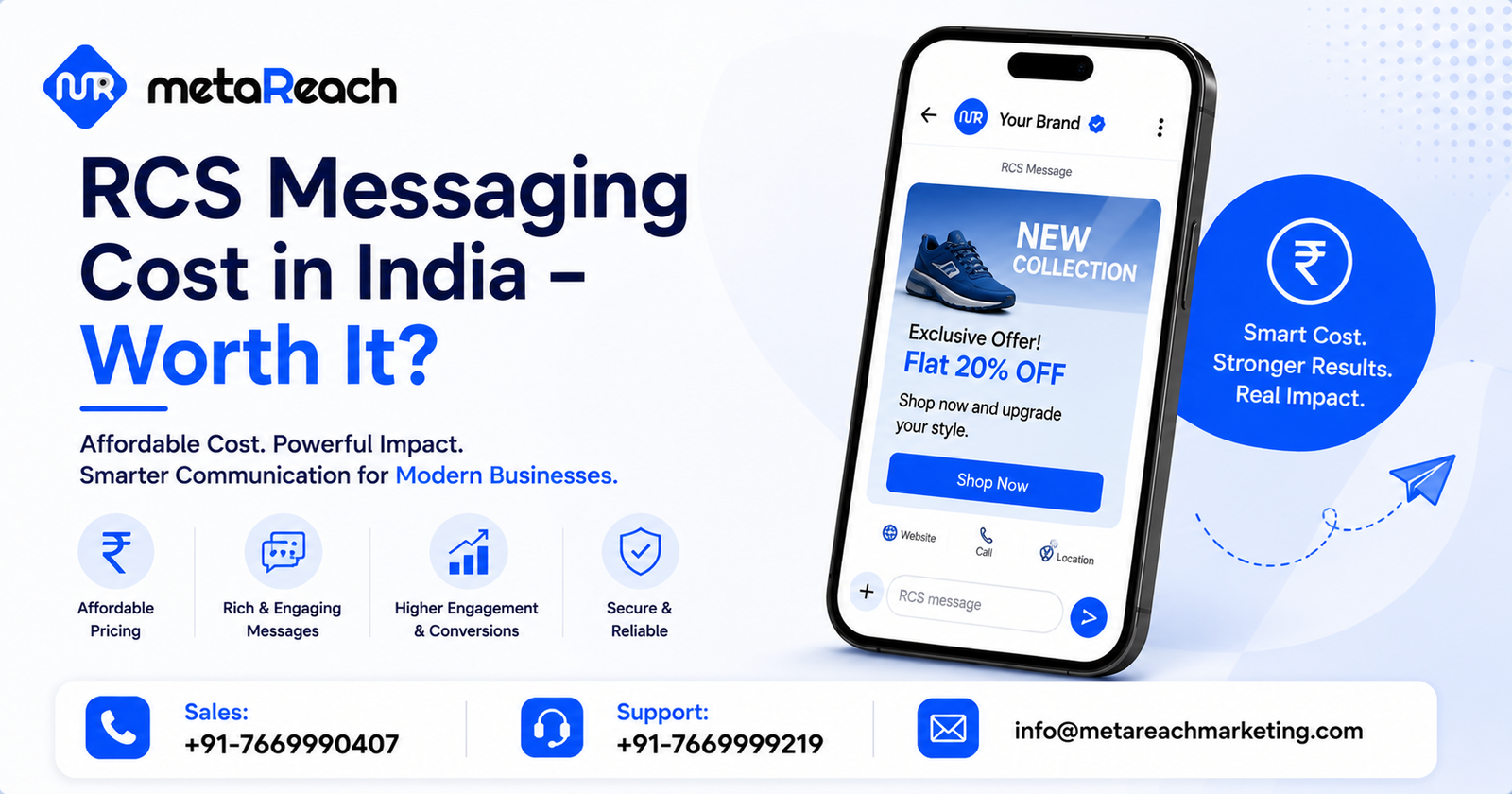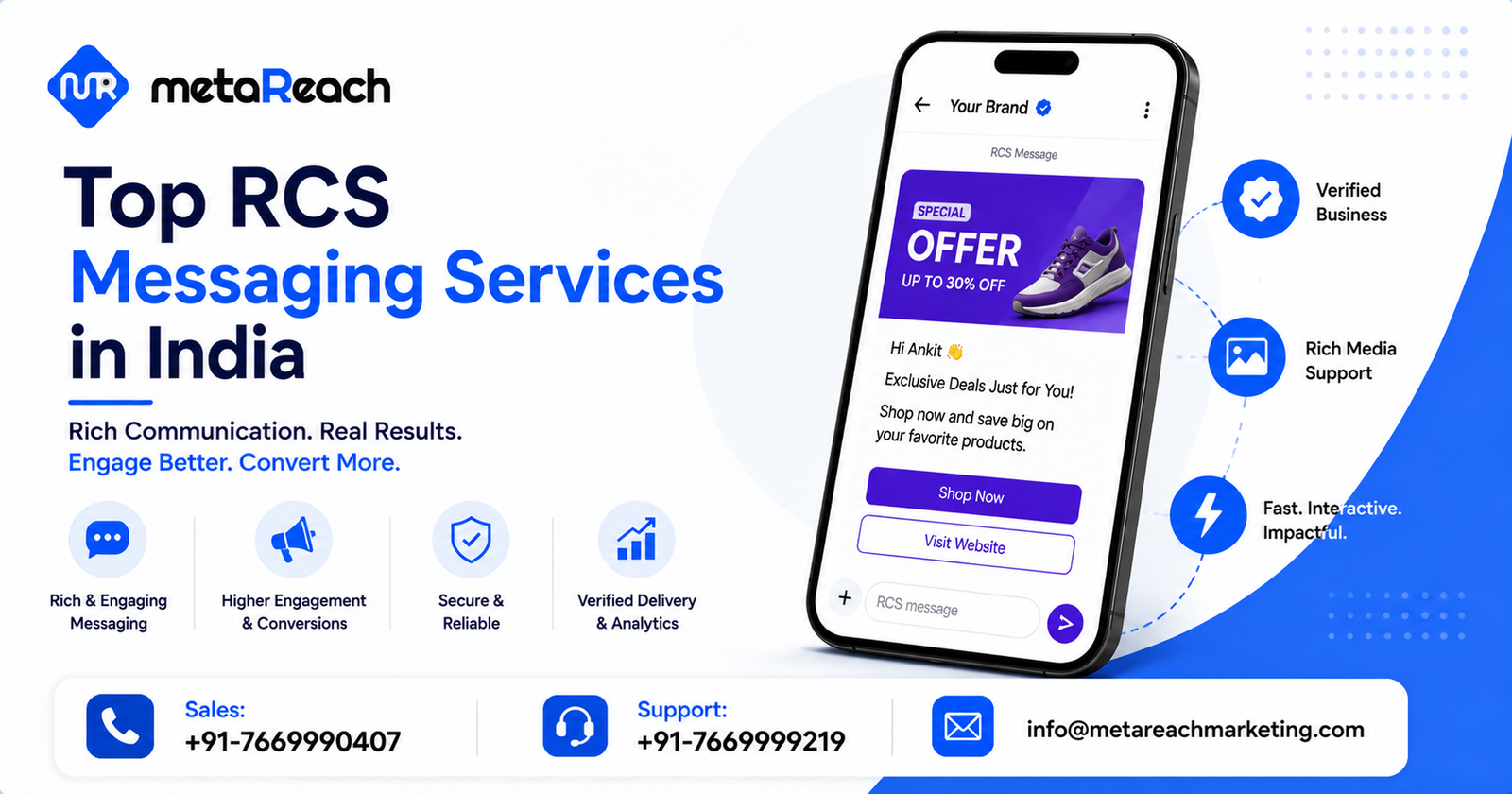
RCS messaging has moved from an experimental channel to a genuine part of how Indian businesses reach customers. All three major operators — Jio, Airtel, and Vodafone Idea — now support it, and hundreds of millions of Android devices in India can receive rich, branded messages with images, buttons, and carousels instead of a plain line of text. The infrastructure question is settled. What’s much less settled is which provider to actually trust with a campaign, because the market has filled up quickly with vendors of very different sizes, specialities, and levels of hand-holding.
The Feature List Isn’t the Differentiator
Nearly every RCS provider will tell you they offer rich media, verified sender IDs, and carrier coverage across India. On paper, most platforms look interchangeable. The real differences show up in the details that don’t make it into a sales pitch — how long it actually takes to get a campaign live, whether Google’s brand verification process is handled for you or left entirely on your plate, and what happens when something breaks on launch day. These operational details tend to matter far more than the feature checklist once you’re actually running a campaign.
Google Brand Verification: The Step Everyone Underestimates
Unlike SMS, which runs through TRAI’s DLT registration system, RCS in India works through Google’s own brand verification process — a separate track entirely. This involves submitting your business logo, name, verified contact details, and sample messages for review. Some providers handle this process in-house on your behalf; others hand you a checklist and leave you to navigate it. The difference isn’t cosmetic — in-house verification support can be the gap between a campaign live in a matter of hours versus one stuck in a review queue for weeks.
SMS Fallback Isn’t Optional
Not every phone supports RCS yet, and a meaningful share of any Indian audience will still be on devices or networks that can’t receive rich messages. A provider without automatic SMS fallback quietly drops those recipients from your campaign entirely — no error, no warning, just a lost customer. This is one of the first things worth confirming before signing with any provider: does the fallback happen automatically, or does it require manual intervention on your end? If it’s the latter, that’s a meaningful operational burden disguised as a minor detail.
Enterprise Platforms vs. Providers Built for Growing Businesses
A lot of the well-known names in India’s messaging space were built primarily for large enterprises — banks, telecoms, multinational logistics firms — and it shows in how they onboard new clients. Setup cycles measured in weeks, high minimum volume commitments, and sales processes designed around large annual contracts make sense for a bank running millions of messages a month, but they’re a poor fit for a growing D2C brand or a regional real estate developer trying to launch a campaign this week. Smaller, more agile providers tend to move faster precisely because they aren’t built around enterprise procurement cycles.
A Practical Comparison Worth Reading Before You Choose
For businesses trying to actually evaluate options rather than guess, MetaReach Marketing has published a detailed
comparison of leading RCS messaging providers in India, covering setup speed, Google verification support, pricing transparency, and where each platform genuinely fits best — from large BFSI-focused enterprise platforms to providers built for faster-moving SMEs. It’s a useful starting point for narrowing down a shortlist before requesting quotes, since it lays out the trade-offs honestly rather than presenting every option as equally suited to every business.
Questions Worth Asking Directly
Before committing to a provider, a short list of direct questions tends to surface more useful information than a sales deck ever will. How long does it realistically take to get a first campaign live, not the marketing claim but the actual median? Is Google brand verification handled in-house, and what happens if it gets stuck? Is there a dedicated point of contact during a launch, or does support run through a generic ticket queue? And is pricing transparent per message, or does it require a custom quote that’s hard to compare against competitors? Providers that answer these plainly, without deflecting, are usually the ones worth trusting with an actual campaign.
Matching the Provider to the Use Case
Not every business needs the same kind of RCS partner. A large bank running compliance-heavy, high-volume campaigns has very different requirements than a coaching institute sending admission alerts or a real estate developer running property carousels for a regional campaign. Some providers specialize in regulated industries with strong audit trails; others focus on fast onboarding and SME-friendly pricing; a few try to be everything to everyone through a single unified platform spanning SMS, WhatsApp, RCS, and email. None of these approaches is universally better — the right fit depends on your volume, your industry, and how quickly you need to move.
The Bottom Line
RCS has matured into a genuinely useful channel for Indian businesses, but the provider you choose shapes the experience just as much as the technology itself. Setup speed, in-house Google verification support, automatic SMS fallback, and transparent pricing tend to separate providers that actually deliver from those that only look capable on a features page. Comparing options against real criteria — rather than a generic feature list — is worth the extra hour before committing budget to a campaign.
Meta Reach Marketing, a Noida-based enterprise communication and digital marketing agency, breaks down exactly these evaluation criteria on its top RCS providers in India guide — a reasonable place to start before choosing a partner for your next campaign.