It is tempting to think a WhatsApp marketing campaign lives or dies on the quality of the message itself, the copy, the image, the offer. In practice, the single biggest factor separating a WhatsApp campaign that converts from one that quietly underperforms is almost always the contact list it goes out to. A brilliantly written offer sent to a broad, unsegmented list of people with no genuine interest in the product will consistently underperform a modest, plainly worded message sent to a smaller, genuinely relevant audience. Building that relevant list, rather than simply accumulating as many numbers as possible, is where most of the real work in WhatsApp marketing actually happens.
Why Broad Reach Is Often a Trap, Not an Advantage
WhatsApp’s near-universal adoption in India creates a tempting illusion: since almost everyone has the app, it feels like a bigger contact list should always mean better results. In reality, sending an irrelevant message to someone with no interest in the product does more than waste that single message. It risks a spam complaint, which quietly damages a business’s sender reputation and can affect the deliverability of every future message sent from that same number, including to genuinely interested customers. A smaller, well-targeted list that responds and engages consistently protects a business’s long-term ability to use the channel at all, in a way that a large, poorly matched list actively undermines.
Building Segments Around Real Buying Signals, Not Just Demographics
Basic demographic segmentation, age, location, gender, is a reasonable starting point, but the segments that actually drive better campaign performance tend to be built around behaviour instead. A customer who abandoned a cart last week is a fundamentally different segment from someone who has never visited a product page at all, even if both share identical demographics. A patient who booked an appointment six months ago and never returned belongs in a different segment from a first-time enquiry that never converted. Building segments around what someone has actually done, rather than only who they are on paper, lets a business send a message that speaks directly to a specific, real situation, which consistently outperforms a generic broadcast sent to an entire undifferentiated list.
Why Opt-In Quality Beats Opt-In Quantity
How a contact ends up on a WhatsApp marketing list matters considerably more than how many contacts are on it. A number collected through a genuine, clear opt-in, someone actively checking a box or messaging a business first to ask a question, tends to engage at a meaningfully higher rate than a number added through a vague, buried consent checkbox or, worse, purchased from a third-party list broker. Beyond the ethical and regulatory concerns with the latter approach, purchased or scraped numbers consistently produce the highest spam complaint rates of any list-building method, since the recipient never genuinely agreed to hear from the business in the first place. A smaller list built entirely from genuine opt-ins outperforms a much larger list assembled through weaker consent almost every time.
Language and Local Context Do More Work Than Most Businesses Expect
Given how linguistically diverse the Delhi NCR region and India more broadly genuinely are, a WhatsApp campaign sent uniformly in English to an entire list often misses a meaningful share of an audience that would respond more warmly to a message in Hindi or another regional language. This is not simply a translation exercise, since a message that reads naturally and idiomatically in a customer’s preferred language tends to land with a warmth that a stiff, literal translation does not replicate. Segmenting a list by language preference, where that data is available, and crafting messages natively for each segment rather than translating a single English template, is a genuinely underused lever for improving engagement across a diverse customer base.
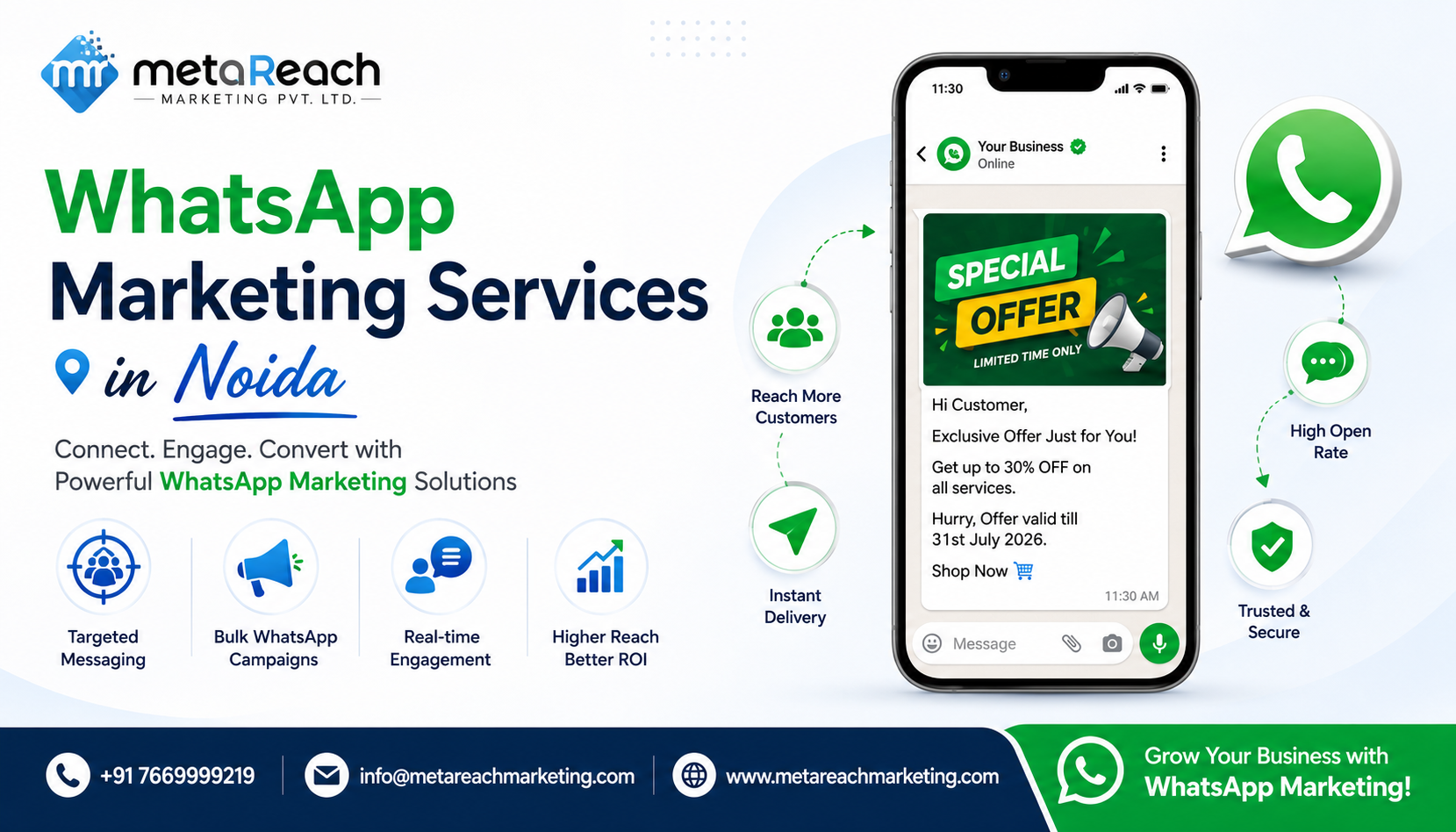
For a complete look at industry-segmented contact lists, creative message design, and real-time delivery reporting for WhatsApp campaigns in Noida and Delhi NCR, this WhatsApp marketing services page for Noida covers the full service offering, use cases across industries, and campaign process in detail.
Why List Hygiene Deserves Regular Attention, Not a One-Time Setup
A contact list that was well-segmented and genuinely opted in a year ago is not necessarily still accurate today. Customers change their preferences, stop being active, or simply lose interest in a specific category of offer over time. Reviewing engagement data periodically, removing contacts who have gone quiet for an extended period or who have explicitly opted out, and re-verifying that segments still reflect genuine current behaviour rather than a snapshot from months earlier keeps a list performing at its best. Businesses that treat list building as a one-time setup task rather than an ongoing discipline tend to see engagement quietly erode over time as the list drifts further from reflecting real, current customer interest.
What a Well-Built List Actually Enables
Once a business has genuinely segmented, opted-in, language-aware contact data, the campaigns built on top of it become considerably more effective without necessarily requiring more creative effort. A cart abandonment message targeted only at people who genuinely abandoned a cart, an appointment reminder sent only to patients with an actual upcoming appointment, a fee reminder sent only to families with a genuinely pending payment, all outperform a generic broadcast precisely because the underlying targeting was done properly beforehand. The creative work of writing a compelling message matters, but it works far better on top of a properly built list than as a substitute for one.
Businesses across Noida, Delhi, Gurugram, and Ghaziabad looking to build genuinely segmented, industry-targeted WhatsApp marketing lists rather than relying on broad, unfocused broadcasts can explore what MetaReach Marketing offers with pre-built industry-specific contact segments, multilingual campaign support, and detailed engagement reporting.