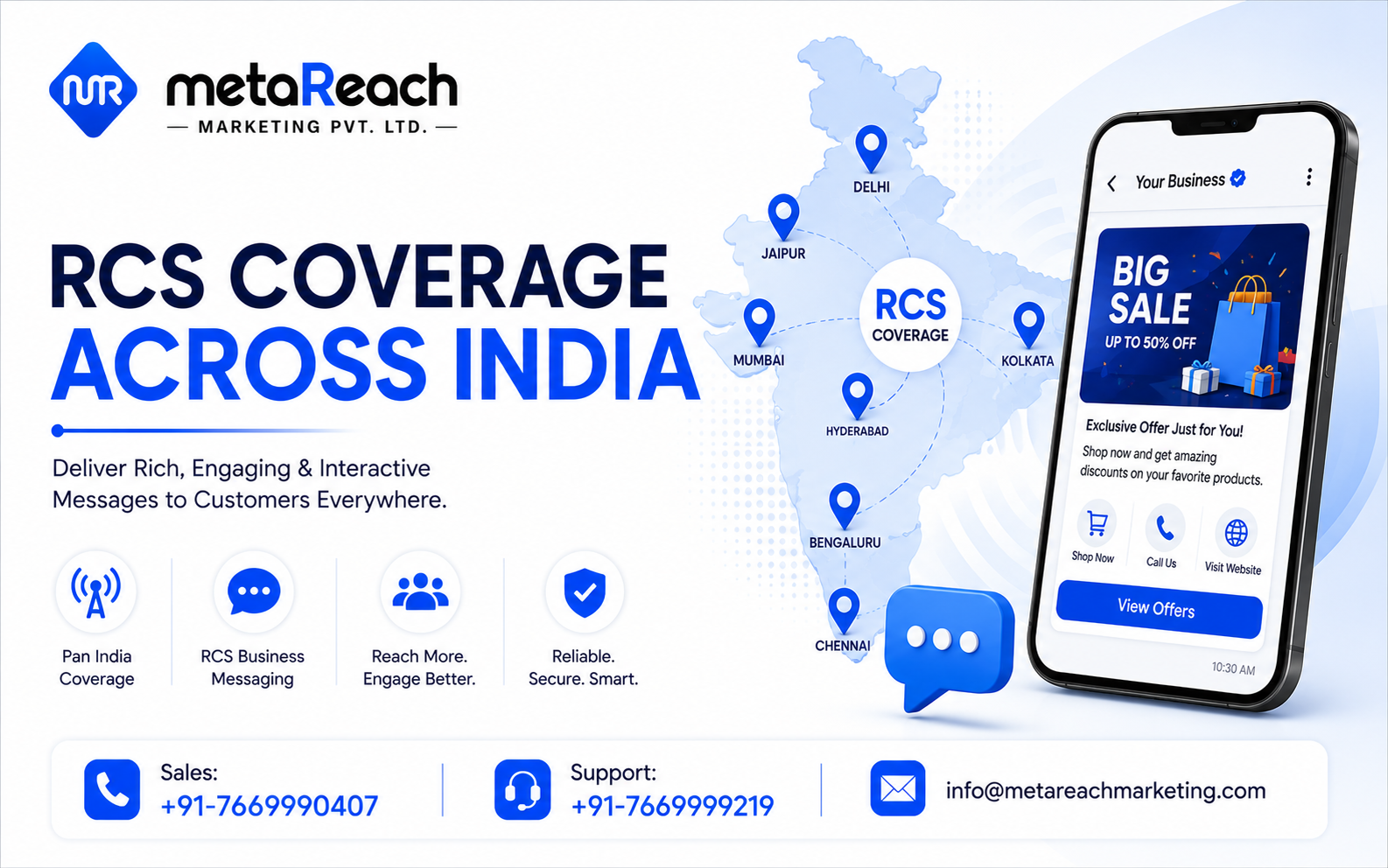
Most discussions of RCS coverage in India focus entirely on which telecom operators support the standard, which is important but only half the picture. RCS messages are received through a specific messaging app on a customer’s phone, and which app that actually is, and whether it genuinely supports RCS properly, matters just as much as whether the underlying carrier network does. A business evaluating RCS should understand this second layer clearly, since operator support alone does not guarantee a message actually renders correctly for every customer.
Why Google Messages Is the Default That Matters Most in India
Google Messages ships as the default messaging app on the large majority of Android phones sold in India, which is precisely why RCS reach in the country is as strong as it is. When a phone’s default app is Google Messages and the carrier supports RCS Business Messaging, a customer receives the full rich experience without needing to install or configure anything separately. This default status is what makes RCS practical at scale in India in a way it would not be if customers needed to actively seek out and install a separate app to receive rich business messages.
Why Some Android Phones Still Ship With a Different Default Messaging App
Not every Android device manufacturer ships Google Messages as the default app. Some device makers configure their own proprietary messaging app as the phone’s default instead, and whether that specific app supports RCS Business Messaging properly varies depending on the manufacturer and how recently that app has been updated. A customer using a manufacturer’s own messaging app rather than Google Messages may not receive the rich RCS experience even on a device and network combination that would otherwise fully support it, simply because the specific app handling incoming messages was never built with RCS Business Messaging support in mind, or supports it only partially.
Why a Customer Can Switch This Without Realising It Affects RCS at All
A customer who has manually installed and set a different app as their default messenger, whether out of habit, familiarity, or simply because it came preloaded and they never changed it, has effectively opted out of receiving RCS-rich messages without any awareness that this setting has that effect. This is an important nuance for a business to understand: even a customer on a fully RCS-supported network, using a fully RCS-capable device, will still fall back to plain SMS if their default messaging app itself does not properly support the standard. This is precisely the kind of edge case that automatic SMS fallback exists to handle gracefully, ensuring the message still arrives even when this specific, less visible condition applies.
Why iPhone Support Introduced a Genuinely Different Set of Considerations
Apple’s introduction of native RCS support starting with iOS 18 brought a new dimension to this app-layer consideration specifically for iPhone users. Since RCS on iPhone runs through Apple’s own Messages app rather than a third-party app a user might install, the app-layer variability that exists across different Android manufacturers does not apply in the same way to iPhones. However, iPhone RCS support has generally lagged behind Android’s fuller feature set in terms of interactive elements and verified branding capability, meaning a message that renders with full rich features on Android may show a more limited version on an iPhone even when both devices are technically RCS-capable.
For a full breakdown of operator support, device compatibility across manufacturers, and messaging app considerations specific to India, this RCS coverage guide for India lays out the complete network, device, and app-layer picture in detail.
Why This Layer Rarely Needs to Concern a Business Directly
Despite this added layer of complexity, a business sending RCS campaigns generally does not need to manage or even be aware of which specific messaging app each individual customer is using. A properly built RCS platform handles this detection automatically as part of its broader capability check before sending, falling back to plain SMS whenever any part of the chain, network, device, or messaging app, does not support the rich format. The complexity exists genuinely at the technical infrastructure level, but a well-built platform absorbs that complexity entirely, presenting a business with a simple binary outcome for each message: rich RCS delivery or clean SMS fallback, without requiring any manual configuration for these underlying variables.
Why Understanding This Still Matters for Setting Realistic Expectations
Even though a business does not need to manage this layer directly, understanding that it exists helps explain why RCS delivery rates are never expected to reach one hundred percent even within a customer base that is entirely on RCS-supported networks and modern smartphones. A small share of any list will always fall into this messaging-app edge case, and expecting a delivery report to show universal rich delivery, rather than a realistic majority with a small consistent share falling back to SMS, sets a more accurate baseline for judging whether a specific campaign’s numbers look genuinely healthy or reveal an actual underlying problem worth investigating.
Businesses across India wanting to understand the full technical picture behind RCS delivery, including network, device, and messaging app considerations, can explore what MetaReach Marketing offers as a direct-integration RCS platform that handles this entire capability detection automatically, with clean SMS fallback for every edge case.
In short, RCS coverage in India depends on three layers working together, telecom operator support, device compatibility, and the specific messaging app a customer actually uses, not just the network alone. Understanding this full picture helps set realistic expectations for delivery data, even though a properly built platform handles all of this complexity automatically, presenting a business with a simple, reliable outcome for every message sent regardless of how many underlying variables determined that outcome.