Ask any business owner in Noida who has tried Google Ads on their own, and you’ll hear some version of the same story: the campaign went live, a few clicks came in, the budget disappeared within a week, and the phone barely rang. This isn’t a Google Ads problem. It’s a structure problem — and it’s the single biggest reason so many local businesses give up on paid search before it ever has a chance to prove itself.
PPC looks deceptively simple from the outside. Pick some keywords, write an ad, set a budget, and wait for leads. In practice, the gap between a campaign that spends money and one that makes money comes down to a handful of decisions most beginners never even know they’re supposed to make.
The Real Reason Budgets Disappear Fast
Broad match keywords are the quiet budget killer. A clinic bidding on “health services” instead of “dental implant clinic Sector 62” ends up paying for clicks from people who were never going to book an appointment in the first place. Add a missing negative keyword list, and the same budget starts funding searches for free information, job seekers, and competitors doing research — all of it billed at full price.
Then there’s the landing page problem. Sending paid traffic to a generic homepage is one of the most common — and most expensive — mistakes a local business makes. A visitor who searched for a specific service expects a page that speaks directly to that search. When it doesn’t, the click still gets charged, but the conversion never happens.
What Actually Changes the Outcome
Quality Score is the metric almost nobody outside the industry talks about, and it quietly decides how much you pay per click. Google rewards ads that are tightly relevant to the keyword and the landing page behind them with a lower cost per click for the same ad position. A campaign built around ten broad ad groups will almost always cost more per lead than one built around fifty narrow, intent-matched groups — even with an identical monthly budget.
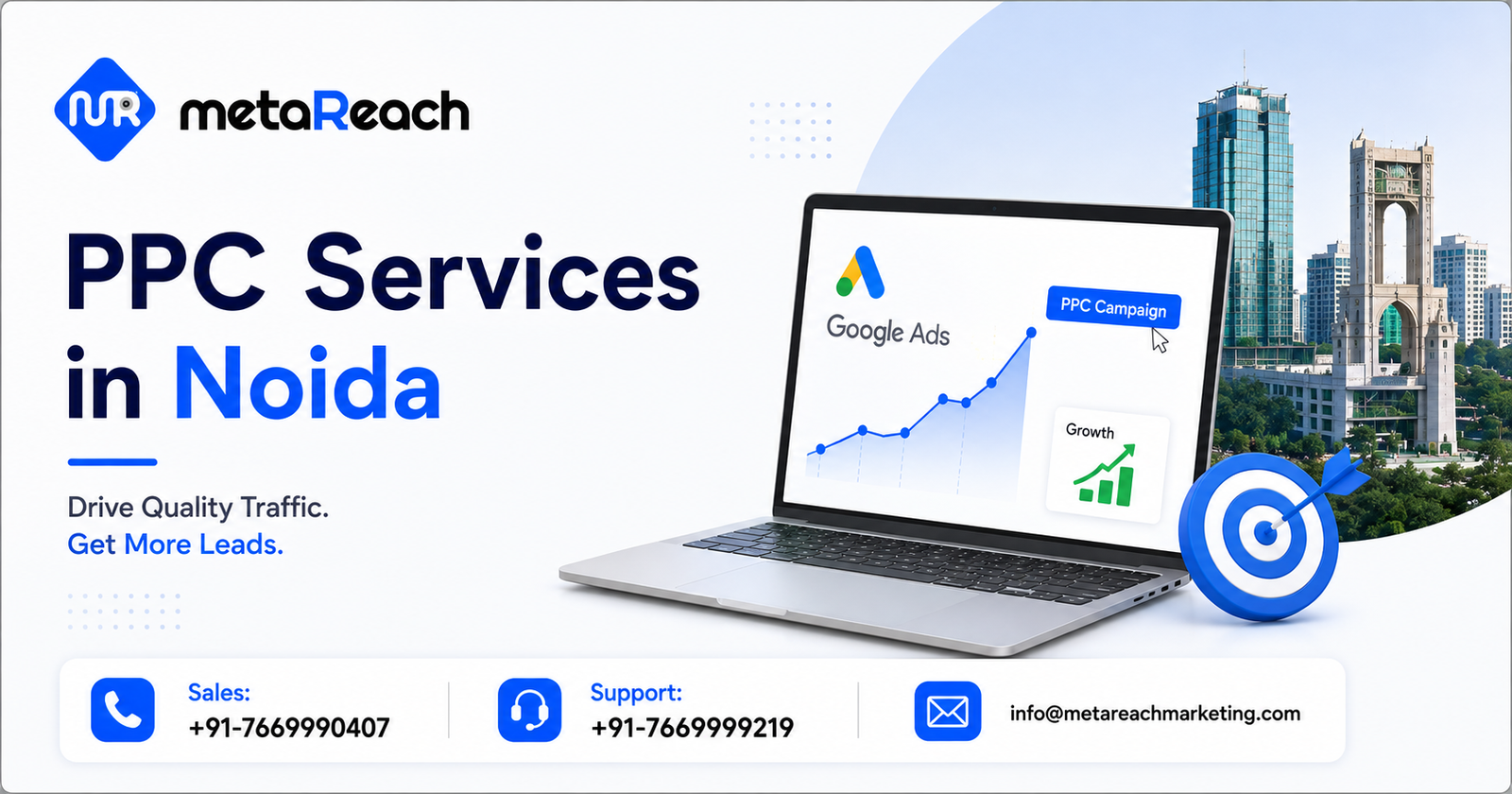
This is exactly the gap that a properly structured PPC service in Noida is built to close — grouping keywords by real search intent, writing ad copy that matches what the searcher actually typed, and routing each ad group to a landing page built for that specific query instead of a generic homepage.
Local Targeting Is Not Optional in a Market Like Noida
Noida and Greater Noida aren’t one market — they’re dozens of micro-markets stacked next to each other. A business in Sector 62 competing for clicks against Sector 18 or Sector 137 without geo-fencing is paying to reach customers who will never realistically walk through the door. Local service radius targeting, combined with call-only ads and location extensions, routinely cuts cost-per-lead for local businesses by focusing spend on people who are actually within reach.
The same logic applies across industries. A coaching institute bidding city-wide burns money reaching students who will never commute. A real estate developer running the same ad to every income bracket in Delhi NCR wastes impressions on people who were never in the buying window. Precision isn’t a nice-to-have in PPC — it’s the entire mechanism that makes the channel profitable.
Remarketing: The Step Almost Everyone Skips
Most visitors don’t convert on the first click. That’s not a failure of the ad — it’s normal buying behaviour. What separates campaigns that scale from campaigns that stall is what happens after that first visit. A remarketing layer that follows warm visitors across the display network and YouTube, segmented by which pages they viewed and how long they stayed, consistently recovers conversions that a single-touch campaign leaves on the table.
None of this requires a massive budget to start. It requires the campaign to be built correctly from day one, tracked properly so every rupee is accounted for, and adjusted on a weekly rhythm instead of left running on autopilot for a month. Businesses that partner with an experienced team — like
MetaReach Marketing — typically see their cost-per-lead settle into a stable, predictable range within the first two months, simply because the account was structured to avoid the leaks that eat most self-managed budgets alive.
PPC isn’t expensive by nature. It’s expensive when it’s unstructured. Get the keyword intent, the landing page match, and the local targeting right, and the same rupee that used to disappear into broad, untracked clicks starts showing up as a call, a form fill, or a booked appointment — which is the only number that was ever supposed to matter.
The Honest Timeline for Results
It’s worth setting realistic expectations before starting. The first week is almost always about setup and Google’s algorithm learning your audience, which means early cost-per-lead numbers tend to look worse than they will a month later. Real optimisation starts once there’s enough click and conversion data to prune what isn’t working — usually somewhere around week three or four. Businesses that judge a campaign’s success in the first ten days often kill something that was about to start paying off. Patience, paired with weekly monitoring rather than a set-and-forget approach, is what turns an average campaign into one with a Quality Score and cost-per-lead that competitors struggle to match.