

Almost every business in India already uses WhatsApp in some form. The question that’s changed in the last couple of years isn’t whether to use it, but which version of it. A huge number of small teams are still running customer communication off a single phone with the free WhatsApp Business app — sending order updates, replying to enquiries, and juggling broadcast lists capped at a few hundred contacts. It works, until it doesn’t.
The point where it stops working is usually obvious: messages pile up faster than one phone and one person can handle, broadcast limits get hit constantly, and there’s no way to plug WhatsApp into a CRM or automate anything. That’s the exact gap the WhatsApp Business API — officially the WhatsApp Business Platform — was built to close.
What Actually Changes With the API
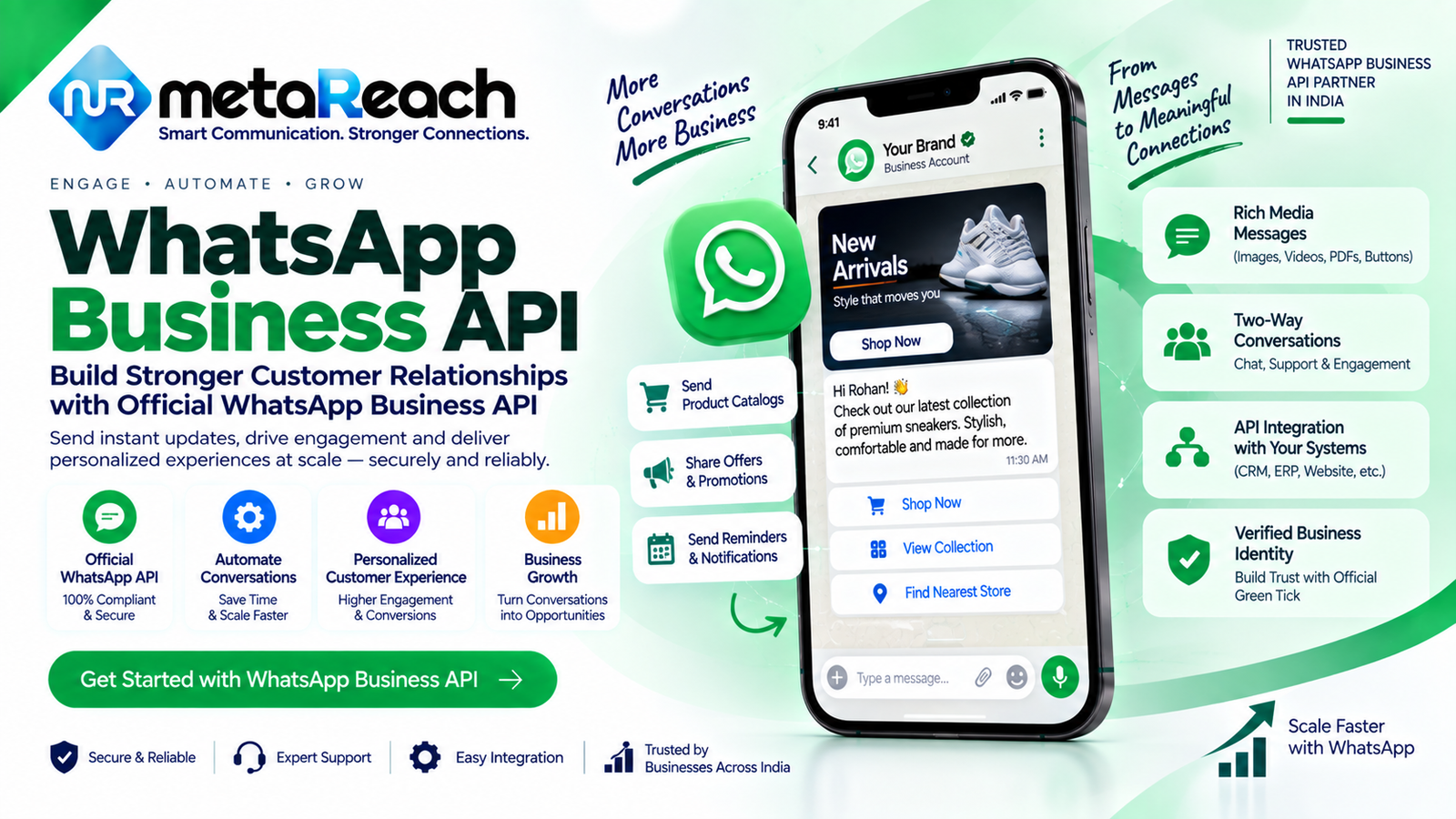
The consumer WhatsApp Business app is designed for a single device and a human on the other end of every reply. The API is a different category of tool entirely — it connects WhatsApp to a business’s own systems, so messages can be sent programmatically, chatbots can handle first-line replies, multiple support agents can work from a shared inbox, and every conversation can sync into a CRM or e-commerce platform automatically.
A detailed breakdown of what this upgrade actually involves — verification steps, message categories, pricing structure, and setup timelines — is covered in this guide to WhatsApp Business API for Indian businesses, which is worth reading in full before comparing providers, since the terminology (BSP, green tick, template categories) trips up a lot of first-time buyers.
The Green Tick Isn’t Just Cosmetic
One of the more visible perks of moving to the API is eligibility for WhatsApp’s verified green tick — the badge that confirms a business account is authentic rather than an unverified number someone could easily spoof. In a market where phishing and impersonation scams over messaging apps have become common, that small visual cue does real work: customers open and trust messages from a verified sender at noticeably higher rates than from a plain, unbadged number.
Getting it isn’t automatic, though. It requires an active API account, a verified Meta Business Manager, a genuine business presence, and compliance with WhatsApp’s commerce policies — and the review itself can take a few weeks. Businesses that go in expecting an instant badge are often surprised by the timeline, which is one more reason to have a partner who’s done this before handling the submission.
Why the Open Rate Numbers Matter So Much
The statistic that gets quoted most often — and for good reason — is WhatsApp’s open rate, which regularly runs close to 98%. Compare that to typical email open rates in the 15–25% range, and it’s easy to see why marketing and operations teams have shifted budget toward WhatsApp for anything time-sensitive: appointment reminders, delivery updates, payment confirmations, OTPs. A message that’s actually seen is worth more than a dozen that sit unread in an inbox.
That said, the API isn’t a free-for-all broadcast channel. Meta groups every message into marketing, utility, authentication, or service categories, each with its own rules around templates, consent, and billing. Businesses that don’t understand this structure tend to either overspend or accidentally violate opt-in requirements — both avoidable with a bit of upfront planning.
Automation Without Losing the Human Touch
A common worry with chatbot automation is that it makes customer service feel colder. In practice, the businesses getting the most out of the API use automation for exactly what it’s good at — instant FAQ answers, order status lookups, appointment confirmations — while routing anything more nuanced to a human agent inside the same conversation thread. The customer never has to switch channels or repeat themselves, which is where a lot of the actual satisfaction gain comes from, not the automation itself.
Choosing Between Going Direct and Using a BSP
Technically, a business can apply for WhatsApp API access directly through Meta. In practice, most companies in India go through an authorised Business Solution Provider instead, because a BSP handles the verification paperwork, template submissions, dashboard tooling, and ongoing account management that Meta’s raw API doesn’t provide out of the box. For a business without an in-house engineering team dedicated to messaging infrastructure, that difference in effort is significant.
Providers like MetaReach Marketing operate as Meta-authorised BSPs specifically so that businesses don’t have to navigate Facebook Business verification, template approval, or chatbot setup alone — the onboarding process is designed to compress what could be weeks of back-and-forth with Meta into a matter of days.
The Bottom Line
The shift from a single-phone WhatsApp Business app to the full API isn’t really optional once a business crosses a certain scale — the broadcast limits and lack of automation on the consumer app become a genuine operational bottleneck. What decides how smooth that transition is usually comes down to the partner handling verification and setup, not the technology itself, since the underlying platform is the same for everyone. Businesses that pick a provider who explains the message categories, handles the green-tick application properly, and gets templates approved on the first try tend to be live and running real campaigns within days rather than weeks.


