Picture a customer calling a business twice in one afternoon and getting a busy tone both times. Nine times out of ten, they don’t call a third time — they move on to whoever answers first. That scenario plays out thousands of times a day across Indian businesses that still rely entirely on a receptionist or a small team to catch every incoming call. It’s an expensive, invisible leak, and it’s exactly the problem a properly configured IVR service is built to close.
What IVR Actually Solves, Beyond Just Answering the Phone
An IVR — Interactive Voice Response — system does something deceptively simple: it answers every call instantly, plays a short menu, and routes the caller to the right place based on what they press or say. The value isn’t just that calls get picked up faster. It’s that every caller gets a consistent, professional experience regardless of whether they call at 11 AM on a Tuesday or 11 PM on a Sunday. A small business team can’t realistically staff a receptionist around the clock, but an IVR system doesn’t need to sleep, take lunch breaks, or get overwhelmed when call volume suddenly spikes because of a marketing campaign or a billboard that just went live.
The Cost Argument Is Bigger Than Most Businesses Expect
Businesses that switch from a purely human-staffed phone line to an IVR-first setup typically report a significant drop in call-handling costs — often somewhere in the 40 to 60 percent range — simply because routine, repetitive queries stop consuming an agent’s time. Order status checks, appointment confirmations, balance enquiries, and basic FAQs can all be resolved without a live person ever picking up. That doesn’t eliminate the need for human agents; it just frees them to handle the calls that genuinely need judgment, empathy, or problem-solving, instead of repeating the same answer to the fiftieth caller asking the same routine question.
Different Industries Are Using It in Genuinely Different Ways
What’s interesting about IVR adoption in India right now is how differently it gets applied depending on the industry. A hospital might use it purely for appointment booking and lab report status, cutting receptionist load dramatically during peak OPD hours. A real estate developer running ad campaigns across multiple project sites uses IVR to route enquiries straight to the right sales agent based on which project the caller is interested in, with the lead data flowing directly into a CRM. An NBFC handling EMI reminders and account queries can resolve the vast majority of routine requests without a human agent ever getting involved. None of these use cases look alike on the surface, but they all come back to the same principle — routing the right call to the right resource without unnecessary friction.
Menu Design Matters More Than the Technology Itself
One thing that separates a genuinely useful IVR system from a frustrating one is how the menu is structured. Callers tend to abandon a call the moment a menu feels too deep or confusing — three levels deep is usually the practical ceiling before people start hanging up out of impatience. A well-designed single or two-level menu, built around the actual queries a business receives most often rather than a generic template, keeps average call duration down and dramatically improves first-call resolution. This is where a lot of businesses get IVR wrong: they treat it as a one-time technical setup rather than something that needs to be shaped around real call data and refined over time.
CRM Integration Turns a Basic Call Router Into a Real Sales Tool
A basic IVR that just routes calls is useful, but connecting it to a CRM changes what’s possible entirely. Returning callers can be recognised, greeted appropriately, and routed based on their previous interaction history rather than starting from zero every time. For sales-driven businesses like real estate or B2B services, this integration means every lead captured through the phone system lands directly in the pipeline without anyone manually re-entering details — reducing both the administrative burden and the chance of a lead slipping through the cracks between a phone call and a spreadsheet update.
Choosing a Setup That Fits Actual Call Volume, Not a Generic Package
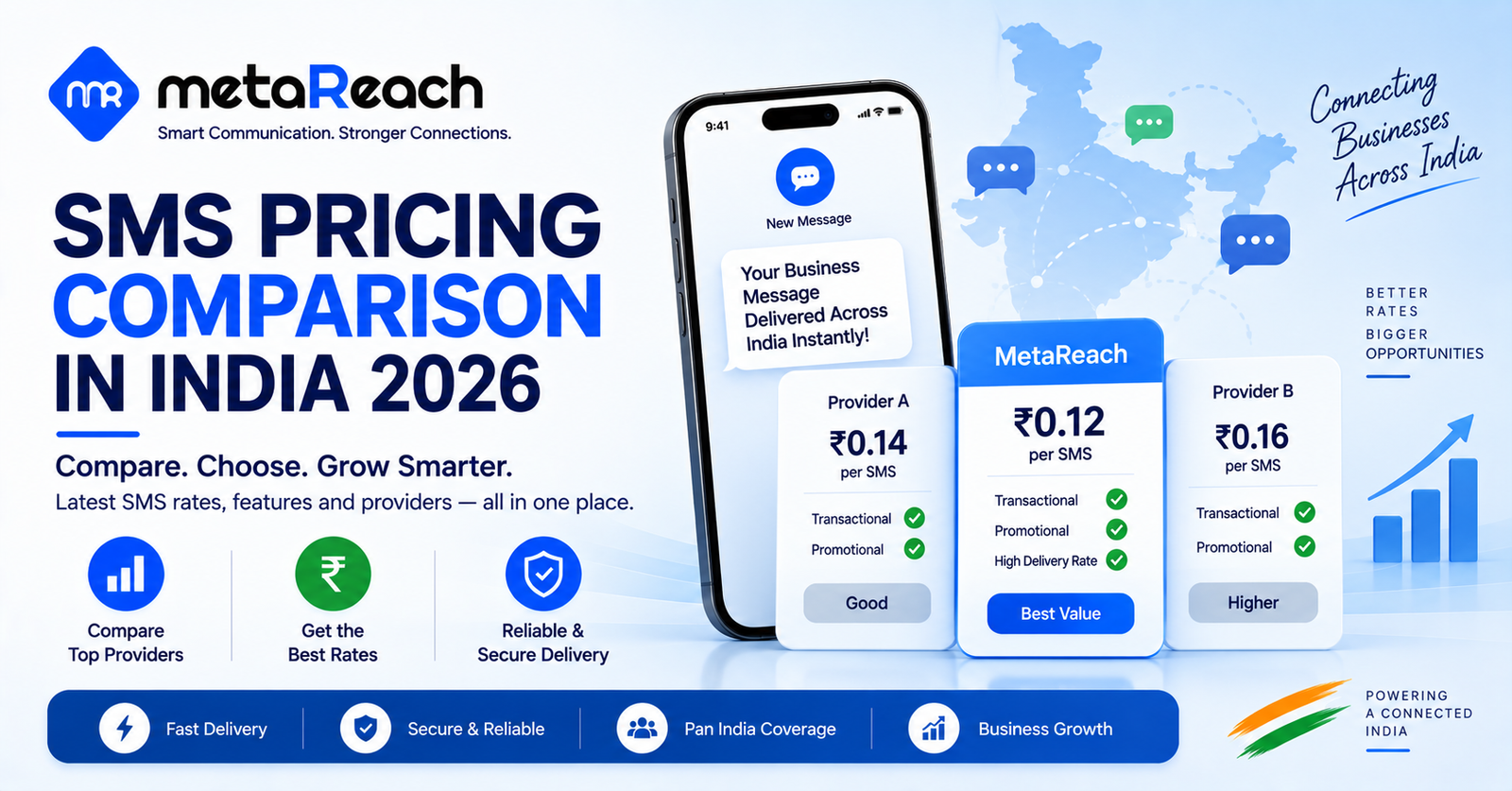
IVR pricing in India isn’t a flat number — it depends on concurrent call channels, menu complexity, CRM integration depth, and whether it’s paired with a toll-free number. A business receiving fifty calls a day at peak hour has very different needs than one handling five hundred, and paying for enterprise-grade concurrency when a business genuinely just needs a simple two-option menu is money spent on capacity that will never get used. Before committing to a plan, it’s worth mapping out realistic call volume and asking directly how a provider’s pricing scales with usage. Reviewing how a provider such as MetaReach structures its IVR and toll-free solutions for Indian businesses — custom quotes based on actual call volume rather than a rigid package — is a reasonable benchmark for comparing setups. Businesses looking to pair voice with SMS, WhatsApp, or broader outreach can find all of these managed together through MetaReach Marketing, which runs its communication stack for clients across India.
The Bottom Line
IVR isn’t a large-enterprise-only tool anymore, and it hasn’t been for a while. Small and mid-size Indian businesses are finding that a well-designed, properly scaled IVR setup pays for itself quickly — not by replacing human agents, but by making sure every call gets acknowledged instantly and routed intelligently, freeing people to focus on the conversations that actually need a human touch. In a market where a customer’s patience for a busy tone is measured in seconds, that difference between answered and abandoned calls adds up to real revenue, month after month.