Every few years, someone declares email marketing dead — first it was social media, then it was chat apps, now it’s whatever platform is trending this quarter. And yet email quietly keeps outperforming most of the channels that were supposed to replace it. The reason is simple: it’s one of the few marketing assets a business actually owns. No algorithm decides who sees your email. No platform can suddenly change its rules and cut your reach overnight. The list is yours, and it keeps working for you campaign after campaign.
Why the Ownership Matters More Than It Sounds
Social media reach depends entirely on a platform’s mood — an algorithm change can quietly halve a brand’s organic visibility with no warning and no appeal process. An email list doesn’t work that way. Every subscriber who opted in remains reachable at the business’s discretion, not a platform’s. This is a big part of why email consistently posts one of the highest returns on investment of any digital marketing channel, often cited around ₹36 for every ₹1 spent — well ahead of paid social or display advertising. For businesses running longer sales cycles, that durability compounds: a list built and nurtured well keeps generating revenue long after the campaign that built it has ended.
The Gap Between Average and Good Email Marketing
Industry-wide, average email open rates tend to sit around 18 to 22 percent. Well-run campaigns regularly hit 30 to 40 percent — nearly double. The gap almost always comes down to the same handful of factors: sending one undifferentiated blast to an entire list instead of segmenting it, skipping proper technical setup so messages land in spam rather than the inbox, and treating email as a one-off broadcast instead of an ongoing, automated relationship. None of these are exotic problems, but they’re exactly the ones that quietly cap performance for businesses that never dig into why their open rates are stuck.
The Technical Setup Nobody Talks About
A surprising amount of email underperformance has nothing to do with the copy or the offer — it’s deliverability. Sending from a domain without properly configured SPF, DKIM, and DMARC records gives inbox providers like Gmail and Outlook no reliable way to confirm a message is legitimate, and a meaningful share of it ends up in spam or the promotions tab before a subscriber even sees the subject line. Gradually warming up a new sending IP, rather than blasting full volume from day one, also plays a large role in whether inbox providers trust a sender long-term. These are one-time technical fixes, but they’re often the single biggest lever for moving deliverability from 70-80 percent up toward 95 percent or higher.
Why Segmentation Changes Everything
Treating every subscriber the same is the single most common mistake in email marketing. A cold lead who downloaded one whitepaper a year ago and a paying customer of three years have almost nothing in common, and sending them identical content guarantees the message feels irrelevant to at least one of them. Splitting a list by industry, engagement level, buying stage, or past behavior lets each segment receive something that actually applies to them — and relevance, more than clever copywriting, is what drives open and click rates upward.
Automation Turns a List Into a System
Welcome sequences, cart abandonment reminders, and re-engagement flows for dormant subscribers all run automatically once they’re built, quietly converting leads that a single newsletter would never reach on its own. A well-designed cart-recovery sequence — a friendly nudge an hour after abandonment, a bit more urgency at 24 hours, a final offer at 72 hours — can recover a meaningful share of otherwise-lost revenue without a single manual send. This is where email marketing stops being a series of one-off campaigns and starts behaving like an actual system that works in the background.
Getting the Setup Right From the Start
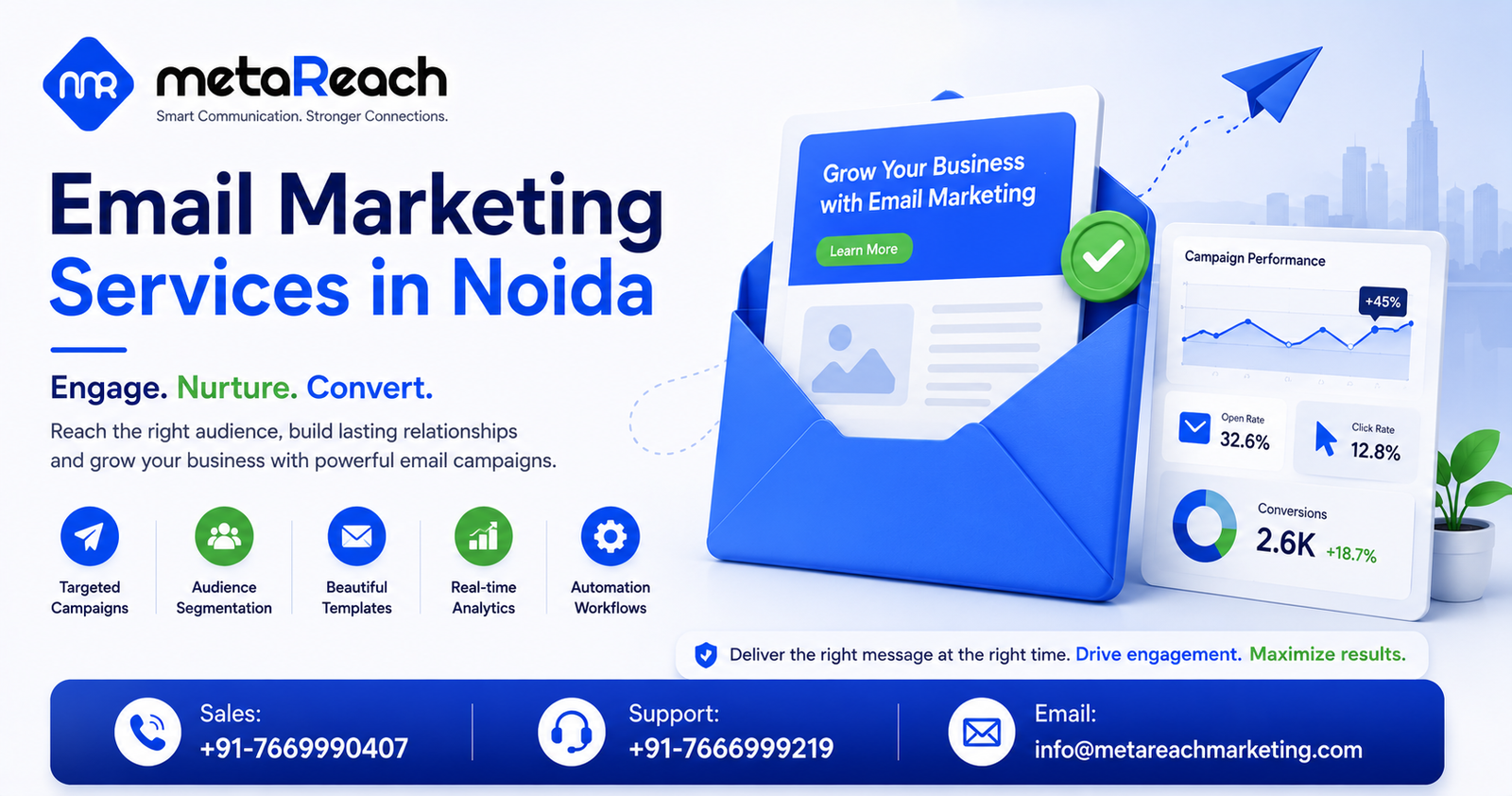
For businesses that want the deliverability, segmentation, and automation done properly rather than pieced together over time, MetaReach Marketing’s email marketing services cover exactly this range — SMTP and authentication setup, list segmentation, B2B drip sequences, and ongoing A/B testing — with the technical groundwork handled as part of onboarding rather than left for a business to figure out on its own.
The Bottom Line
Email marketing hasn’t survived this long by accident. It remains one of the few channels a business fully controls, and the businesses getting real value from it aren’t necessarily writing better copy — they’re segmenting properly, fixing the technical fundamentals, and letting automation do the repetitive work. Getting those basics right tends to matter more than any single clever campaign.
Businesses looking to pair email with other communication channels — Bulk SMS, WhatsApp Business API, or RCS messaging — can explore the full range of services offered by Meta Reach Marketing, a Noida-based digital marketing and enterprise communication agency serving 500+ businesses across India.