Chennai has earned its nickname as India’s “Detroit of the South” for good reason — the city anchors a massive automotive manufacturing base alongside a broader industrial ecosystem of component makers, ancillary units, and B2B suppliers. What doesn’t get talked about as much is how differently these businesses have to handle their phones compared to a typical service company. A manufacturer or automotive brand in Chennai often has to manage two entirely different call patterns at once: multi-tier distributor and dealer relationships on one side, and everyday customer support on the other.
Two Very Different Callers, One Phone Line
A dealership network calling in about parts availability or warranty claims needs something very different from a walk-in customer calling about a service appointment or a product complaint. Yet in a lot of manufacturing and auto businesses, both types of calls land on the same generic line, handled by whoever happens to be free. That’s a workable system when call volumes are small — it stops being workable the moment a business scales past a handful of dealers or a local customer base.
The result, when routing is missing, is predictable: dealers waiting on hold for basic parts queries, customers getting bounced to departments that have nothing to do with their issue, and support staff spending more time redirecting calls than actually resolving them.
What Manufacturing and Auto Companies Actually Need
Given the dual nature of call volume in this sector, a handful of specific capabilities matter more here than in most other industries:
- Distributor and dealer-tier routing — B2B calls from dealers or distributors need a separate track from consumer support, so a parts query from a dealership doesn’t get treated the same as a general customer complaint.
- Scale for direct-to-consumer support — as brand recognition grows, so does consumer call volume, and the system needs to absorb that growth without falling apart.
- Tamil, Hindi, and English menus — Chennai’s customer and dealer base spans all three languages, and a menu limited to just one shuts out a meaningful share of callers before they even reach a person.
- Fast, low-friction setup — manufacturing businesses rarely have the bandwidth for a drawn-out IT rollout on top of everything else they’re managing.
What This Looks Like for a Real Business
Take an automotive component manufacturer supplying a network of dealers and service centers across Tamil Nadu. Dealers calling in about stock levels or warranty documentation need to reach the right desk immediately — not get routed through a general helpline meant for end consumers. A properly configured IVR menu separates these calls at the very first step, sending B2B queries down one path and consumer support down another.
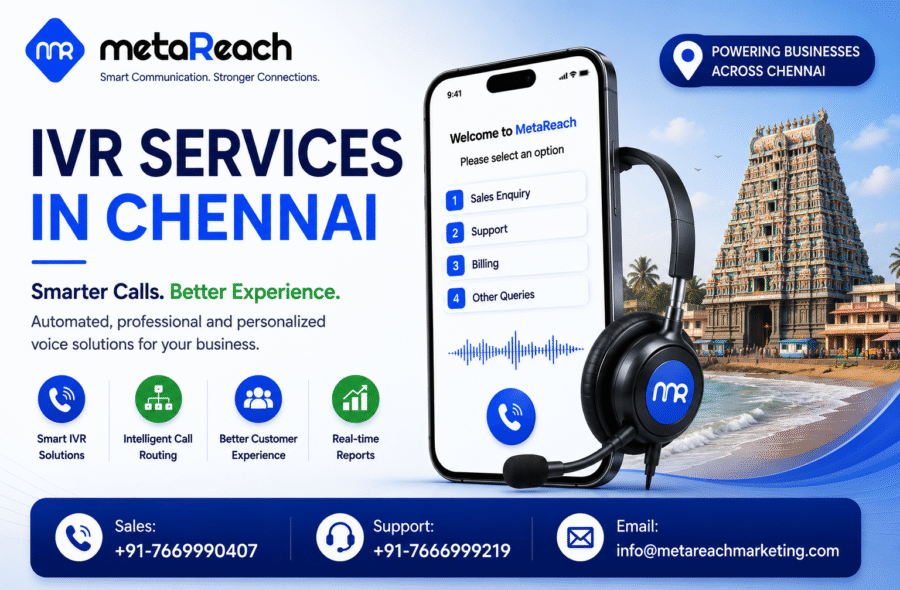
On the consumer side, imagine a customer calling in about a delayed service appointment or a product issue. Instead of navigating a maze of transfers, they select their language and reason for calling, and land directly with the right support agent. IVR Services in Chennai are built with exactly this dual structure in mind — separating distributor and dealer-network routing from direct consumer support, with Tamil, Hindi, and English language options built in from the start.
Automotive Dealerships and Service Centers Specifically
Dealerships and service centers face their own version of this problem multiplied across locations — a customer calling about a service booking, a parts inquiry, or a complaint all need different handling, often at multiple branches simultaneously. Structured call routing designed around how dealership networks actually operate makes it possible to manage all of that without each location needing its own dedicated call-handling staff.
Getting Set Up Without Slowing Down Operations
Manufacturing and automotive businesses run on tight operational schedules, and the idea of a lengthy phone-system overhaul is understandably unappealing. In practice, this doesn’t have to be disruptive — IVR configuration can typically go live within 24 hours of onboarding, with call flows and language menus built around how the business already handles dealer and customer calls, not around a rigid, one-size-fits-all template.
The Bigger Picture
For a sector built on relationships — with dealers, distributors, and end customers alike — how a phone call is handled says something about how seriously a business takes those relationships. A dealer left waiting on a stock query, or a customer bounced between departments over a warranty issue, remembers that experience longer than most companies realize. Getting call routing right is a relatively small operational change with an outsized effect on how dependable a manufacturing or automotive business feels to the people who rely on it.
Businesses across Chennai’s manufacturing and automotive corridor looking to fix this without a major operational overhaul typically find that a well-structured IVR line, paired with the right supporting communication tools, covers most of the gap. Meta Reach Marketing works with manufacturing and automotive businesses across India on IVR, multi-language call routing, and broader customer communication infrastructure built around how these industries actually operate.