Indian e-commerce has an unusually large cart abandonment problem compared to many other markets, with a majority of shoppers adding items to a cart and leaving before ever completing checkout. For a business watching this happen daily, it can feel like an unsolvable leak in the sales funnel. In reality, this specific gap is one of the most reliably fixable problems in digital marketing, precisely because the shopper has already shown genuine intent by reaching the cart in the first place. A well-timed, automated recovery sequence recovers a meaningful share of that lost revenue without requiring a single extra rupee of ad spend to generate the interest all over again.
Why So Many Indian Shoppers Abandon Carts in the First Place
Understanding why this happens shapes how a recovery sequence should actually be written. A large share of Indian shoppers browse and add to cart on mobile during short windows of free time, a commute, a lunch break, a moment between tasks, fully intending to return later rather than abandoning the purchase outright. Others are genuinely price-comparing across multiple sites before committing, using the cart as a temporary holding place rather than a final decision. Payment friction, an OTP that took too long, an unfamiliar payment method, or simple hesitation over a final price also account for a real share of abandonment. None of these reasons suggest a lost customer; they suggest someone who needs one more nudge at the right moment, which is exactly what a properly timed email sequence is built to provide.
Why Timing Matters More Than Almost Anything Else in the Sequence
A recovery sequence sent too late misses the window while a shopper’s interest is still fresh, while one sent too aggressively, or with a discount offered too early, can train customers to always abandon their cart first in order to unlock a better price later. A staged approach tends to work best: a simple, non-promotional reminder within the first hour or two that just shows what was left behind, a slightly more persuasive follow-up roughly a day later that adds genuine social proof or addresses common hesitations, and a final message a few days out that introduces a modest, time-limited incentive only if the first two messages did not already convert. This staged escalation respects a shopper’s own timeline rather than assuming everyone needs an immediate discount to come back, which protects margin on the sizeable share of shoppers who would have returned anyway with just a gentle reminder.
Why Festival Timing Deserves Its Own Dedicated Automation
India’s shopping calendar has genuinely distinct peaks around Diwali, Holi, and other major festivals, and a business relying purely on generic, always-on automation misses the opportunity to build sequences specifically timed around these predictable spikes in buying intent. A festival-specific drip sequence, planned and scheduled well in advance rather than assembled at the last minute, can align messaging with the specific emotional and purchasing patterns of a given festival period, which consistently outperforms a generic promotional email sent during the same window with no seasonal framing at all. Businesses that treat festival automation as a distinct, planned campaign rather than an afterthought layered onto existing generic sequences tend to see it become one of the strongest revenue periods of their entire year.
Why Pairing Email With WhatsApp Recovers More Carts Than Either Channel Alone
Email alone recovers a meaningful share of abandoned carts, but Indian shoppers, given how heavily WhatsApp is embedded in daily mobile behaviour, often respond faster to a WhatsApp nudge than to an email sitting in an inbox they check less frequently. Running a coordinated sequence, an email reminder alongside a WhatsApp message at a slightly offset time, gives a shopper two distinct chances to notice and act on the reminder through the two channels they are most likely to actually check. Businesses running this combined approach consistently report stronger recovery rates than either channel achieves independently, since the two channels reach a shopper through genuinely different attention patterns rather than simply duplicating the same message twice.
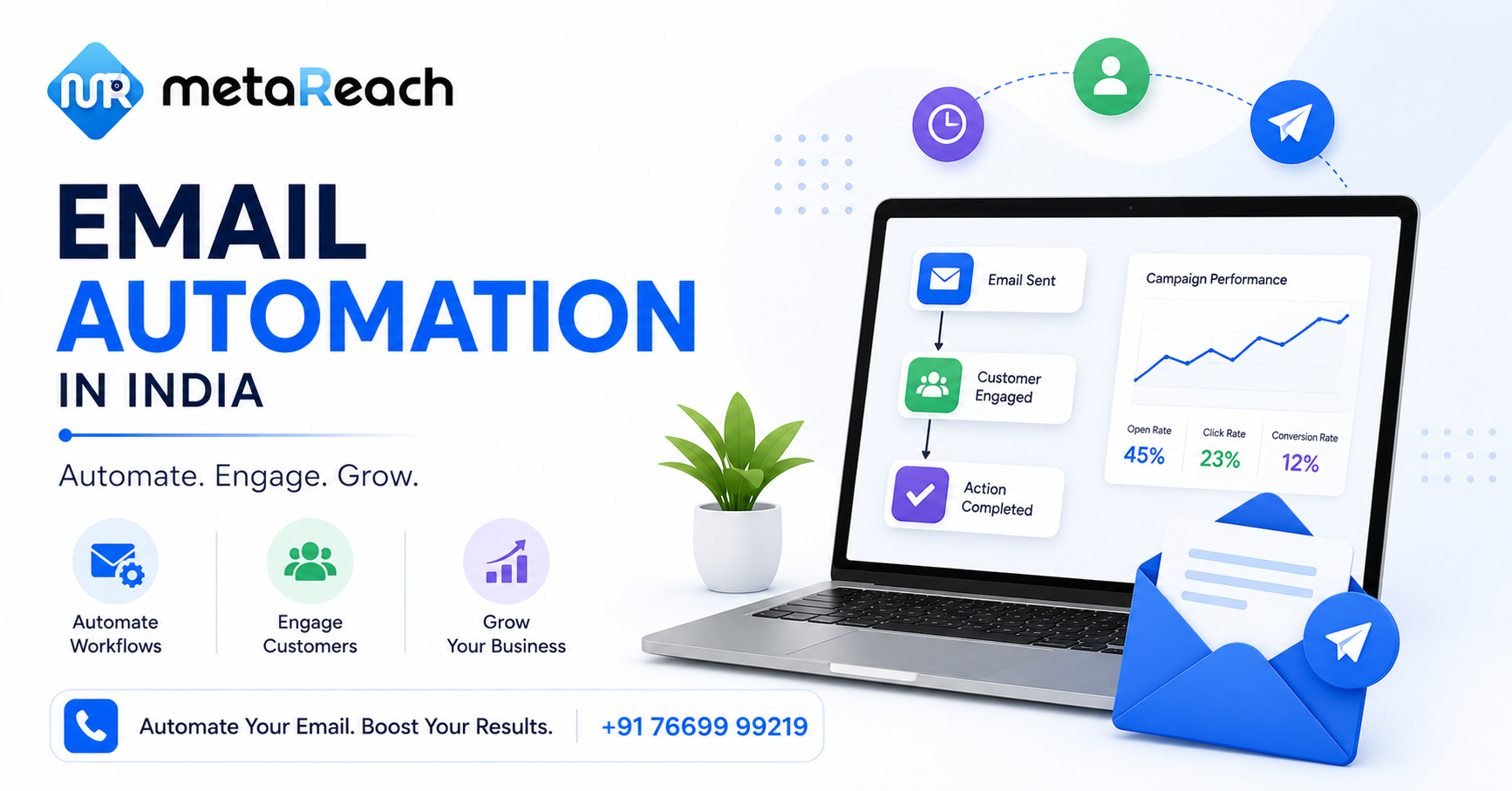
For a full walkthrough of building cart abandonment, festival, and combined email plus WhatsApp automation sequences, along with pricing and setup timelines, this email automation page for India covers the complete automation build process and real client results in detail.
Businesses across India looking to recover lost cart revenue through automated, well-timed sequences, paired with WhatsApp for maximum reach, can explore what MetaReach Marketing offers with free automation setup, dedicated IP delivery, and combined email plus WhatsApp recovery flows built for how Indian shoppers actually behave.
In short, cart abandonment is not a lost cause for Indian e-commerce businesses, but a predictable, recoverable gap that a well-built automated sequence closes reliably. Getting the timing staged correctly, planning festival-specific sequences well in advance, and pairing email with WhatsApp for the channels Indian shoppers actually check first are what turn a business’s biggest revenue leak into one of its most efficient sources of recovered sales.