In a market obsessed with app notifications and social media reach, it’s easy to assume the humble text message has had its day. The numbers say the opposite. SMS in India still gets opened by over 98% of recipients, usually within three minutes of arriving — a response rate no other channel comes close to matching. For businesses trying to reach customers who don’t always have data switched on, or who simply ignore push notifications, that reliability is hard to replace.
Why SMS Still Wins When Everything Else Gets Ignored
Email gets buried under promotions. Social posts get lost in an algorithmic feed that decides who sees what. An SMS, on the other hand, lands directly on the lock screen — no app required, no internet dependency to open it, no notification permission that can be switched off. For time-sensitive information like OTPs, delivery updates, or appointment reminders, that directness isn’t a nice-to-have; it’s the entire point.
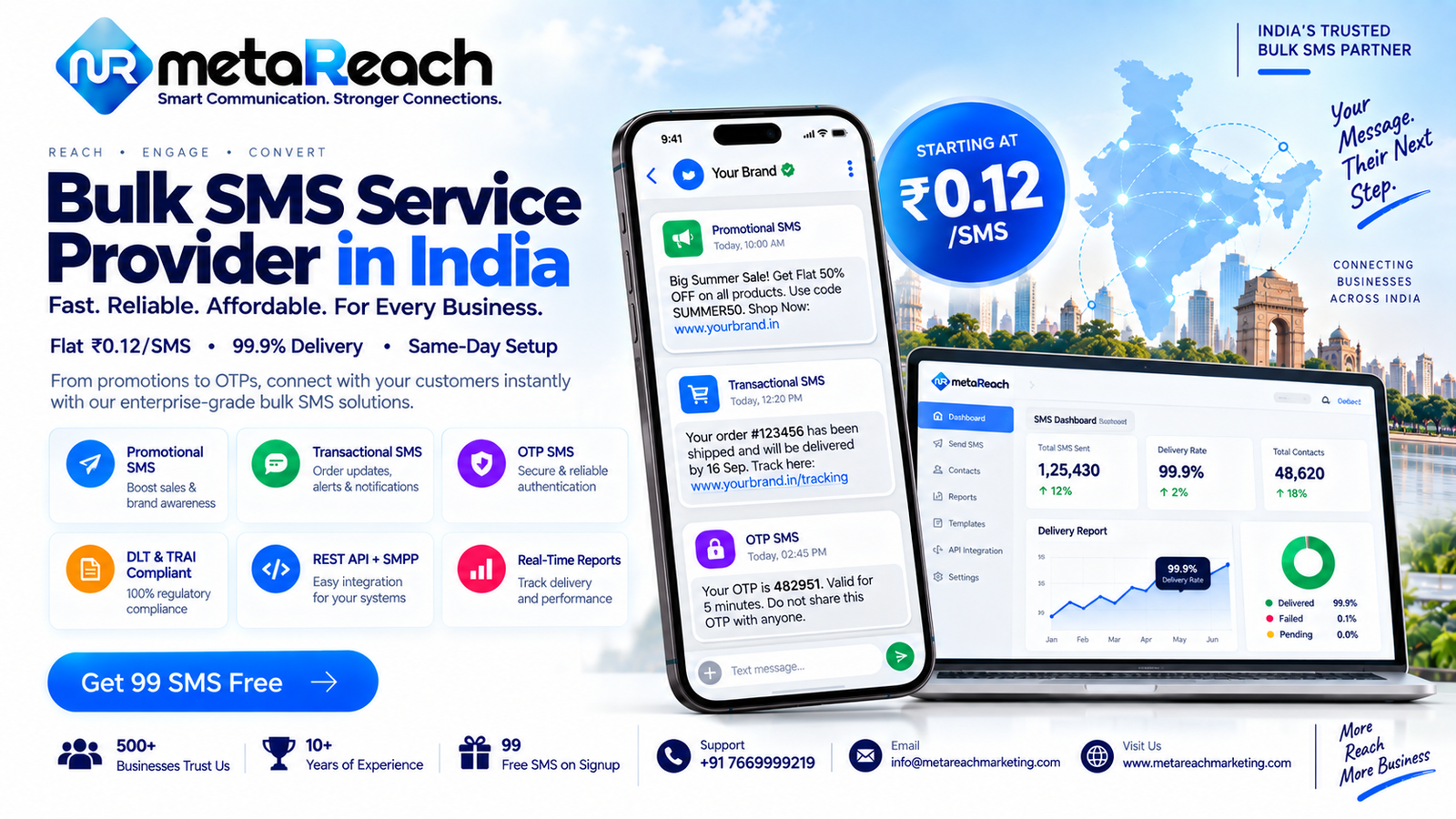
This is exactly the gap that a reliable bulk SMS service is built to fill. Instead of sending messages one at a time, a business can reach thousands of customers in seconds through a single dashboard or API call — while still keeping every message compliant, trackable, and properly delivered.
What a Modern Bulk SMS Platform Actually Needs to Get Right
Not every SMS provider is built the same, and the differences show up the moment volume increases. A handful of things separate a platform that actually holds up under real business use from one that quietly fails when it matters most:
- Direct carrier connections — routing straight through Jio, Airtel, Vi, and BSNL instead of hopping through third-party aggregators that slow delivery down.
- DLT compliance handled end-to-end — entity registration, sender ID approval, and template whitelisting, since TRAI regulations block any message that isn’t properly registered.
- Separate handling for promotional versus transactional traffic — promotional messages respect DND and sending-hour rules, while transactional and OTP messages need to reach customers 24/7 without delay.
- Real-time delivery reporting — knowing exactly who received a message, who didn’t, and when, rather than waiting for an end-of-month summary.
Where Bulk SMS Fits Into a Bigger Customer Communication Strategy
The businesses getting the most value from SMS rarely treat it as a standalone channel. An e-commerce brand might use transactional SMS for order and delivery updates, promotional SMS for flash sales, and OTP SMS to secure account logins — all running through the same platform rather than three disconnected tools. A clinic might lean on appointment reminders and lab report alerts. A real estate developer might use it for site-visit invitations and payment reminders. The use case changes by industry, but the underlying need — fast, reliable, compliant delivery — stays constant.
This is where working with an established provider like MetaReach Marketing tends to make a measurable difference. With over a decade of experience and 500+ businesses already running campaigns on its platform, the infrastructure has been stress-tested across industries that range from healthcare and education to real estate and fintech — not built around a single generic use case and stretched to fit everyone else.
The Compliance Side Most Businesses Underestimate
One detail that catches a lot of first-time senders off guard: DLT registration isn’t optional in India. Every bulk SMS sender has to be registered under TRAI’s Distributed Ledger Technology framework, with an approved sender ID and pre-whitelisted message templates. Skip this step and messages simply won’t deliver, no matter how good the platform is. A provider that handles this registration process for you — rather than leaving you to navigate government portals alone — saves real time in the first few weeks, which is often when a campaign needs to move fastest.
DND scrubbing matters just as much. Promotional messages sent to DND-registered numbers don’t just fail to deliver — they can trigger compliance penalties. A platform that automatically filters against the National DND registry before sending removes that risk entirely, rather than leaving it to manual list management.
The Bottom Line
For all the newer channels competing for attention, SMS remains one of the few ways to guarantee a message actually reaches a customer’s phone and gets read within minutes. The businesses getting the best results aren’t necessarily sending more messages — they’re sending the right message, through the right channel, at the right moment, on a platform built to handle both the volume and the compliance requirements without either becoming a bottleneck.