Open your Android phone’s messaging app today and there’s a good chance you’ve already received a business message that looked nothing like an old-fashioned SMS — a product image, a branded logo, maybe a “Track Order” button you could tap without leaving the conversation. That’s RCS, quietly becoming the new normal for how Indian businesses reach customers over their phone number, without needing them to install anything new.
What RCS Actually Is
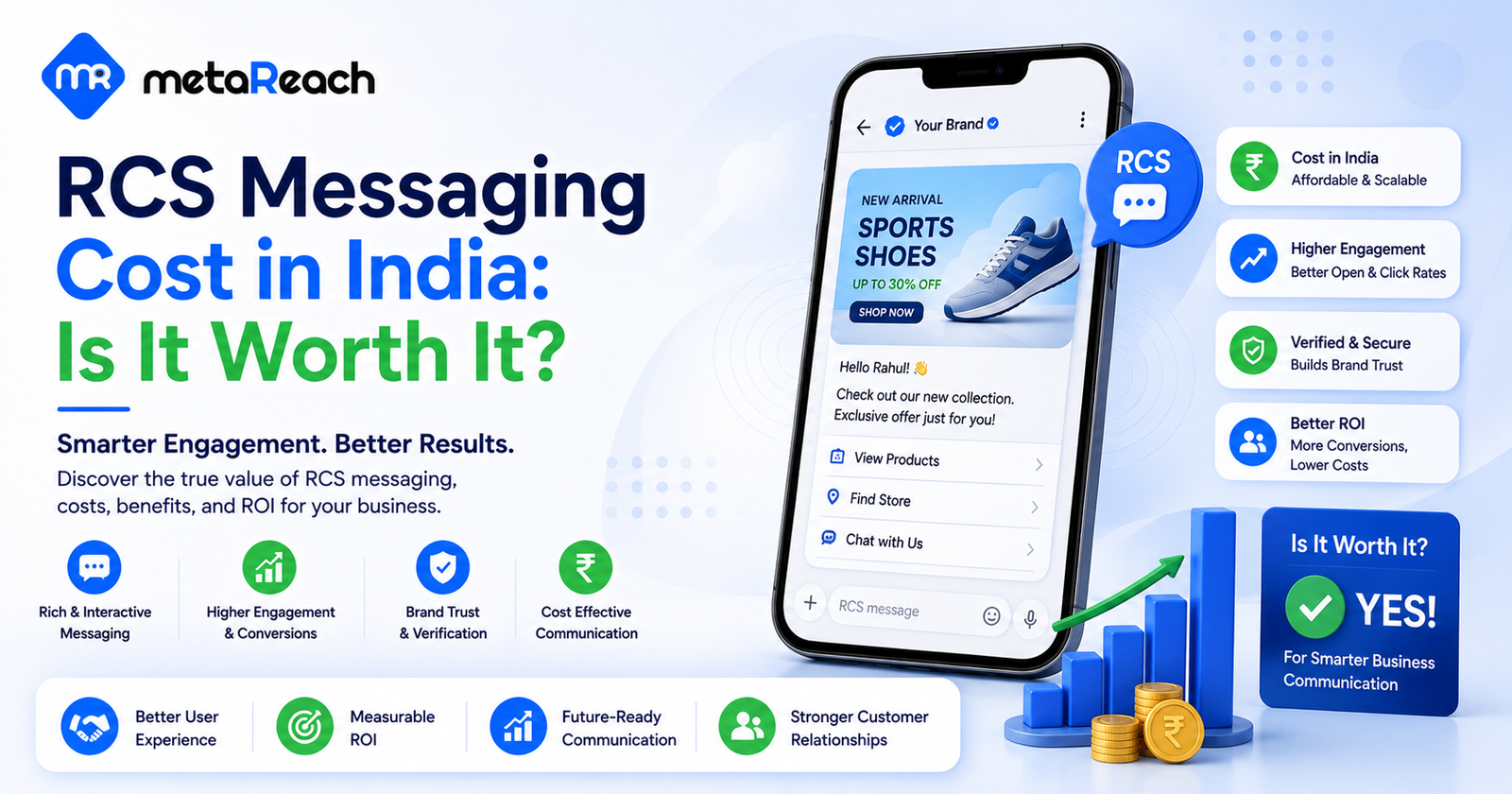
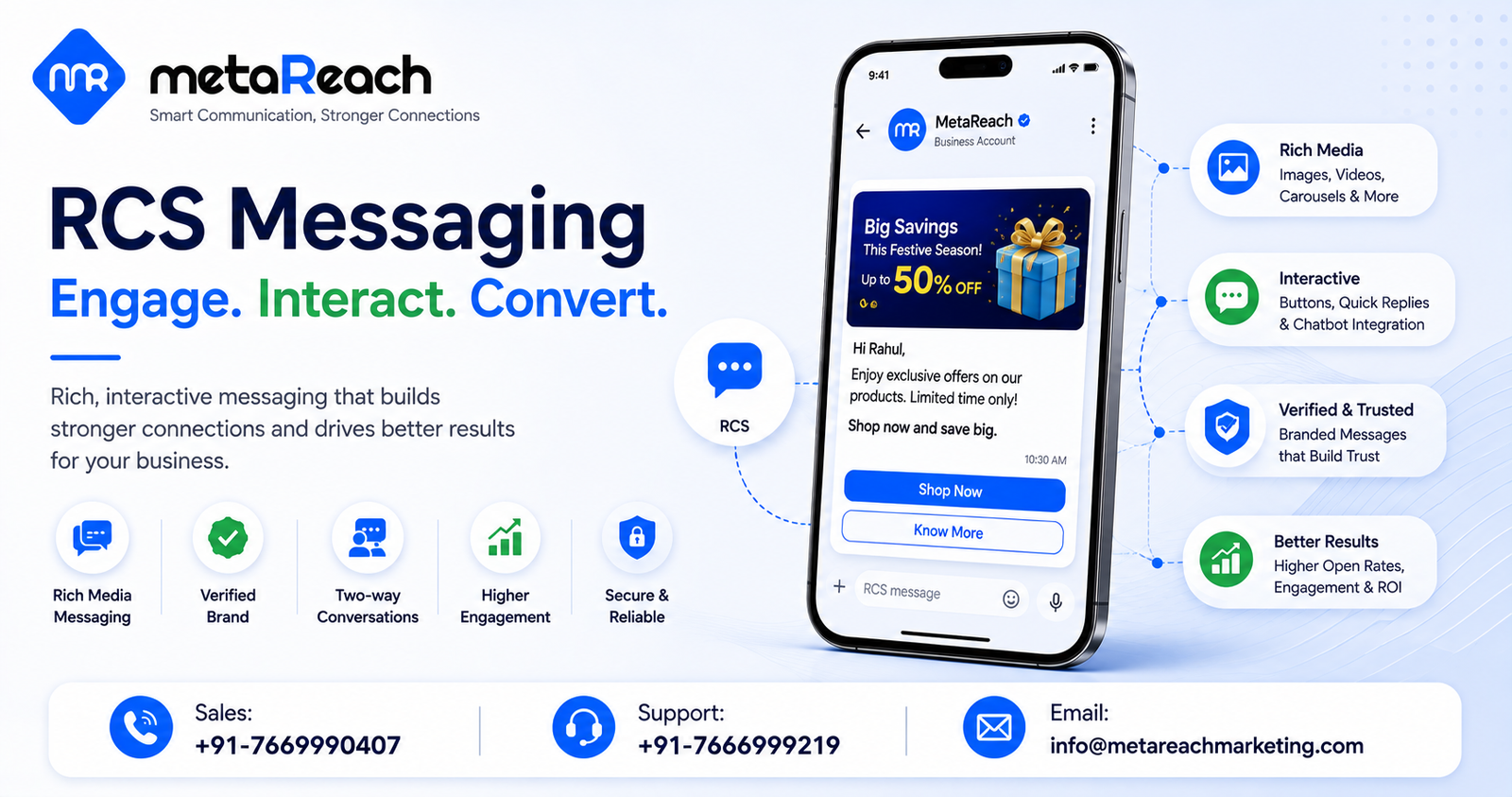
RCS, or Rich Communication Services, is best understood as SMS’s more capable successor. Where traditional SMS is capped at 160 characters of plain text, RCS supports images, videos, GIFs, interactive carousels, and quick-reply buttons, all delivered natively inside the phone’s default messaging app — no separate download required. Every RCS message also carries a verified business name and logo, so the recipient can see at a glance that the message is genuinely from the brand it claims to be from, rather than a spoofed sender pretending to be a bank or delivery service.
Why the Verified Sender Badge Matters So Much
SMS-based phishing has grown into a real problem in India, with fake delivery notifications and fraudulent bank alerts training people to distrust unfamiliar text messages on sight. RCS addresses this directly: a business has to go through sender verification to send RCS messages at all, so the badge a customer sees genuinely means something. For sectors where trust is everything — banking, insurance, healthcare — this alone can be the difference between a message that gets acted on and one that gets deleted without a second thought.
Where the Engagement Numbers Actually Come From
The reason RCS keeps coming up in marketing conversations isn’t hype — it’s the engagement gap. Plain SMS campaigns in India typically see open rates in the 25 to 35 percent range and click-through rates rarely above 3 percent. RCS routinely posts open rates above 90 percent, with click-through rates between 25 and 40 percent, largely because a rich card with an image and a clear call-to-action button simply invites interaction in a way a plain-text SMS never can. A discount code buried in 160 characters gets ignored; the same offer with a product photo and a “Shop Now” button gets tapped.
It Isn’t a Replacement for SMS — It’s a Complement
RCS currently runs on Android devices connected to Jio, Airtel, or Vodafone Idea through Google’s Jibe platform, with iOS support gradually rolling out. This means device and network coverage, while broad, still isn’t universal — which is exactly why RCS deployments are built around automatic SMS fallback. If a recipient’s device or network doesn’t support RCS, the message quietly delivers as standard SMS instead, so campaign reach never actually shrinks. Businesses get the richer experience wherever it’s available and full backward compatibility everywhere else.
Where RCS Earns Its Keep
E-commerce brands use RCS for product carousels, shipping updates, and cart-recovery messages that let a customer complete a purchase without opening a separate app. Banks and NBFCs send OTPs and transaction alerts carrying verified sender branding, which meaningfully cuts down on customers ignoring or distrusting the message. Healthcare providers attach a map link and a “Reschedule” button directly to an appointment reminder. Real estate developers share property image galleries inside the message itself instead of a plain text link. In each of these cases, the format does something a 160-character SMS structurally can’t.
Deciding If RCS Fits Your Business
Not every message needs the richer format — a simple urgent alert that must reach every phone regardless of type is still often better served by plain SMS. But for promotional campaigns, order and appointment confirmations, and any message where a visual or an interactive button would drive real engagement, RCS is increasingly worth testing. MetaReach Marketing’s RCS messaging service covers this full range — verified sender setup, rich card and carousel creative, direct integration with Jio, Airtel, and Vi, and automatic SMS fallback — giving businesses a straightforward way to run a hybrid RCS-and-SMS strategy without managing multiple vendors.
The Bigger Picture
RCS represents a real shift in how businesses can communicate over a plain phone number — closer to an app-based messaging experience, but without asking the customer to install anything. As Android adoption and carrier support continue expanding across India’s Tier-2 and Tier-3 cities, the audience RCS can meaningfully reach keeps growing too. For businesses still relying purely on plain-text SMS for everything, it’s worth at least testing a segment of campaigns on RCS to see what the engagement difference actually looks like against their own numbers.
Businesses evaluating RCS alongside their existing SMS, WhatsApp, or voice channels can explore the full range of communication services offered by Meta Reach Marketing, a Noida-based enterprise communication agency serving 500+ businesses across India.