Plain text SMS has served Indian businesses well for over two decades. It is fast, cheap, and universal. But ask any marketing team honestly, and they will tell you the same thing: a text box with a link does not look trustworthy anymore, especially when customers are conditioned to treat unknown sender IDs with suspicion. This is exactly the gap that RCS business messaging India is closing, and why businesses across e-commerce, banking, healthcare, and real estate are quietly making the switch right now.
What RCS Messaging Actually Is
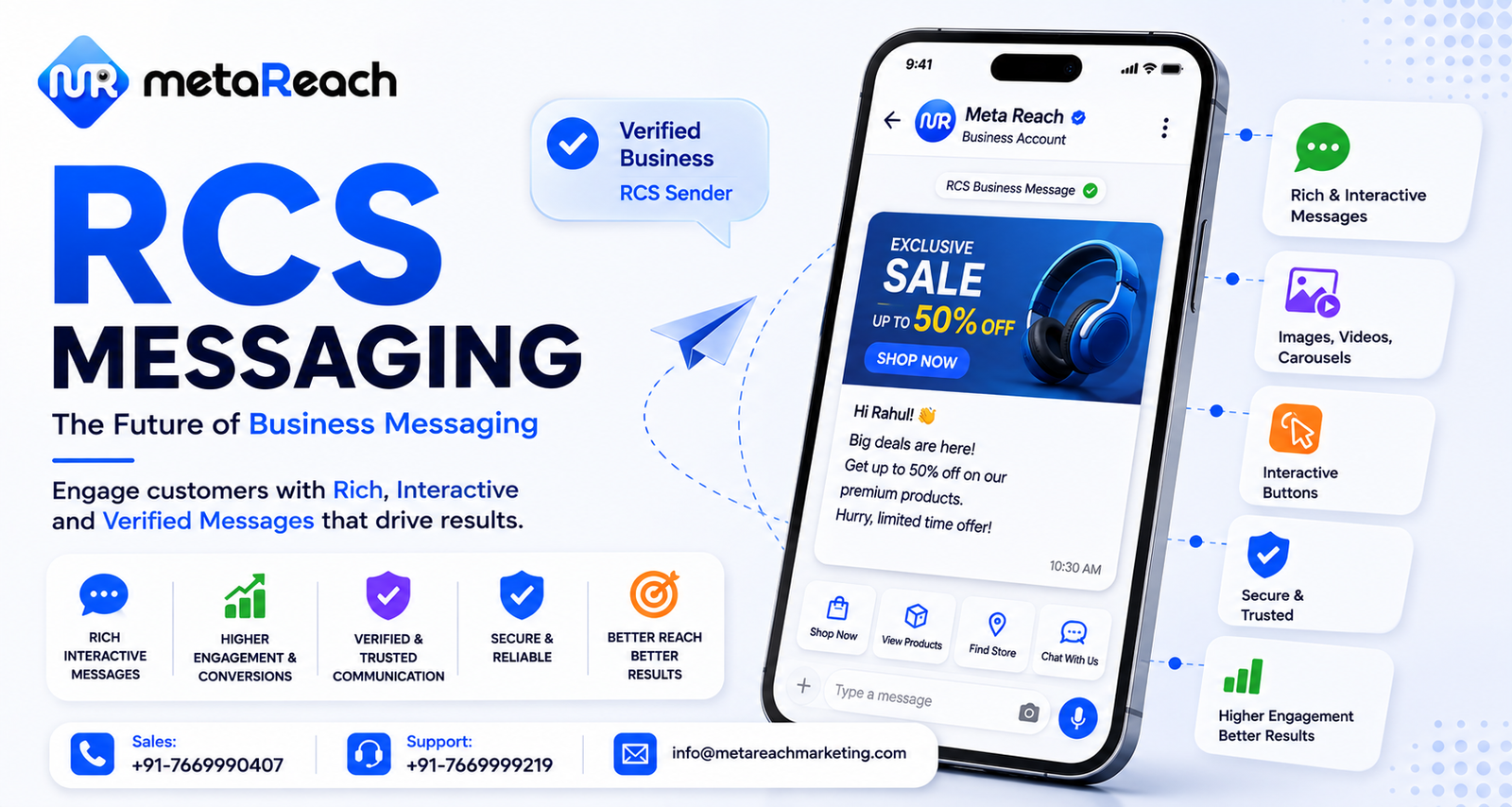
Rich Communication Services, or RCS, is the next generation of SMS built directly into Google Messages, the default messaging app on Android devices. It does not require an app download, a data opt-in, or a new inbox. It delivers inside the same thread a customer already uses for texts, except instead of plain characters, the message can carry high-resolution images, scrolling product carousels, tap-to-book buttons, video content, and a verified brand badge showing the business name and logo rather than a random sender header.
India has over 600 million RCS-eligible Android users across Jio, Airtel, and Vodafone Idea, making it one of the largest RCS-ready markets in the world. For any business sending campaigns to Indian mobile users, that is a reach number that is simply too large to ignore.
Why RCS Marketing India Is Producing Significantly Better Engagement
The difference RCS makes to engagement is not subtle. While standard SMS open rates sit around ninety percent, RCS messages in India are achieving open rates closer to ninety-five percent, driven largely by the verified sender badge that tells a customer immediately they are looking at a legitimate brand communication rather than a spam text. That single trust signal changes how a message is received before the content is even read.
Beyond open rates, the interactive elements inside RCS — quick reply buttons, tap-to-call actions, product carousels, and map links — remove the friction between a customer receiving a message and taking action on it. A real estate developer sending a property carousel with a book-site-visit button gets a one-tap conversion path. A bank sending an EMI reminder with a pay-now button removes an entire journey from reminder to payment portal. A retail brand sending a Diwali sale carousel with product thumbnails and a shop-now tap converts inside the message rather than sending a customer to hunt through a website.
RCS vs WhatsApp: How They Compare
Both RCS and WhatsApp offer rich messaging, but they operate differently in practice. WhatsApp requires customers to have the app installed and the business to initiate contact only through approved templates outside a conversation window. RCS works through the native Android messaging app with no separate installation, reaches customers on any Jio, Airtel, or Vi number running a compatible Android device, and uses Google’s verification system rather than Meta’s. For businesses already running WhatsApp Business API alongside SMS, adding RCS creates a third channel that covers a different slice of the audience with the same type of rich content and without any overlap in the contact list.
What the RCS for Business Platform at MetaReach Offers
The RCS messaging service on MetaReach Marketing’s platform covers everything a business needs to get live, starting from Google brand verification, DLT registration for TRAI compliance, template design and approval, through to API integration for automated message triggers and real-time delivery analytics. Pricing starts from just twelve paise per message for basic RCS, with rich card campaigns from fifteen paise, making the step up from standard SMS genuinely accessible for businesses of any size rather than an enterprise-only budget item.
Critically, for every device or operator connection where RCS is not supported, the platform automatically falls back to DLT-compliant SMS at no extra setup, ensuring one hundred percent reach regardless of whether a recipient’s phone supports the richer format.
How Quickly Can a Business Go Live With RCS
One of the practical objections businesses raise about RCS is setup time, specifically the concern that Google brand verification and DLT registration will take weeks. In practice, with a provider handling the process end to end, most businesses are live and sending their first verified RCS campaign on the same day they sign up. Google brand submission, network registration with Jio, Airtel, and Vi, template approval, and API or panel setup can all happen within hours when the process is managed by a team that has run it hundreds of times before, rather than navigating it fresh from scratch.
Final Thought
RCS is not a channel to put on a roadmap and revisit next year. With hundreds of millions of eligible devices already active across India’s three major networks, the audience is there right now. The businesses integrating RCS into their messaging mix today are building a head start over competitors who will move only after the channel reaches saturation.
For a full breakdown of what the platform includes, the RCS service page at MetaReach Marketing covers pricing, brand verification, and campaign types in detail. For businesses comparing the complete messaging stack, a direct visit to MetaReach Marketing is the natural starting point before choosing a provider.