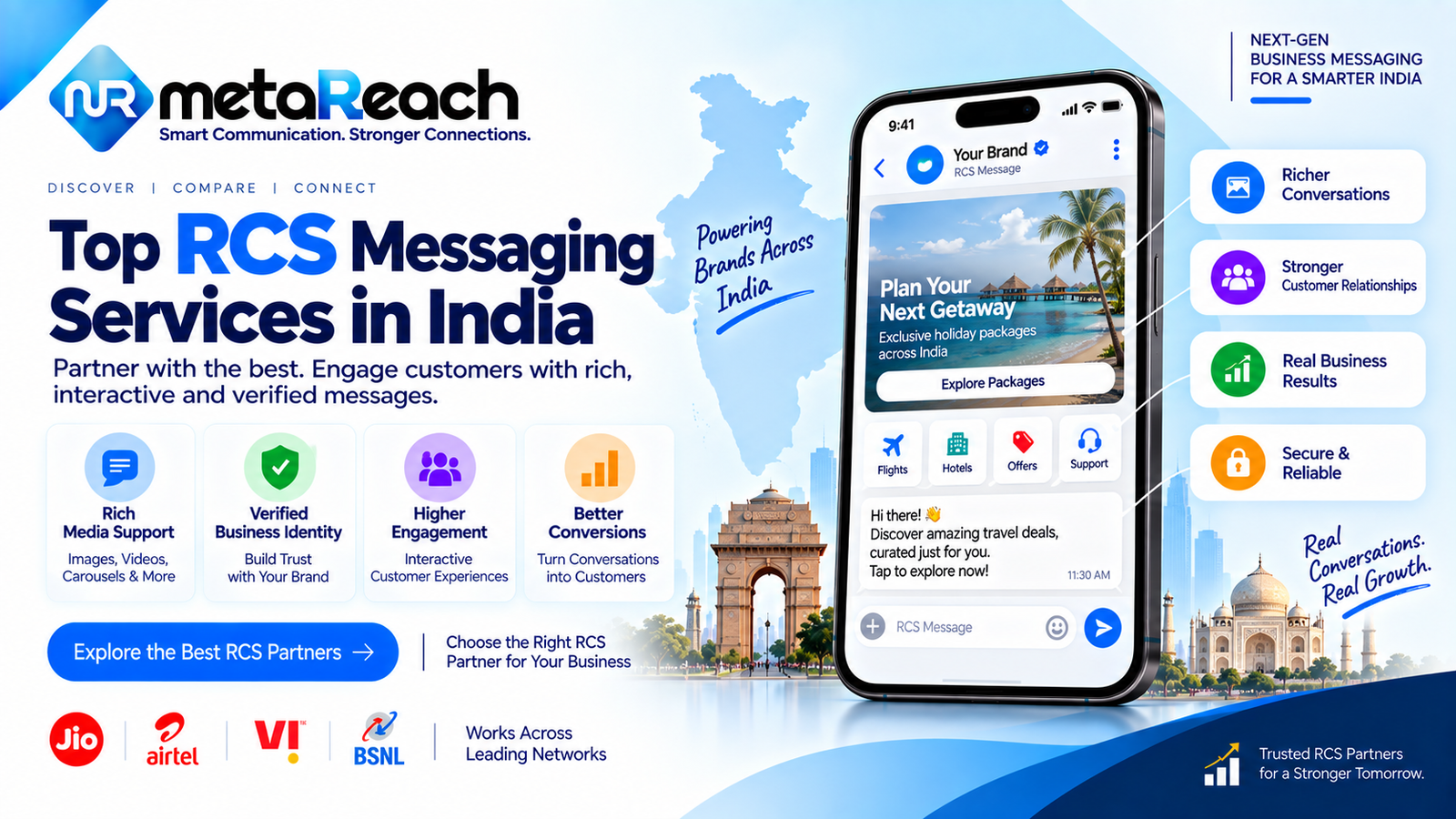
RCS — Rich Communication Services — has moved from a niche technical upgrade to a mainstream business messaging channel in India. Verified sender badges, product carousels, and tappable buttons inside a standard messaging app push click-through rates well above what plain SMS typically delivers. Naturally, the number of companies offering to set this up has grown just as fast — which means picking the wrong partner is easier than it should be.
Most businesses evaluating RCS for the first time focus on the wrong question. They ask which provider has the flashiest demo, when the more useful question is which provider will actually get a campaign live, keep it compliant, and make sure no customer gets missed along the way.
Start With Verification, Not Features
Every RCS platform will show a demo with rich cards and interactive buttons — that part of the pitch has become fairly standardised. What actually separates providers is what happens before any of that goes live: Google’s brand verification process. Unlike SMS, RCS business messaging doesn’t run through India’s TRAI DLT system; it runs through Google’s own verification, and that process can take anywhere from a few hours to several weeks depending entirely on how the provider handles it.
A useful reference point here is a recent comparison of leading RCS messaging providers in India, which breaks down setup timelines, verification handling, and pricing transparency across several well-known platforms. The pattern that emerges is consistent: providers that manage Google verification fully in-house tend to get businesses live in hours, while those that outsource or defer it can stretch onboarding into multiple weeks.
Setup Speed Isn’t a Vanity Metric
It’s tempting to treat “fast setup” as a marketing line rather than something that matters practically. In reality, the gap between a same-day go-live and a two-week onboarding cycle often decides whether a business can actually use RCS for time-sensitive campaigns — a festive sale, a product launch, a limited-window offer. A platform that’s technically capable but takes weeks to activate effectively removes itself from consideration for anything urgent.
SMS Fallback Is Not Optional
Not every phone supports RCS. Older Android devices, certain regional carriers, and a portion of iPhone users will not receive a rich RCS message no matter how well it’s designed. A provider that doesn’t automatically fall back to plain SMS for these contacts is quietly dropping a meaningful share of an audience — often without the business realising it, since a failed RCS send doesn’t always show up clearly in reporting. This single feature — automatic, invisible SMS fallback — is arguably more important than any rich-media capability. It’s the difference between a campaign that reaches everyone and one that only reaches whoever happens to have the right phone.
Pricing Transparency Says a Lot About the Vendor
RCS pricing in India tends to fall into two camps: providers who publish a clear per-message rate, and providers who require a sales call before quoting anything. Neither approach is automatically wrong — enterprise platforms serving banks and telecom operators often have legitimate reasons for custom pricing at scale. But for a small or mid-sized business trying to compare options quickly, a provider that hides pricing behind a contact form usually isn’t built for fast decisions.
Support Model: A Real Person vs a Ticket Queue
Campaign launch day is exactly when things go slightly wrong — a template gets rejected, a sender ID needs a tweak, a delivery report looks off. Whether a business gets a dedicated account manager on the phone or has to wait in a generic support queue during that window can be the difference between a smooth launch and a frustrating one. This is easy to overlook while comparing feature lists on a website, but it’s usually the thing businesses remember most after their first campaign.
Matching the Provider to the Business, Not the Other Way Around
Large enterprise platforms with global infrastructure make sense for multinational corporations sending tens of millions of messages a month across many countries. They rarely make sense for a regional retail chain or a growing D2C brand that needs to launch in days, not quarters. Similarly, a platform built primarily around WhatsApp with RCS added as an afterthought is a reasonable choice if WhatsApp is the primary channel — but not if RCS itself is meant to carry the campaign.
The honest exercise is matching the provider’s actual strengths to the business’s actual constraints: volume, timeline, compliance needs, and how hands-on the support needs to be. A provider that’s excellent for a bank’s compliance-heavy rollout isn’t automatically the right fit for a fashion retailer that needs a festive campaign live by Friday.
Providers that answer these questions plainly, without redirecting to a generic sales pitch, are usually the ones worth shortlisting. MetaReach Marketing is one example of a platform built around exactly this kind of transparency — publishing per-message pricing, handling Google verification in-house, and offering a live demo before any contract is signed, which makes it easier for a business to judge fit without guesswork.
The Bottom Line
RCS is genuinely worth adopting for most Indian businesses in 2026 — the engagement numbers back that up clearly. But the channel is only as good as the provider running it. Speed of setup, verification handling, guaranteed SMS fallback, and honest pricing matter more in practice than any single rich-media feature. Businesses that evaluate providers on these fundamentals, rather than on demo polish alone, tend to end up with campaigns that actually launch on time and reach the audience they were built for.