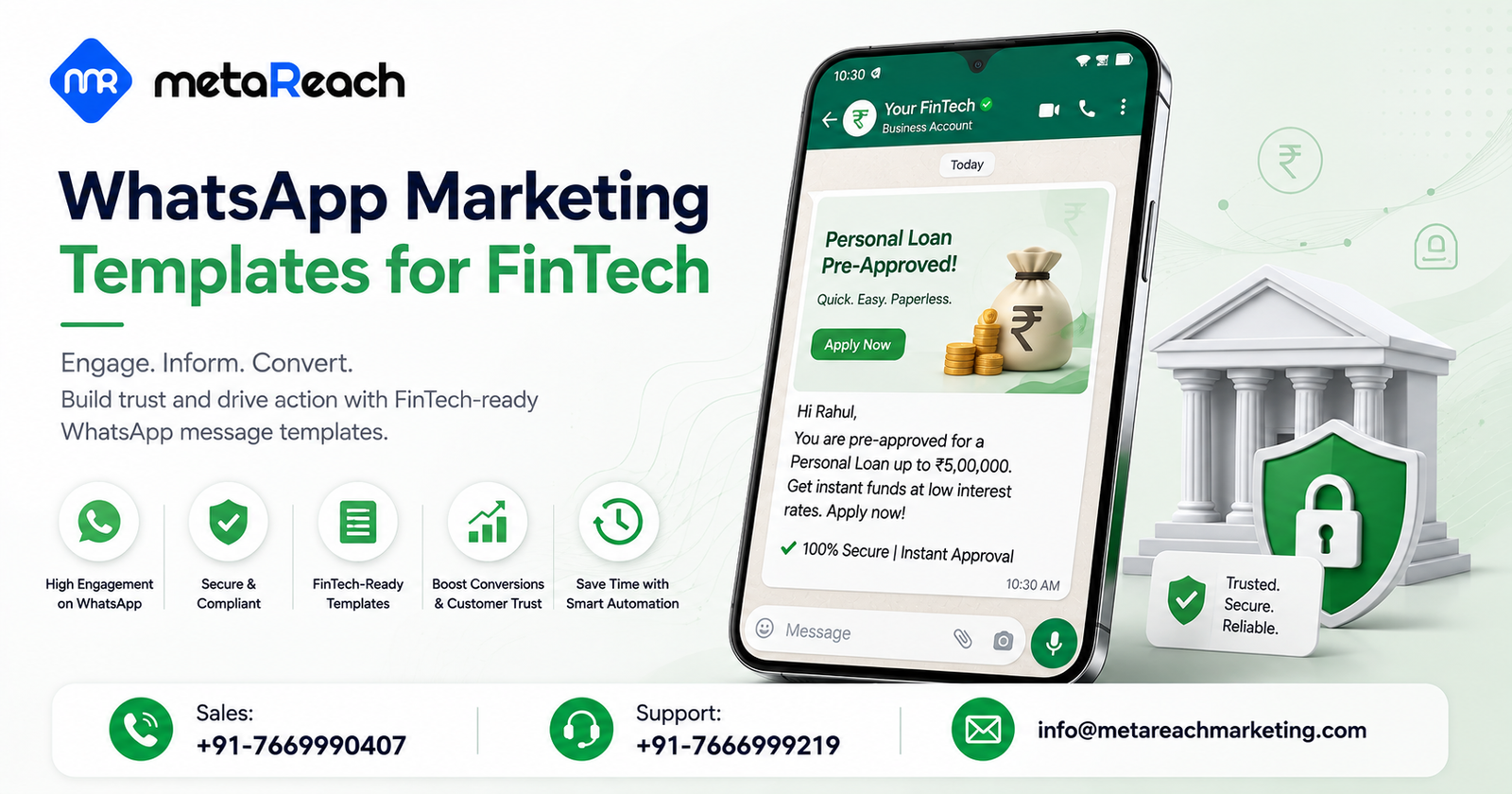
Fintech companies live and die by how quickly they can reach a customer with the right information at the right moment — a payment reminder, a loan approval, a KYC alert. WhatsApp has become the obvious channel for this because people actually open it, unlike email or a generic SMS that gets lost in the noise. But there’s a catch fintech teams run into again and again: WhatsApp doesn’t let businesses message customers freely. Once the standard 24-hour conversation window closes, every outbound message has to come from a template that Meta has already reviewed and approved.
Why This Approval Step Exists
It’s tempting to see template approval as red tape, but it’s really a quality filter, and for fintech specifically, it matters more than for most other industries. Financial messages touch money, personal data, and trust in ways a restaurant’s promotional blast never will. A poorly worded or misleading template sent to thousands of customers isn’t just a compliance risk — it can genuinely damage a brand’s credibility. The approval process exists to catch exactly this kind of problem before it reaches a customer’s phone.
The Rules That Trip Up Most Fintech Teams
Most template rejections come down to a handful of avoidable mistakes. Templates can’t start or end with a placeholder — meaning a message can’t open or close with something like a bare {{1}} with no surrounding context. Requests for sensitive information such as full card numbers or passwords are an automatic red flag. Mixing two languages in one submission, using shortened links instead of full URLs, and stacking more than two calls-to-action into a single message all tend to get flagged as well. None of these rules are secret; they’re published, but plenty of fintech teams submit templates without checking them first and then wonder why the review comes back rejected.
What a Good Template Actually Looks Like
The templates that sail through review tend to share a few traits. They focus on one purpose only — a payment reminder doesn’t also try to cross-sell a new product in the same message. They include realistic sample values for every placeholder, so a reviewer can see exactly what a customer would receive rather than a template full of unexplained variables. And they keep the tone direct and professional: “Hi {{1}}, your EMI of ₹{{2}} is due on {{3}}. Pay now to avoid late charges” reads clearly and does its job without sounding like a sales pitch. Loan approvals, KYC reminders, and OTP alerts all follow this same pattern — clear, single-purpose, and personalized without being cluttered.
A Practical Path From Draft to Approval
The process itself isn’t complicated once a business knows the steps. It starts with a verified Meta Business account and an approved WhatsApp Business profile — without these, a template can’t even be submitted. From there, the message body gets drafted with placeholders and sample values, submitted through WhatsApp Business Manager or a BSP, and reviewed by Meta, usually within 24 hours. Even after approval, it’s worth keeping an eye on the template’s quality rating, since a pattern of negative feedback from customers can eventually put an account at risk. Submitting during weekday business hours and avoiding mid-review edits both tend to shave time off the process.
Why Fintechs Often Bring in Outside Help
Given how specific these rules are, and how costly a rejected or blocked campaign can be for a growing fintech, many companies choose not to navigate this alone. Meta Reach Marketing’s detailed guide on WhatsApp template approval for fintech businesses walks through the full approval process, the most common rejection reasons, and real template examples that fintech companies use for payment reminders, loan status updates, and KYC alerts — useful reading for any fintech team trying to get this right the first time.
It’s also worth remembering that template approval isn’t a one-time hurdle — it’s an ongoing discipline. WhatsApp periodically reviews the quality signals tied to an approved template, including block rates and negative feedback from recipients, and a template that once sailed through review can still be paused if customers start reacting poorly to it. Fintech teams that treat their message copy as something to revisit and refine, rather than a box checked once, tend to keep their approval rates and customer engagement healthier over the long run.
The Bigger Picture
Getting a template approved is really just the entry ticket. The larger goal for any fintech is using WhatsApp as a channel that customers trust rather than tune out — timely reminders, clear updates, and messages that respect the weight financial communication carries. Done well, this builds the kind of quiet, everyday trust that keeps customers engaged with a fintech brand long after the first onboarding message.
Fintech businesses looking for end-to-end support — from WhatsApp Business API setup to DLT-compliant SMS, OTP delivery, and RCS messaging — can explore the full range of communication services offered by Meta Reach Marketing, a Noida-based enterprise communication agency working with fintech, banking, and NBFC clients across India.