Ask ten businesses in India what they pay for bulk SMS, and most will quote you a per-SMS rate without blinking. Ask what else is bundled into that number — or quietly left out of it — and the conversation gets a lot less confident. That gap is exactly where businesses end up overpaying, and it’s worth understanding before signing up with any provider in 2026.
On the surface, SMS pricing in India looks simple: a few paise per message. In practice, the real cost of a bulk SMS campaign is shaped by far more than the number printed on a pricing page.
Why the Per-SMS Rate Rarely Tells the Whole Story
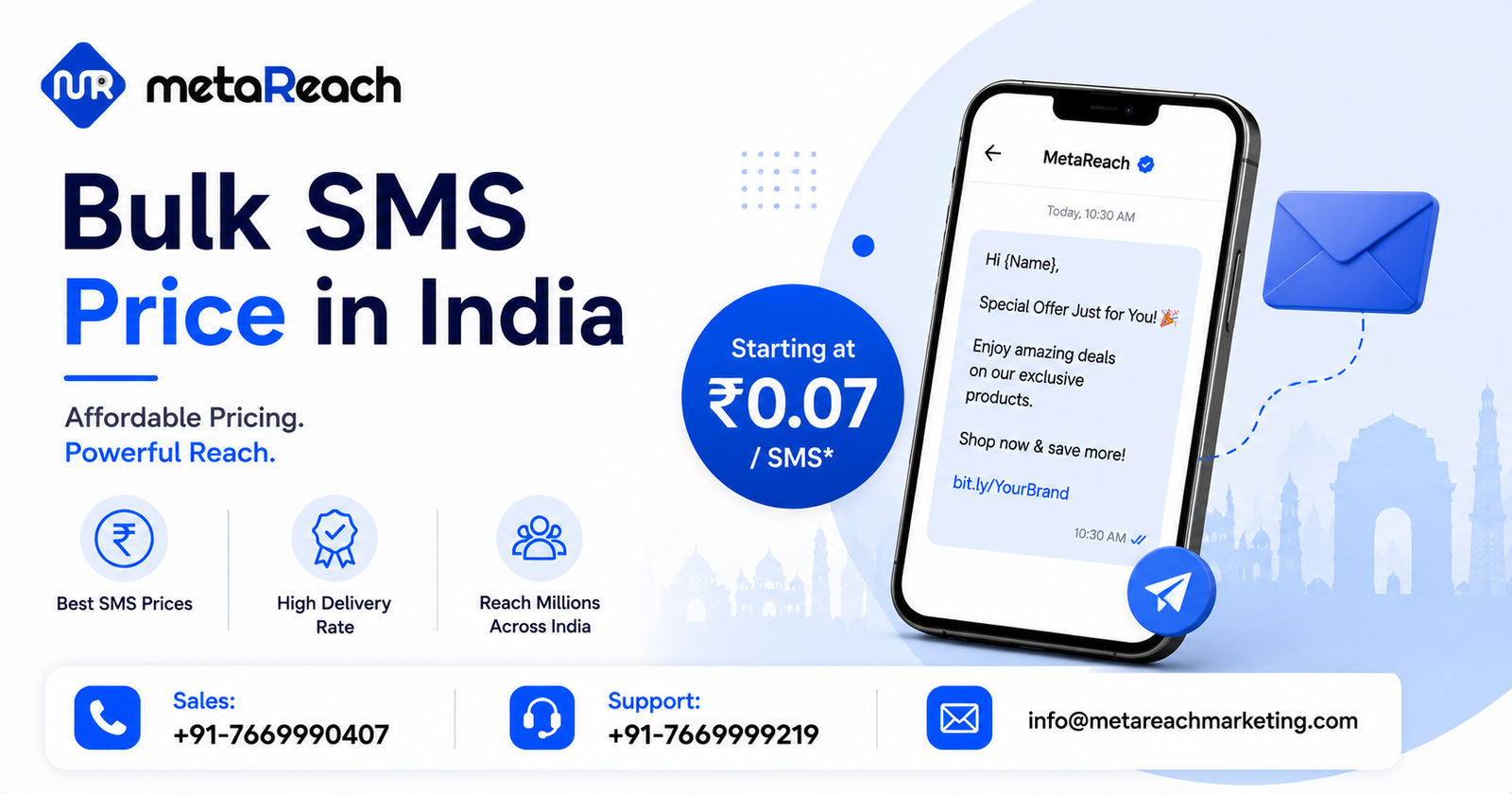
Most providers advertise a headline rate somewhere between ten and fifteen paise per SMS, and on paper the differences look negligible. But two costs sit outside that number and rarely get mentioned upfront: DLT registration and hidden service fees.
Every business sending commercial SMS in India is legally required to complete TRAI’s DLT (Distributed Ledger Technology) registration — entity registration, sender header setup, and template approval. The telecom operator’s own DLT fee is fixed and unavoidable no matter who you sign up with. What varies wildly is the service charge providers add on top of that just to walk you through the paperwork — commonly anywhere from a few thousand rupees upward. For a first-time business, that one-time charge can quietly outweigh months of savings from a slightly lower per-SMS rate.
The Three Things That Actually Move the Price
Route matters more than most businesses realise. Direct operator routes through Jio, Airtel, or Vodafone Idea deliver faster and more reliably, especially for OTPs and transactional alerts, but usually cost slightly more than aggregator routes commonly used for lower-priority promotional sends.
Volume is the second lever — many providers use tiered pricing that rewards very high senders and quietly penalises smaller ones, which makes it worth asking whether a quoted rate is flat or scales with commitment.
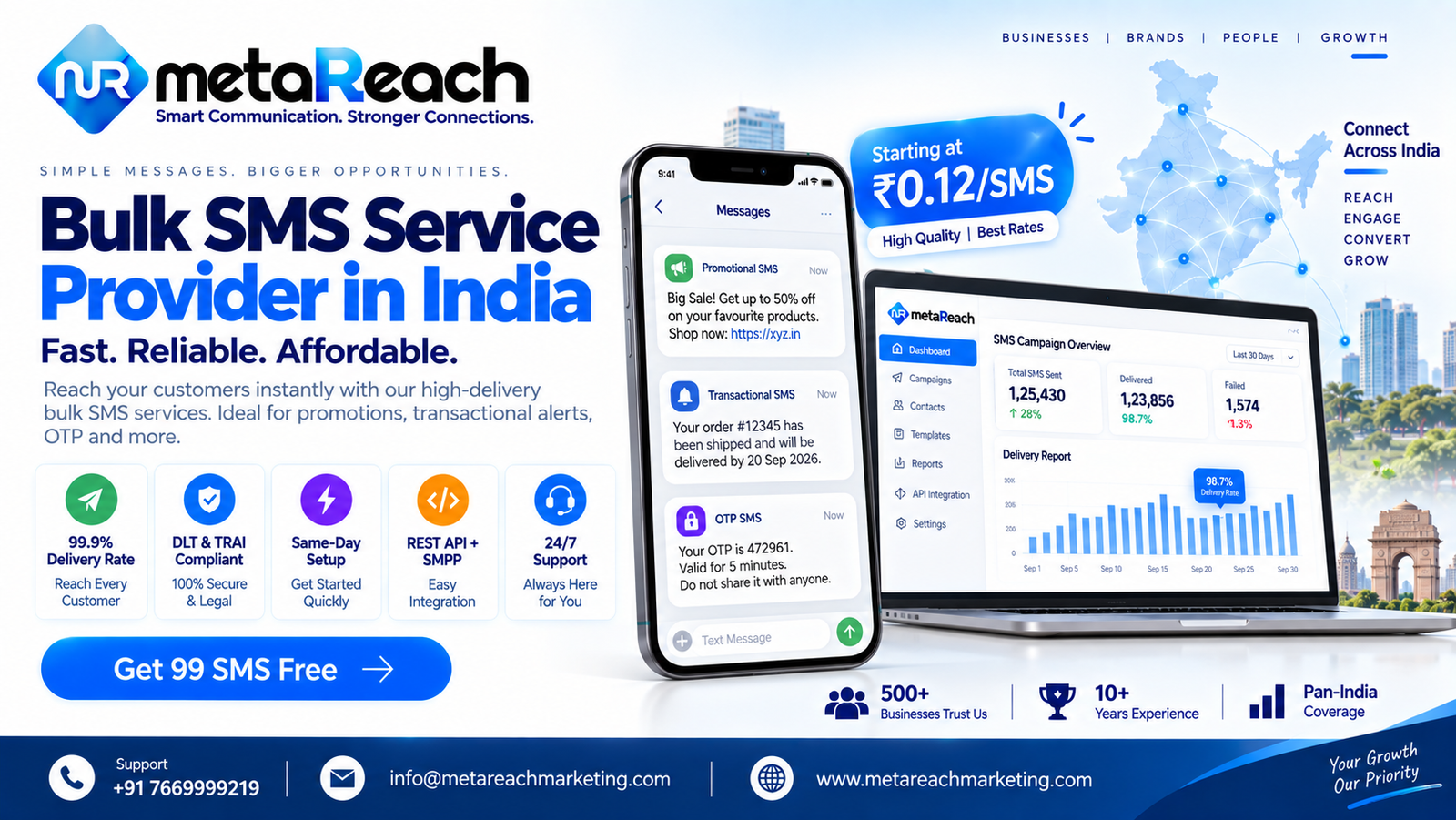
And message type — promotional versus transactional versus OTP — changes not the price so much as the delivery rules. Promotional SMS is blocked on DND numbers and restricted to daytime hours; transactional and OTP messages bypass DND entirely and run 24/7 on priority routes. Getting this classification wrong doesn’t just cost money — it can mean a compliance violation or a message that simply never reaches DND-registered customers.
A Simple Way to Compare Providers Properly
Instead of comparing a single number across quotes, it helps to lay out the full cost picture side by side — per-SMS rate for each message type, whether DLT setup is free or charged separately, whether there’s a minimum monthly commitment, and what the free trial actually includes. A detailed breakdown of current bulk SMS pricing in India — including volume-wise estimates by industry and a direct comparison against other well-known providers — makes this a lot easier to evaluate properly instead of relying on a single quoted figure over a phone call.
Budgeting Realistically by Industry
The right way to budget isn’t a flat guess — it depends on what a business actually sends. A retail brand running order confirmations plus festive promotions behaves very differently, cost-wise, than a clinic sending appointment reminders or a bank sending OTPs at high priority. Mapping expected monthly volume against message type before signing a contract avoids the common trap of underestimating spend once a campaign actually scales.
Why This Is Worth Getting Right in 2026
SMS remains one of the cheapest, most reliable channels available to Indian businesses — but only when the pricing is genuinely transparent. With WhatsApp Business API and RCS now competing for the same marketing budget, providers who bundle DLT registration, deliver on direct operator routes, and skip hidden service fees end up being the more cost-effective choice even when their headline rate looks identical to a competitor’s.
Meta Reach Marketing is a Noida-based communication agency that has run bulk SMS, WhatsApp, and RCS campaigns for over 500 businesses across India for more than a decade, with a pricing model built around flat, transparent rates and DLT handled at no extra charge as part of onboarding — rather than positioned as a separate line item after the sale.
Final Thought
Before choosing a bulk SMS provider purely on the per-SMS number, it’s worth spending fifteen minutes comparing the full picture — DLT costs, route quality, message-type rules, and hidden fees. That small bit of diligence is usually what separates a campaign that scales profitably from one that quietly bleeds budget month after month.