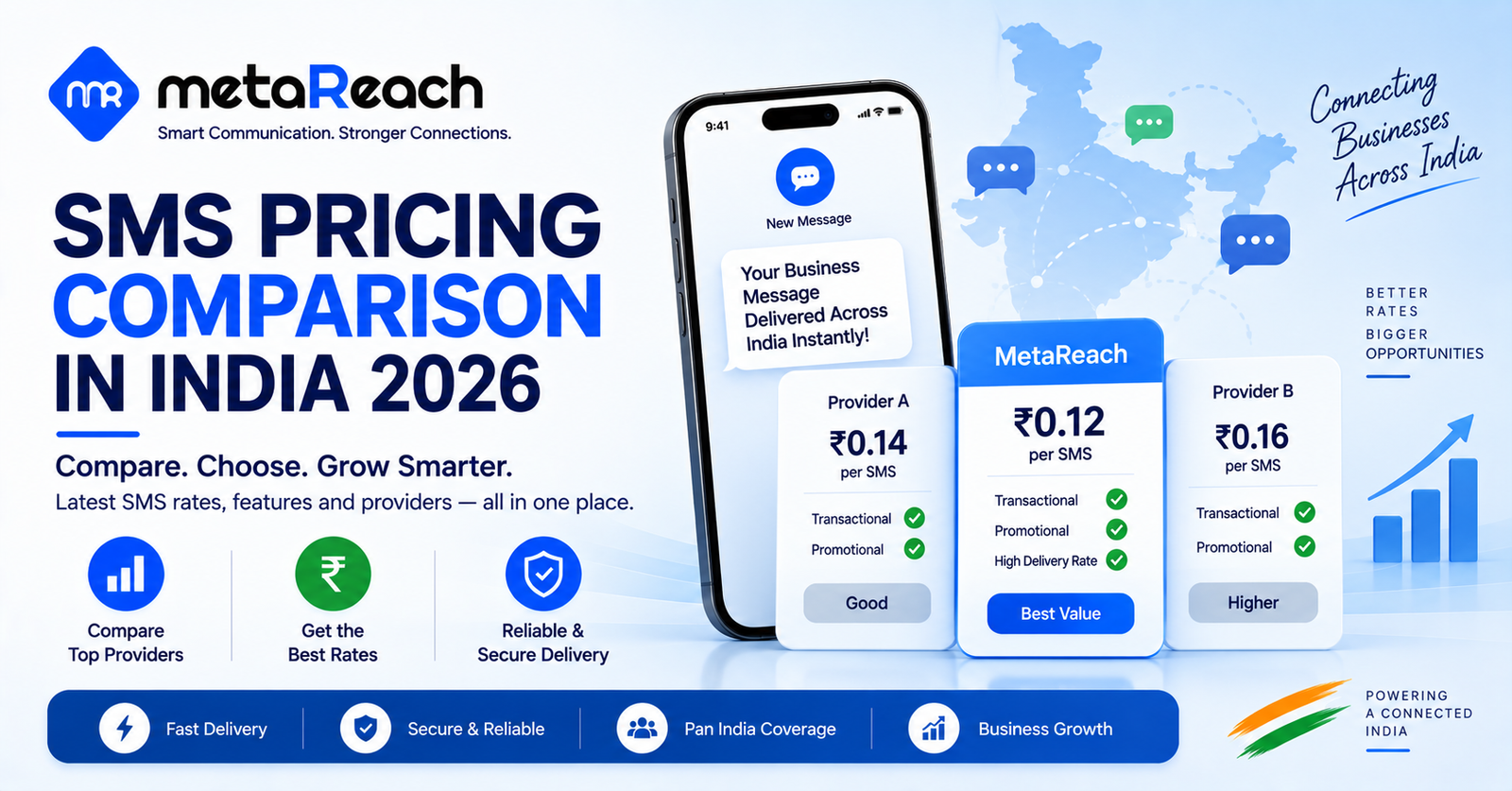
Bulk SMS still quietly powers a huge share of business communication in India — OTPs, order confirmations, appointment reminders, and promotional blasts all run through it, often without customers even thinking about which provider is sending them. But for the business footing the bill, the provider you pick can make a real difference to your monthly spend, especially once volumes climb into the tens of thousands of messages. A quick look at a bulk SMS pricing comparison for India in 2026 makes it obvious just how much per-SMS rates, setup fees, and minimum volume requirements vary from one provider to the next.
Per-SMS Rate Is Only Part of the Real Cost
It’s tempting to compare bulk SMS providers purely on the headline per-message rate, but that number rarely tells the whole story. Some providers quote an attractive base rate and then add setup fees, charge separately for DLT registration assistance, or require a minimum monthly volume that smaller businesses simply can’t commit to. Others bundle SMS as an add-on to a bigger voice or CPaaS platform, which can work out more expensive if SMS is genuinely your primary channel rather than a secondary feature. The only way to get an honest comparison is to add up the full monthly cost at your actual expected volume — not just the rate printed on a pricing page.
DLT Registration Is Non-Negotiable — and Often Underpriced by Buyers
Every business sending bulk SMS in India is required to complete TRAI’s DLT (Distributed Ledger Technology) registration — entity registration, sender ID setup, and template registration for each message type. Skipping this isn’t really an option: messages simply get blocked by telecom operators once the requirement kicks in. What a lot of businesses don’t realise upfront is that while the government’s own DLT fee is fixed, individual providers charge very differently for helping with the actual setup — some handle it as part of onboarding, others bill it as a separate service fee. That difference can add a meaningful amount to your first-year cost if you don’t ask about it before signing up.
Promotional, Transactional, and OTP SMS Aren’t Priced the Same for a Reason
Not all bulk SMS is equal, and pricing usually reflects that. Promotional SMS is restricted by TRAI’s DND rules and can only be sent during certain hours to non-DND numbers, which keeps its cost relatively low. Transactional and OTP messages, on the other hand, need to reach every number — including those on DND — at any hour, often through priority routes that guarantee faster delivery. That extra reliability is why OTP and transactional rates tend to sit slightly higher across the industry. Businesses evaluating providers should check pricing separately for each message type rather than assuming one flat rate applies everywhere, since a provider that looks cheap on promotional SMS isn’t necessarily cheap on OTP delivery.
Minimum Volumes Quietly Rule Out a Lot of Options for Smaller Businesses
One detail that trips up a lot of startups and small businesses is minimum volume commitments. Several enterprise-grade CPaaS platforms are built around large-scale senders — think millions of messages a month — and simply aren’t priced or structured for a business sending five or ten thousand messages. If you’re a growing business testing SMS as a channel for the first time, it’s worth specifically checking whether a provider has a minimum volume requirement or a high entry-level setup fee, because those constraints can rule out otherwise reasonable-looking pricing before you’ve sent a single message.
Delivery Speed and Support Matter More Than People Expect
Price comparisons tend to focus purely on cost, but delivery reliability and support responsiveness are just as important in practice — particularly for OTP messages, where a few seconds of delay can mean a frustrated customer abandoning a login or a payment. Direct operator routing with Jio, Airtel, and Vi generally delivers faster and more reliably than routes that pass through multiple intermediaries. Similarly, a provider offering real, reachable support — rather than a ticket queue with a multi-day turnaround — can save enormous frustration when a campaign needs an urgent fix or a template gets rejected the night before a launch.
How to Actually Compare Providers Before Committing
The most reliable way to shortlist a bulk SMS provider is to work out your expected monthly volume, request pricing for promotional, transactional, and OTP SMS separately, and ask directly whether DLT setup, sender ID registration, and API access are included or billed extra. It’s also worth asking about minimum commitments and cancellation terms before signing anything longer than a month-to-month agreement. A detailed SMS pricing comparison for India is a useful starting point for seeing how rates, DLT handling, and support models differ across providers before you request individual quotes. For businesses that also need this messaging layer connected with email, WhatsApp, or broader digital marketing campaigns, MetaReach Marketing runs SMS alongside its other communication and growth services for clients across India.
The Bottom Line
Bulk SMS pricing in India looks simple on the surface — a rupee figure per message — but the real cost only becomes clear once setup fees, DLT handling, minimum volumes, and message-type differences are factored in. Businesses that take the time to compare providers properly, rather than picking whichever quote arrives first, usually end up with lower total costs and fewer surprises once volumes scale. In a market where margins on messaging are thin and customer experience depends on speed and reliability, that extra bit of diligence upfront tends to pay for itself many times over.