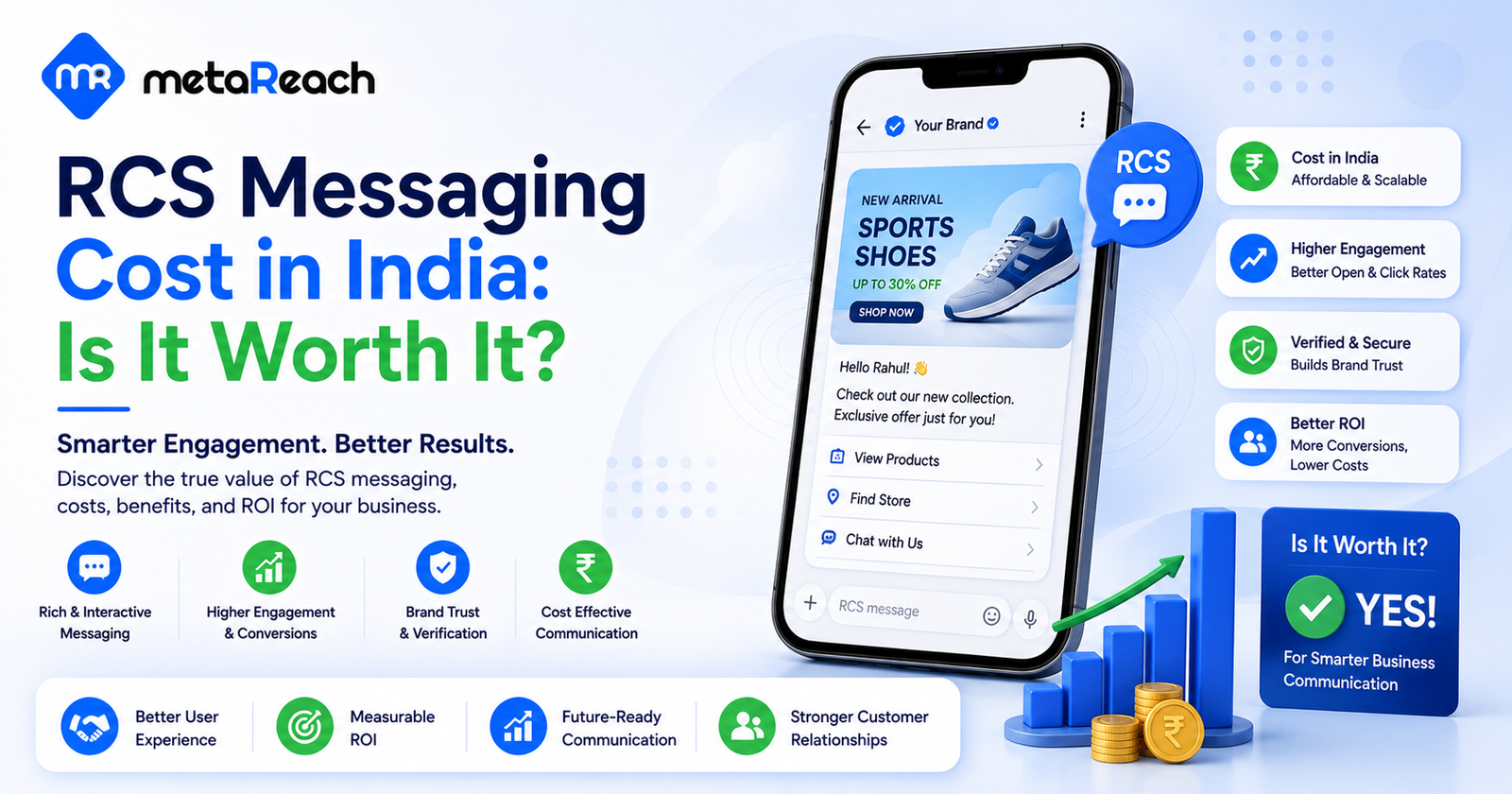
Every business messaging team in India runs into the same question sooner or later: SMS is cheap and reliable, so why pay more for RCS? The honest answer is that RCS does cost more per message, but the extra spend only makes sense for certain kinds of communication. Before rolling RCS into your stack, it helps to understand exactly where the price difference comes from and where it actually pays off.
Why RCS Messages Cost More Than SMS
Rich Communication Services (RCS) isn’t just a fancier text message — it’s a different kind of infrastructure. A plain SMS is a 160-character packet that fires off and disappears. RCS, on the other hand, supports images, carousels, buttons, read receipts, and verified sender badges, all of which need persistent sessions and heavier bandwidth on the carrier side. Add in the Google and carrier verification steps needed to get a brand a verified RCS sender profile, and it’s easy to see why providers charge a premium. None of this means RCS is overpriced; it genuinely costs more to deliver.
When the Premium Pays for Itself
The extra cost tends to justify itself when a message actually needs the richer format. Order tracking with a live map, appointment cards with a one-tap reschedule button, or a promotional carousel showcasing multiple products are all things plain SMS simply can’t do. Read receipts also matter more than they seem — for time-sensitive alerts like OTPs or delivery windows, knowing a message was seen (not just delivered) lets a business trigger a fallback SMS only when it’s actually needed, which can offset some of the cost elsewhere. Verified sender badges help too, especially for payment confirmations or account alerts where trust and spam-avoidance matter.
When Plain SMS Still Wins
RCS isn’t the right call for every use case. High-volume, low-value pings — think delivery status updates sent by the millions — are still cheaper and more sensible on SMS, since the per-message cost gap adds up fast at scale. The same is true for any message that absolutely must reach every device, regardless of type; SMS’s universal reach beats RCS whenever the audience’s device mix skews older or is simply unknown. Paying RCS rates for a message that silently falls back to SMS anyway defeats the purpose.
Does RCS Replace SMS, or Work Alongside It?
One misconception worth clearing up: adopting RCS doesn’t mean abandoning SMS. Almost every business running RCS campaigns in India keeps SMS as an automatic fallback for devices or networks that don’t support RCS. The message is sent as RCS first; if it can’t be delivered that way, the platform quietly falls back to SMS so reach is never compromised. This is exactly why device mix matters so much when weighing the cost — if a large share of your audience already uses Google Messages or Samsung Messages with RCS enabled, you’re paying the premium for an experience most recipients will actually see. If not, a chunk of your “RCS” spend is really just an expensive way of sending SMS.
A Practical Way to Decide
Rather than making an all-or-nothing switch, most businesses get better results by segmenting their messaging. Keep high-volume, low-value transactional pings on SMS, and move engagement-sensitive messages — promotional carousels, payment confirmations, rich appointment reminders — to RCS. Running that hybrid setup for four to six weeks while tracking click-through and response rates gives a business real data on whether RCS is earning its keep, instead of guessing.
For a full breakdown of this exact decision framework, along with the cost factors driving RCS pricing in India, MetaReach Marketing’s detailed guide on RCS vs SMS costs is a useful read — it walks through when the premium is worth paying and when it isn’t, with a clear segment-testing approach businesses can apply immediately.
The Bottom Line
RCS in India will almost always cost more than SMS per message — that part isn’t in question. What matters is whether the message you’re sending actually benefits from rich media, read receipts, and verified branding. If it does, the engagement lift usually justifies the spend. If it doesn’t, plain SMS remains the more efficient choice. Testing a small segment of your messaging volume before committing your full budget is the safest way to find out which side of that line your business sits on.
It also helps to remember that cost-benefit analysis isn’t a one-time exercise. Carrier pricing shifts, RCS device penetration keeps growing across India, and customer expectations around rich, verified messaging are climbing every year. A use case that doesn’t justify RCS today may well justify it in twelve months, so it’s worth revisiting the decision periodically rather than treating it as settled.
Businesses looking to run this kind of segment test, or simply wanting expert guidance on choosing between RCS, SMS, and WhatsApp for their messaging mix, can explore the full range of enterprise communication services offered by Meta Reach Marketing, a Noida-based messaging and digital marketing agency serving businesses across India.