A few years ago, a marketing manager choosing between messaging channels in India had a simple decision to make: SMS was cheap, reliable, and everyone used it. That calculus is no longer so straightforward. Rich Communication Services, better known as RCS, has quietly moved from a nice-to-have to a genuine line item on Indian marketing budgets, and the businesses figuring it out early are the ones seeing the biggest lift in engagement.
The confusion usually starts with price. RCS messages cost more than plain SMS, and on a spreadsheet that looks like a step backward. But the per-message price was never the number that mattered. What matters is how many messages it actually takes to get a customer to act, and that is where RCS quietly wins.
Why the Per-Message Price Is the Wrong Question
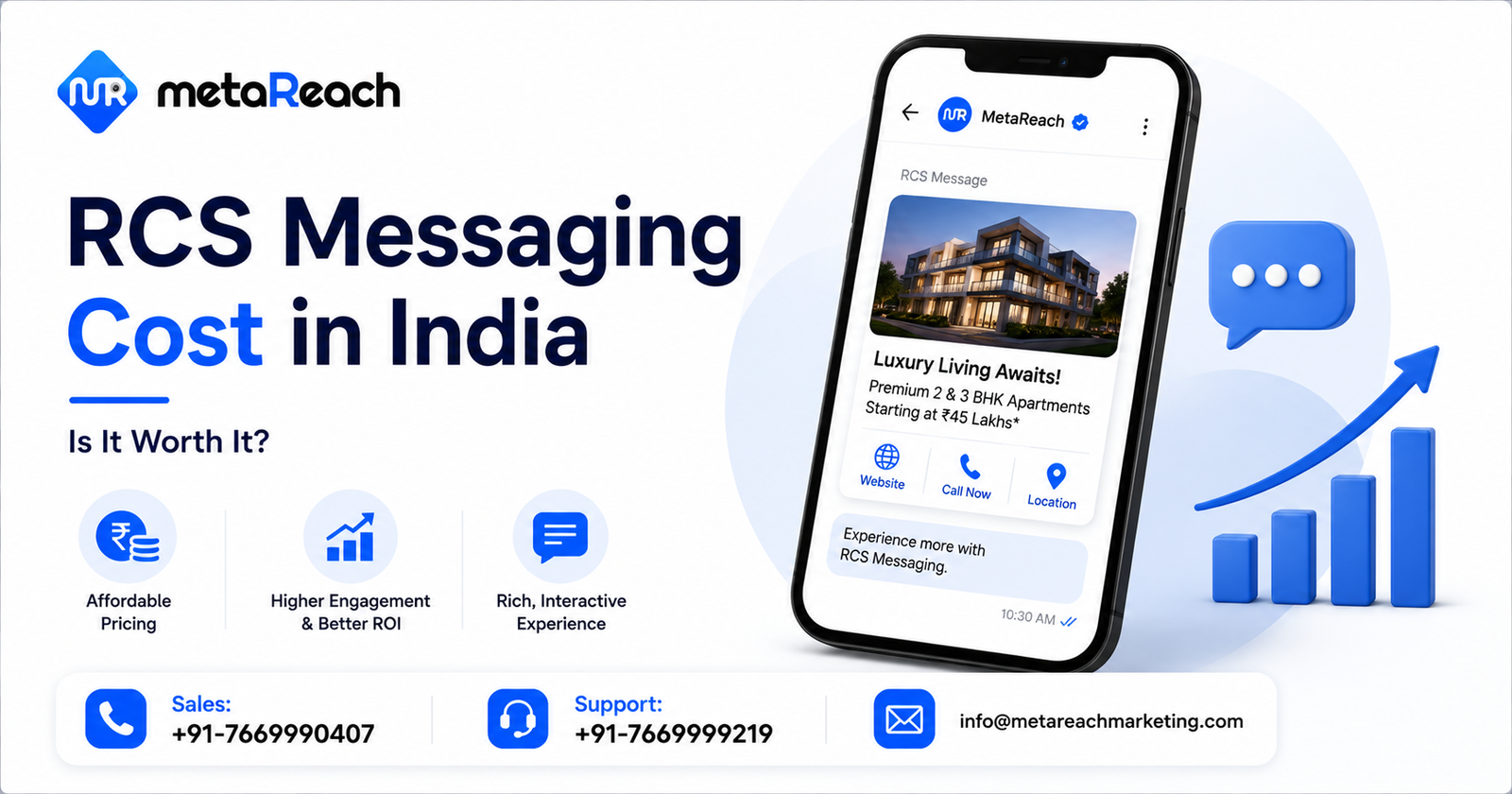
An SMS is text on a screen. An RCS message can carry a product image, a carousel of options, and a tappable button that completes a purchase without the customer ever leaving the conversation thread. When a channel removes friction between intent and action, fewer messages are needed to close the loop — which is precisely why cost-per-click on RCS campaigns in India has been reported running well below SMS benchmarks, even though the sticker price per message is higher.
This is also why comparing channels purely on rate cards misses the point. A business sending a one-line OTP has no use for a rich card — plain SMS remains the right, and cheaper, tool for that job. But a cart-recovery message, a loan pre-approval offer, or a real-estate enquiry follow-up behaves completely differently when the customer can respond with a tap instead of typing back or opening an app. Anyone budgeting for RCS in 2026 should start with the use case, not the price sheet — and
a detailed breakdown of what RCS actually costs in India is a useful place to work through the numbers before committing budget to a pilot.
The Infrastructure Question Nobody Asks Early Enough
India’s three major telecom operators — Jio, Airtel, and Vodafone Idea — now all support RCS through Google’s platform, which means the network-level groundwork is done. What is still inconsistent is pricing and device coverage. Android dominates the Indian smartphone market and handles RCS features reliably. iOS support exists but is patchier, tied to carrier and region, which is exactly why a solid RCS setup treats SMS as the safety net rather than an afterthought. If a customer’s device or network doesn’t support rich messaging, the message should fall back to SMS automatically, with no manual intervention and no dropped customer.
That fallback layer is often the difference between an RCS pilot that scales and one that quietly gets abandoned after two months. Businesses that get burned on RCS usually skipped this step, not because the channel underperformed, but because a chunk of their audience never got a message that looked good on either format.
Where the Numbers Actually Work in RCS’s Favour
Four categories keep showing up in early Indian RCS success stories: cart recovery, financial offers that need a verified sender to build trust, post-purchase upsell using product carousels, and support flows where a customer needs to pick from options rather than describe a problem in free text. Each of these involves a decision, not just information delivery — and decisions are exactly what a tappable, visual interface is built for.
Outside those categories, the case weakens fast. Simple delivery alerts, appointment reminders with no action required, and low-volume sends under a few thousand messages a month rarely justify the setup and per-message premium. The honest advice is to pilot on a single high-value journey — a top-customer segment, a specific cart-abandonment flow — measure it against the SMS baseline, and let the data decide whether to scale.
Getting Started Without Overcomplicating It
Businesses new to RCS don’t need to solve every use case on day one. Start with the journey that already has the clearest ROI story attached to it, build the rich version first and the SMS fallback second, and track read rate, button taps, and conversion — not just delivery. Those three numbers will tell you faster than any rate card whether the channel is earning its premium. Providers experienced with the Indian operator landscape, such as
MetaReach Marketing, can usually get a pilot campaign live within a day or two once the use case and creative are ready, which makes testing the channel a low-risk decision rather than a quarter-long commitment.
The channel isn’t a replacement for SMS or WhatsApp — most brands that get this right end up running all three, each doing the job it’s actually good at. But for the conversations that need a customer to do something rather than just read something, RCS has quietly become the smarter spend, not the more expensive one.