Every business shopping for a bulk SMS provider in India starts the same way — open five tabs, compare the per-SMS rate on each website, and pick whichever number looks smallest. It feels like a rational process. It’s also the fastest way to end up paying more than you expected once the first invoice arrives.
The headline rate on a pricing page is almost never the number you actually pay. What sits underneath it — DLT charges, setup fees, minimum volume commitments, GST, and how support is structured — usually moves the real cost more than the base rate itself. Understanding those variables before signing up is the difference between a predictable monthly SMS bill and one that keeps surprising you.
Why the Advertised Rate Rarely Tells the Whole Story
Bulk SMS pricing in India isn’t one number — it’s three. Promotional, transactional, and OTP messages are priced differently because they carry different delivery rules. Promotional SMS respects DND registration and only goes out during permitted hours. Transactional and OTP messages bypass DND and route through priority channels around the clock, which is exactly why they tend to cost more per message on most platforms.
A business comparing providers on promotional rates alone can end up with a nasty surprise the moment OTP volume scales up, because that’s often where the real price gap between providers opens. If OTP delivery is central to your product — a login flow, a payment confirmation, a booking verification — that rate matters more than any other number on the page.
The DLT Fee Nobody Budgets For
TRAI’s DLT registration is mandatory for every business sending commercial SMS in India — no exceptions, no workarounds. It covers entity registration, sender ID approval, and template registration for every message format you plan to send. The telecom-side fee is fixed and unavoidable, but what a provider charges on top of that, as a service fee for helping you complete it, varies enormously. Some absorb it into onboarding. Others treat it as a separate line item that shows up after you’ve already committed.
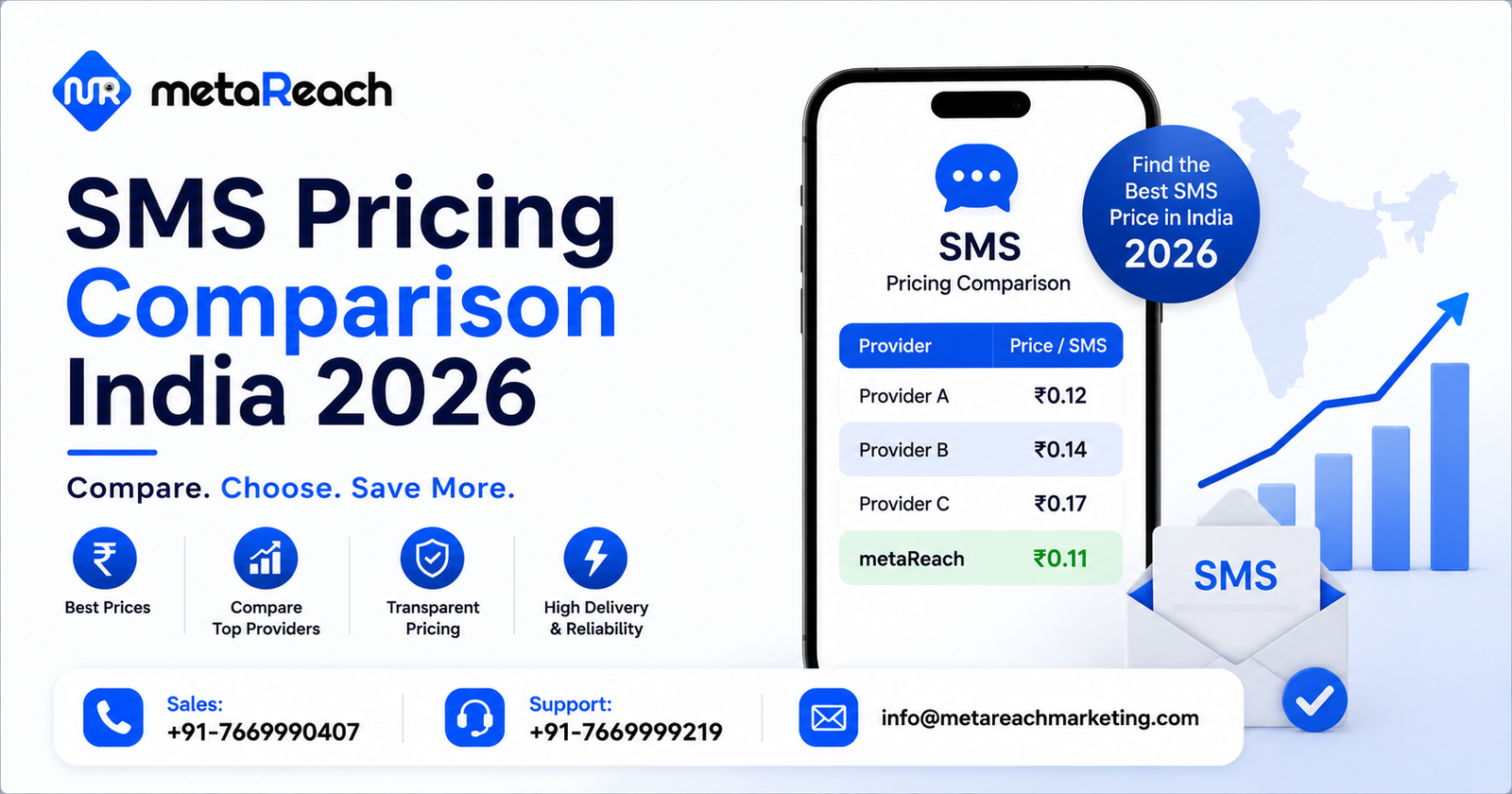
This is worth asking about directly before signing anything, because it’s exactly the kind of cost that doesn’t show up on a comparison table until it’s too late to negotiate. A detailed
SMS pricing comparison for India in 2026 is a useful reference point for seeing how DLT handling, minimum volumes, and per-message rates actually stack up across the major providers side by side, rather than relying on a single vendor’s own claims.
Minimum Volume Commitments Change the Math Completely
A rate that looks attractive at a glance can be functionally unavailable to a smaller business if it’s locked behind a high minimum monthly volume. Some enterprise-grade platforms simply aren’t built for a business sending a few thousand messages a month — the pricing model assumes six or seven-figure monthly volumes, and anything below that threshold either isn’t served at all or gets quoted a much higher effective rate.
This is where a growing business needs to be honest about its actual near-term volume rather than the volume it hopes to hit eventually. Locking into a plan built for enterprise scale before you need it usually means overpaying now for capacity you won’t use for months.
Support Quality Is a Cost, Even When It’s Not on the Invoice
A support ticket that takes two business days to get a response doesn’t show up as a line item, but it has a cost — a blocked campaign sitting idle, an OTP route misconfigured during a launch, a DLT template rejected with no clear explanation. Providers offering real-time phone or WhatsApp support tend to resolve these issues in minutes rather than days, and for anything time-sensitive like a flash sale or a product launch, that responsiveness is worth more than a marginal difference in per-message rate.
The businesses that get the best long-term value from bulk SMS in India are rarely the ones chasing the single lowest number on a pricing page. They’re the ones who ask about DLT handling upfront, confirm there’s no hidden minimum volume trap, and test support responsiveness before committing serious budget. Providers such as
MetaReach Marketing have built their pricing around exactly these pain points — flat per-message rates with no volume threshold, DLT handled as part of onboarding rather than a surprise add-on, and support that answers the same day an issue comes up.
Before choosing a provider, run the numbers at your actual expected volume, not a hypothetical one. Ask what happens to your rate if you double your sends. Ask exactly what DLT support includes. And ask how support tickets get resolved on a Sunday, because at some point, they will need to be. The provider that answers those questions clearly is usually the one that ends up cheaper in practice, even if its homepage number wasn’t the smallest one you saw.