If you run marketing or operations for an Indian business, you have probably experienced this at least once: your OTPs stop reaching customers, your promotional SMS blast shows a delivery rate of almost zero, and nobody on your team can explain why. The templates are approved. The sender ID looks fine on paper. Yet nothing lands in the recipient’s inbox.
Nine times out of ten, the missing piece is a compliance step that most businesses never hear about until something breaks — PE-TM Binding.
A Quick Refresher on DLT and Why It Exists
Before 2018, Indian mobile users were flooded with unsolicited SMS from anyone willing to pay a bulk messaging vendor. There was no reliable way to trace who actually sent a message or verify that a business was who it claimed to be. TRAI (the Telecom Regulatory Authority of India) responded by building the Distributed Ledger Technology, or DLT, platform — a blockchain-based registry that records every business, every sender ID, and every message template used for commercial SMS in the country.
Registering on DLT is the first step. But registration alone does not make your messages deliverable. That is where PE-TM Binding comes in.
What PE-TM Binding Actually Does
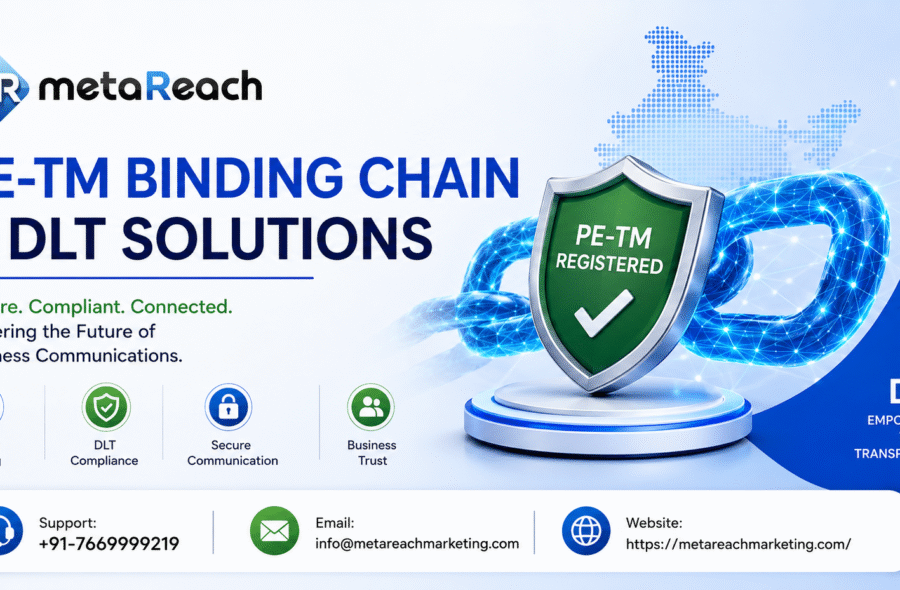
PE-TM Binding connects two parties on the DLT ledger: the Principal Entity (your business, referred to as PE) and the Telemarketer (your SMS service provider, referred to as TM). Until this binding is approved and active, no telecom operator will carry your traffic — even if your headers and templates show as approved in your portal.
Think of it as a digital handshake that has to be renewed and verified every time you register a new sender ID, approve a new template, or switch providers. Skip it, and your carefully worded, TRAI-approved template will still get silently rejected at the network level, often with no useful error message to point you in the right direction.
This single oversight explains a huge share of the “my OTPs suddenly stopped working” tickets that agencies and IT teams deal with. A detailed breakdown of the entire process — from header creation to template mapping to the exact troubleshooting steps to follow when messages fail — is laid out in this complete PE-TM Binding guide for 2026, which walks through each stage of the binding chain in plain language.
Where Businesses Typically Go Wrong
A few patterns show up again and again:
- Assuming approval means activation. A header or template can show “Approved” and still not be usable because it was never bound to the telemarketer actually sending the traffic.
- Switching SMS providers without rebinding. Moving vendors is common, but many teams forget that binding has to be redone for the new provider’s TM ID.
- Ignoring pending requests in the DLT portal. Binding requests sit in a queue waiting for PE approval. If nobody checks the portal regularly, campaigns stall for days without anyone noticing why.
- Using an unregistered telemarketer. No amount of correct paperwork on your side will help if the provider you hired was never registered as a telemarketer on the DLT platform in the first place.
Getting It Right the First Time
The good news is that PE-TM Binding is not complicated once you understand the sequence: register your entity, get your headers and templates approved, choose a properly registered telemarketer, and then formally approve the binding request from your DLT portal. It typically takes a matter of minutes to action on your end, though full activation across the chain can take a day or two.
For businesses that would rather not manage this manually — checking portal notifications, chasing rejected requests, re-binding after a provider switch — working with an agency that handles compliance end to end removes most of the friction. Providers like Meta Reach Marketing manage DLT registration, header binding, and template binding as part of their standard SMS onboarding, so campaigns launch without the usual back-and-forth.
The Bottom Line
DLT compliance in India is not optional, and PE-TM Binding is the step that most often gets overlooked between “registered” and “actually delivering messages.” If your OTPs, transactional alerts, or promotional campaigns are underperforming for no obvious reason, this is the first thing worth checking. A properly bound PE-TM chain is the difference between a campaign that reaches your customers and one that silently disappears into the network.
Before your next campaign launch, it is worth running through a basic compliance checklist: confirm your PE registration is active, verify every header and template shows as bound (not just approved), and send a small test batch to confirm delivery before committing your full send volume. That ten-minute check can save an entire campaign from failing quietly.