A surprising number of WhatsApp campaigns in Delhi NCR fail for reasons that have nothing to do with the actual offer or creative. The message never gets approved, or it gets approved and then quietly underperforms because the template was written for compliance rather than for a real human reading it on their phone. Before a business ever thinks about audience segmentation or timing, getting the template itself right is the single step that determines whether a campaign has any chance to work at all.
Why Template Approval Trips Up So Many First Campaigns
Every message a business sends through the WhatsApp Business API, outside of a live 24-hour conversation window, has to go through Meta’s template approval process first. This catches a lot of first-time senders off guard, since a template that reads perfectly reasonably to a marketing team can still get rejected for using overly aggressive promotional language, including a shortened or unfamiliar-looking link, or making claims that sound too close to spam patterns Meta actively filters for. A Delhi NCR business planning a festival sale campaign, for instance, needs its template approved well before the sale actually starts, since rejection and resubmission can eat several days that a time-sensitive campaign simply does not have to spare.
The Difference Between a Template That Gets Approved and One That Actually Converts
Getting a template approved is only half the battle. A technically compliant template can still fail to generate any real response if it reads like a form letter rather than a message from an actual business. The templates that perform best tend to open with something specific and personal, a customer’s name, an order number, or a reference to a past interaction, rather than a generic greeting, and they give the reader one clear, obvious next step through a button rather than asking them to figure out what to do next on their own. A message confirming a booking with a single ‘Reschedule’ button attached tends to generate far more engagement than the same information buried in a paragraph with no clear action attached to it.
Timing a Campaign Around How Delhi NCR Actually Moves
Delhi NCR’s daily rhythm genuinely differs by audience segment in ways that affect when a WhatsApp campaign should actually go out. A campaign targeting working professionals in Gurugram’s corporate corridor tends to see stronger engagement during a commute window or shortly after typical office hours end, while a campaign aimed at homemakers or retirees in a residential pocket of Noida or Ghaziabad may perform better mid-morning or early afternoon. Sending every campaign at the same fixed time regardless of audience, simply because that time happened to work for a previous unrelated campaign, tends to leave meaningful engagement on the table. Testing send times against a specific segment, rather than assuming one universal best time exists across an entire Delhi NCR customer base, consistently produces better open and response rates.
Why the First Reply Matters More Than the First Message
Once a customer replies to a campaign message, a 24-hour window opens during which a business can send free-form messages without needing further template approval. This window is where a genuinely well-run WhatsApp campaign separates itself from a one-way broadcast tool. A business that has a chatbot or a live agent ready to respond within minutes of that reply, rather than hours later, keeps a genuinely interested customer engaged at the exact moment their interest is highest. A response that arrives the next day, after that immediate curiosity has faded, converts at a noticeably lower rate even if the eventual message content is identical, which is exactly why response speed within that opened window deserves as much planning attention as the original campaign message itself.
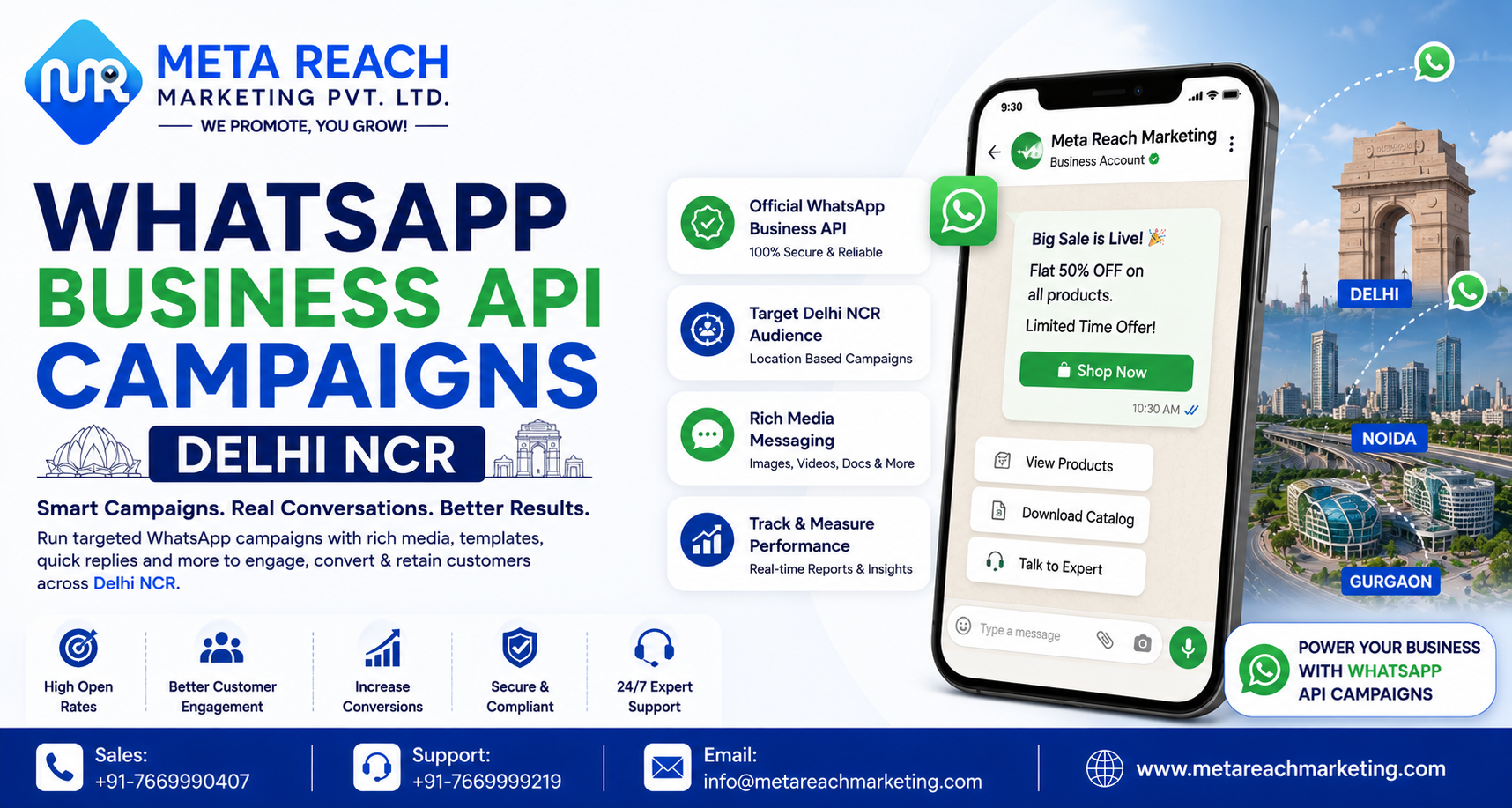
For a full, practical walkthrough of setting up official API access, building compliant templates, and running industry-specific campaigns across Delhi NCR, this guide to WhatsApp Business API campaigns in Delhi NCR covers the complete setup process along with real examples across real estate, e-commerce, healthcare, and education.
The Compliance Line That Protects a Business’s Ability to Keep Sending
It is worth taking Meta’s opt-in and spam policies seriously rather than treating them as a formality, since a flagged or banned WhatsApp Business number is genuinely difficult, and sometimes impossible, to recover. Messaging only customers who have explicitly opted in, keeping opt-out instructions clear and easy to use, and avoiding language that reads as aggressive or misleading protects a business’s long-term ability to use the channel at all. Businesses that treat compliance as an afterthought, chasing short-term campaign volume over sustainable sending practices, occasionally find their entire number blocked mid-campaign, which is a far more expensive mistake than the modest discipline it takes to avoid it in the first place.
What Separates a Campaign That Compounds From One That Doesn’t
The businesses seeing the strongest long-term results from WhatsApp campaigns in Delhi NCR are the ones treating each campaign as a source of data for the next one, rather than a one-off event judged only on its own immediate numbers. Reviewing delivery rate, read rate, and response rate after every send, and specifically testing one variable at a time, whether that is send time, template wording, or button placement, builds a genuinely improving campaign process over several months rather than a series of disconnected sends that never get meaningfully better.
Businesses across Delhi, Noida, Gurugram, and Ghaziabad looking to launch WhatsApp campaigns built around proper template strategy, audience-aware timing, and fast response handling can explore what MetaReach Marketing offers as an authorised Meta BSP with end-to-end campaign management for Delhi NCR businesses across every major industry.