Think about the last time you called a business and got stuck on hold, or reached the wrong department, or heard nothing at all because it was after hours. Most of us hang up and move on, and that is a lost customer. This is the exact problem that IVR, short for Interactive Voice Response, is built to solve. In this guide we look at how it works, where it helps, and what to check before you buy, with reference to the IVR services offered by MetaReach Marketing.
What an IVR System Actually Does
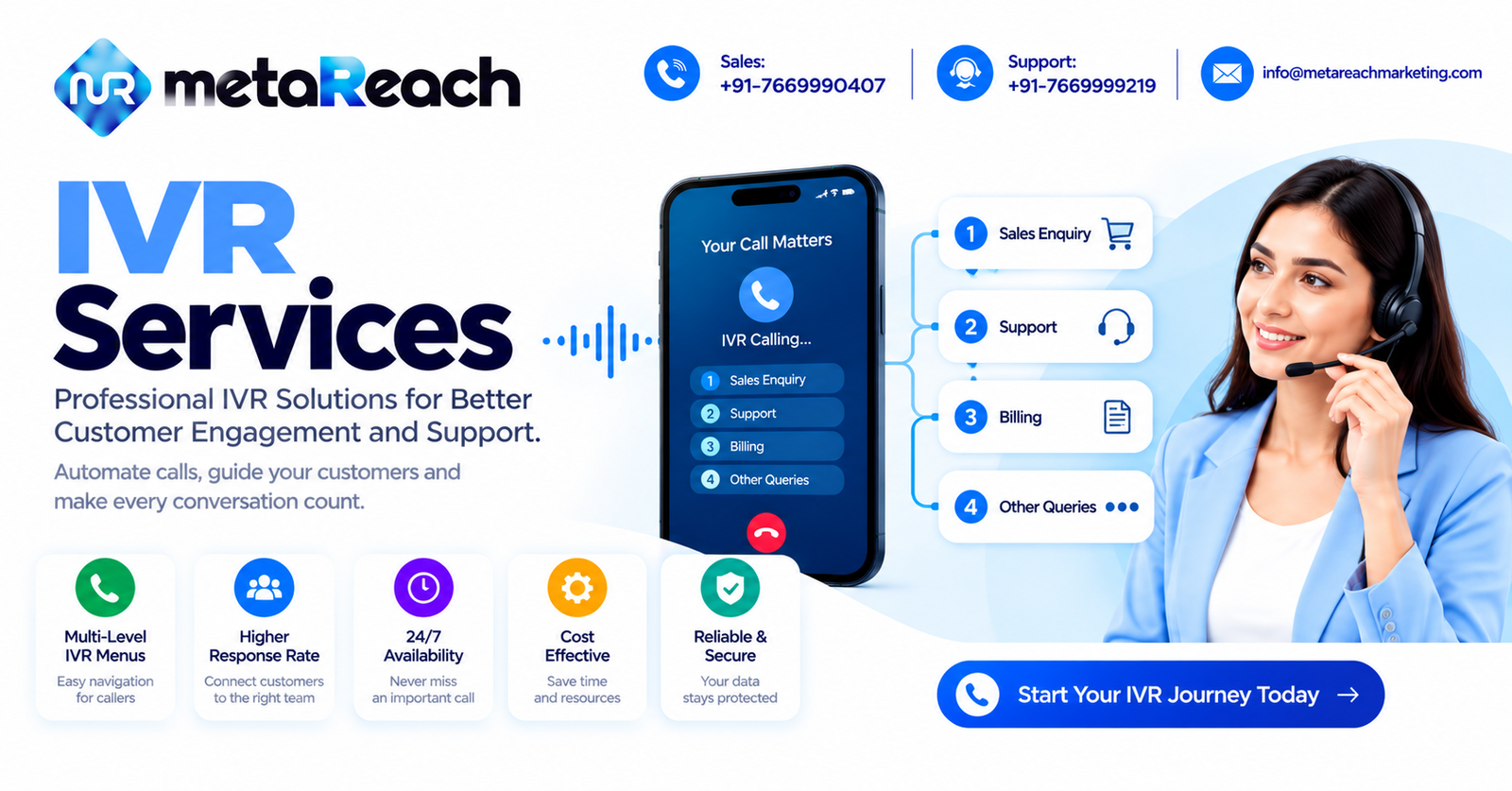
An IVR answers incoming calls automatically. A caller hears a greeting, often in their own language, and presses a key to pick an option such as sales, support or billing. The system then sends the call to the right person or team, or gives the information directly. If nobody is free, the caller can leave a voicemail or ask for a callback instead of being left in silence. Every call is logged, so you can see who called, what they chose and how long they stayed on the line.
The result is simple. Routine questions get answered without tying up your staff, and the calls that do reach your team arrive in the right place. If you want a deeper explanation, this IVR system guide covers the basics in plain language.
Features Worth Looking For
Not every IVR is set up the same way, so it helps to know what to ask for. Menu-based routing is the starting point, but good setups also allow time-based rules for business hours, weekends and holidays, and distribution across agent groups. Multilingual prompts matter in India, where one customer may prefer Hindi and the next English, which is why multi-language IVR is often a priority. Call recording, a dashboard for reports, and CRM or API connections round out the list. These let you log calls automatically, capture new leads and pull live details such as an order status into the menu.
One practical tip: keep menus short. Two or three levels are usually enough, and long menus tend to frustrate callers.
Toll-Free or Virtual Number?
The number your customers dial affects how many of them will call. A toll-free number means the business pays for the call, which removes a small but real barrier and suits support lines and national brands. A virtual or local number works well for sales lines and city-based campaigns. The right choice depends on your audience and budget, and the guide on toll-free vs virtual numbers walks through the trade-offs. You can also read about toll-free services directly.
Where IVR Fits Across Industries
IVR is useful anywhere calls come in repeatedly with similar questions. Clinics use it for appointment booking, so reception is not overwhelmed. Real estate teams route enquiries by project and schedule site visits. Banks and finance companies handle balance and loan queries, and often pair IVR with outbound voice reminders for EMI payments. Schools manage admission enquiries, while online stores use it for order tracking and delivery updates.
Many businesses combine inbound IVR with outbound calling. A reminder goes out through an OBD voice campaign, and anyone who responds lands in the IVR menu. It is a tidy loop that keeps the conversation going.
What Does IVR Cost?
Pricing varies more than people expect. MetaReach lists plans starting from ₹999 per month, with the final amount depending on call volume and your requirements. Factors include per-minute call charges, the number of menu levels, CRM integration, how many calls can run at once, how long recordings are stored, and toll-free number rental. Ask for a clear breakdown so there are no surprises later. For a closer look, see the page on IVR pricing in India.
Getting Started
A basic setup, covering the call flow, menu recording and routing, can go live within a couple of days according to MetaReach, and it needs no hardware or on-site installation. More involved builds with CRM links or several menu levels take longer. Before you begin, sketch your ideal caller journey on paper: who calls, what they want, and where each call should end up. It saves time and gives your provider a clear brief, which usually means fewer changes after launch and a menu your callers will actually find easy to follow. Also remember to add a notice if calls are recorded, and check current telecom rules with your provider.