For years, businesses in India had two realistic options for reaching customers on their phones: plain text SMS, or a WhatsApp campaign that depended on the customer having saved a business number and opted in. RCS — Rich Communication Services — has quietly become a third option, and in 2026 it’s mature enough that most businesses evaluating their messaging stack should at least understand where it stands.
The question that comes up most often isn’t whether RCS looks better than SMS. Rich cards, verified sender badges, and interactive buttons obviously look better than a plain text line. The real question is simpler and more practical: will it actually reach my customers?
The Short Answer: Yes, Mostly
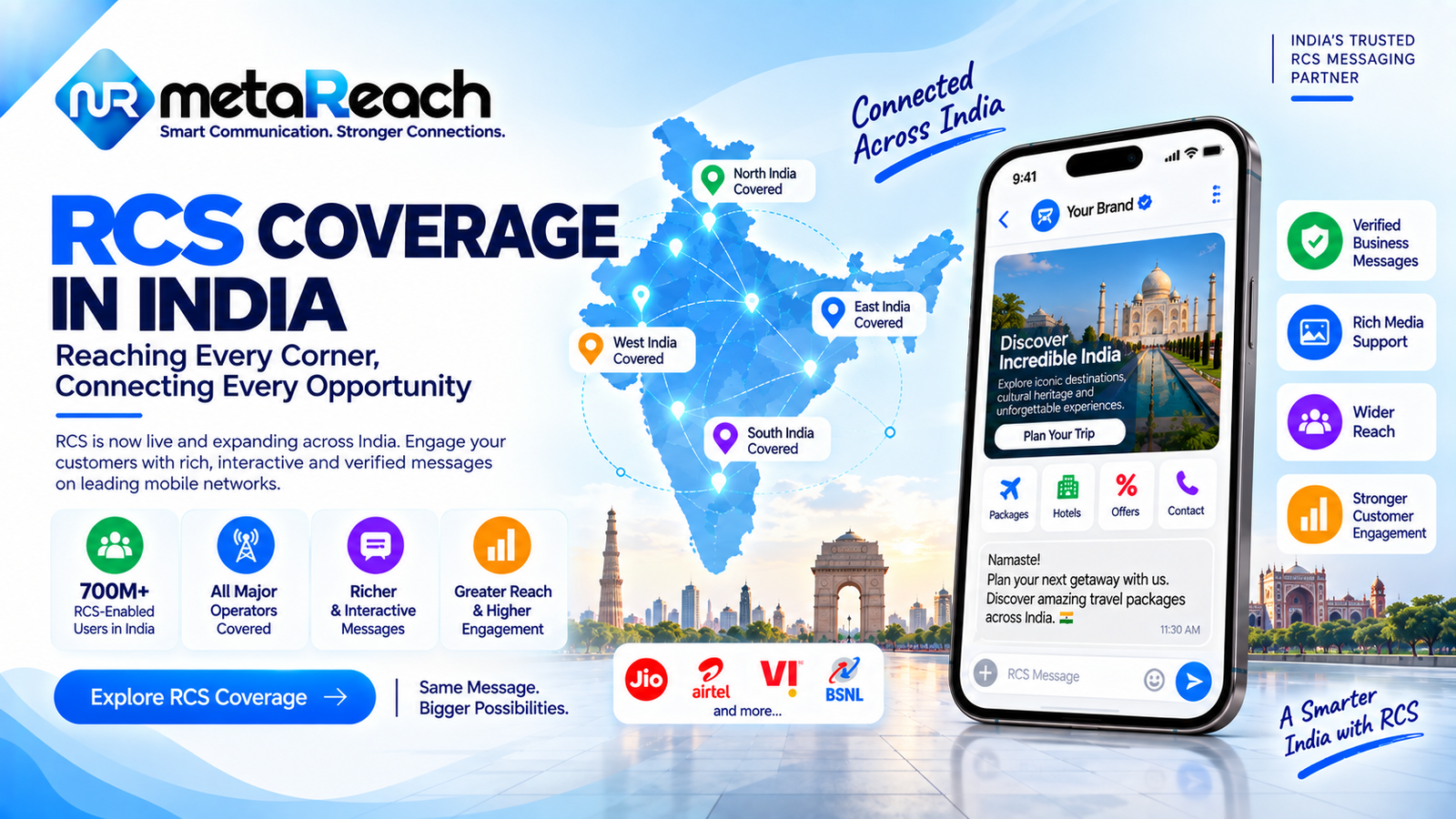
All three major Indian telecom operators — Jio, Airtel, and Vodafone Idea — now support RCS Business Messaging at the network level. Between them, they account for the overwhelming majority of mobile subscribers in the country, and coverage isn’t limited to metro cities. Because RCS support is tied to the operator and the device rather than the city, a customer in a Tier 2 or Tier 3 town on a Jio or Airtel connection can receive a rich RCS message just as reliably as someone in Mumbai or Bangalore, provided their phone meets the basic requirements.
A detailed breakdown of RCS network coverage across India lays out exactly how this splits by operator, city tier, and device type — useful reading for any business trying to estimate what share of its customer base RCS will actually reach before committing budget to the channel.
Android Carries the Weight
RCS on Android runs through Google Messages, which comes pre-installed as the default messaging app on the vast majority of Android phones sold in India. Since Android accounts for roughly four out of every five smartphones in the country, this single fact does most of the heavy lifting for RCS reach nationally. Any Android device running version 5.0 or above, with Google Messages active, is essentially RCS-ready out of the box — no separate app download, no customer action required.
The iPhone Question
Apple held out on RCS for years before adding native support in iOS 18, released in September 2024. That single update mattered more than most people realise, because it meant iPhone users in India — a smaller but high-value segment of the market — could finally receive verified, rich business messages instead of falling back to plain SMS every time. Support has continued to mature since: person-to-person RCS arrived first, with business messaging support for iPhone following in a later iOS update, rolling out gradually carrier by carrier rather than all at once.
What Happens When RCS Doesn’t Reach Someone
This is where most businesses get nervous, and reasonably so. Not every device is RCS-capable, not every network has completed a full rollout, and not every customer has an active internet connection at the exact moment a campaign goes out. Older phones, partial rural rollouts, and patchy connectivity all represent genuine gaps.
The practical answer is automatic SMS fallback. A well-built RCS platform attempts rich delivery first and, if that isn’t confirmed within a short window, quietly routes the same message as a plain SMS instead — so the campaign still lands, just without the visual polish. Handled properly, a business doesn’t need to pre-sort its contact list by device type; the routing logic handles it automatically, campaign by campaign.
Why This Matters for Campaign Planning
Understanding coverage isn’t just a technical curiosity — it directly affects how a business should think about RCS in its marketing mix. A retail brand targeting mostly metro, Android-heavy audiences can expect high RCS delivery rates and lean into the format’s visual advantages. A business with a large rural or older-device customer base should expect a meaningful share of messages to fall back to SMS, and should design creative accordingly rather than assuming rich media reaches everyone. Carrier-level spam filtering, added through partnerships between telecom operators and Google, has also improved overall trust in the channel — a factor that indirectly affects open rates, not just raw technical coverage.
Getting a Realistic Estimate Before Launching
Rather than guessing at reach, the more useful approach is to check coverage against an actual customer list — cross-referencing operator mix, device type, and geography before a campaign goes live. Most reputable messaging providers can run this kind of estimate on request, which turns “will RCS work for us” from a guess into a number worth planning around.
This is also where a full-stack communication partner has an advantage over a single-channel vendor. MetaReach Marketing runs RCS, SMS, and WhatsApp messaging under one platform, which means the fallback logic between channels is handled natively rather than stitched together across separate tools — a detail that matters more in practice than it sounds on paper, especially for businesses running campaigns at scale.
The Bottom Line
RCS coverage in India has reached a point where most businesses can adopt it with reasonable confidence, provided they build in a proper SMS fallback rather than treating RCS as an all-or-nothing channel. Network support from Jio, Airtel, and Vi, combined with Android’s dominant market share and Apple’s recent entry into the standard, means the majority of Indian mobile users can now receive rich business messages. The gaps that remain — older devices, partial rural rollout, connectivity dips — are real but manageable, and a well-designed fallback system means no customer is ever left without a message, even if it isn’t the prettiest version of it.