

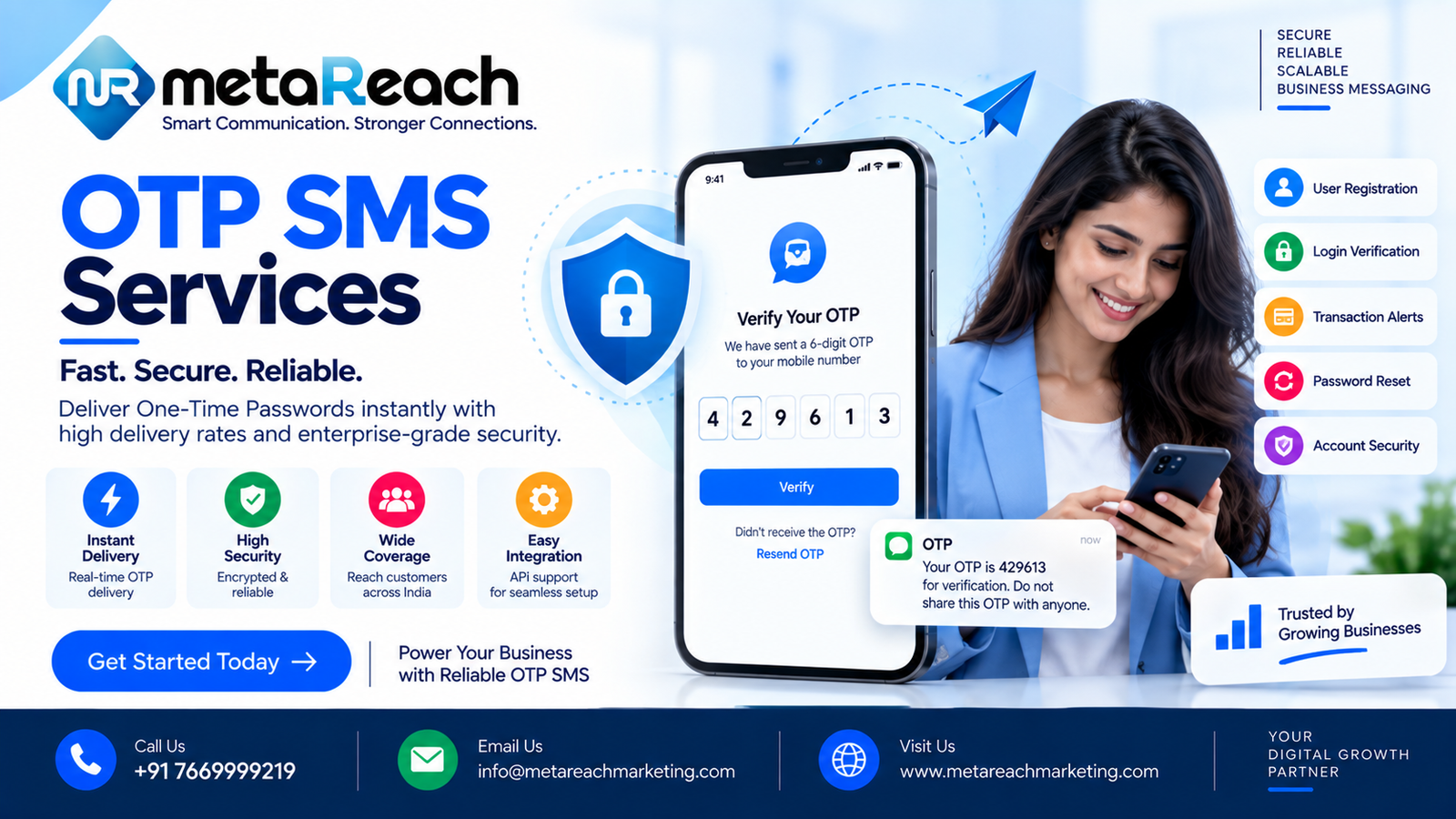
Think about the last time you signed up for an app, logged into your bank, or completed an online payment. Somewhere in that process, a six-digit code landed on your phone within seconds — and you probably didn’t think twice about it. That small moment is doing a lot of heavy lifting behind the scenes. It’s confirming you’re really you, blocking a fraudster from hijacking your account, and quietly building the trust that keeps you coming back to that platform. This is the job of OTP SMS, and for Indian businesses, getting it right is no longer optional — it’s the difference between a user who converts and one who gives up halfway through checkout.
What Makes OTP SMS Different From a Regular Text Message
An OTP, or one-time password, is a short numeric code generated for a single use and valid for only a few minutes. Unlike a static password that can be stolen, guessed, or reused across sites, an OTP expires the moment it’s used or the timer runs out. That makes it one of the simplest and most effective tools for two-factor authentication (2FA), and it’s why banks, fintech apps, e-commerce platforms, and even healthcare portals lean on it so heavily.
There’s also a regulatory angle that many business owners don’t realise until they hit a wall. In India, all commercial SMS traffic must be registered under TRAI’s DLT (Distributed Ledger Technology) framework. Promotional messages are further restricted by DND rules and time-of-day sending windows. OTPs, however, are classified as transactional messages, which means they can legally reach a user’s phone 24 hours a day, seven days a week — even if that number is registered on the National Do Not Disturb list. That exemption alone makes OTP SMS one of the most dependable channels a business can use for anything time-sensitive.
Why Speed and Reliability Matter More Than People Realise
Here’s an uncomfortable truth for a lot of platforms: users don’t wait. Research and everyday experience both point to the same pattern — if an OTP takes longer than ten or fifteen seconds to arrive, a meaningful chunk of users assume something went wrong. They hit resend, they get frustrated, or they abandon the signup or checkout entirely. For an e-commerce brand, that’s a lost sale. For a fintech app, that’s a lost customer at the exact moment they were ready to trust you with their money.
This is why the underlying infrastructure behind OTP delivery matters so much more than most people assume. Providers that route OTPs through the same queues as bulk promotional SMS often see delays during high-traffic periods, because authentication messages end up stuck behind marketing blasts. A properly built OTP SMS gateway keeps transactional traffic on dedicated, direct-to-carrier routes, so verification codes aren’t competing with anything else. That separation is a small architectural decision with an outsized impact on conversion rates.
Where OTP SMS Actually Gets Used
It’s easy to think of OTPs as just a login step, but the use cases stretch across nearly every industry that touches a customer digitally. Banks and NBFCs use them for fund transfers and payment approvals. E-commerce platforms trigger them at checkout and account creation to cut down on fraudulent orders. Healthcare providers rely on them to secure patient portals and confirm appointments. Logistics companies use them to verify delivery handoffs and driver identities. Even EdTech platforms use OTPs during exam registration and fee payments, where a failed verification can mean a missed deadline.
What ties all of these together is a simple expectation: the code has to arrive fast, work every time, and never depend on the user having a data connection or a specific app installed. SMS still wins here because it works on every mobile phone in the country, from a brand-new smartphone to a decade-old feature phone on a 2G network — no internet required.
Choosing the Right OTP Partner
If you’re evaluating providers, a few things are worth checking before you commit: how fast do OTPs actually land in real-world testing, not just in the sales pitch; is DLT registration handled for you or left as your own headache; is pricing transparent with no hidden monthly minimums; and is there a fallback channel, like a voice call, for the rare case when an SMS doesn’t go through. Businesses that get these fundamentals right tend to see fewer support tickets, higher completion rates on signups and payments, and noticeably more trust from their users over time.
Communication infrastructure isn’t the most glamorous part of running a digital business, but it’s one of the few things users notice the instant it fails. A dependable OTP SMS service quietly protects your platform from fraud while making sure genuine users get in without friction. For businesses looking to strengthen this layer of their stack — or explore broader messaging tools like transactional SMS, voice OTP, and WhatsApp-based verification — providers such as MetaReach Marketing offer the kind of dedicated, DLT-compliant infrastructure that scales from a handful of daily verifications to millions a month, without asking businesses to compromise on speed or reliability.


