Every business that runs logins, payments, or account verification in India eventually asks the same question: how much should OTP SMS actually cost? The honest answer is that pricing has become far more transparent over the last couple of years, but not every provider structures it the same way. Understanding what a fair rate looks like — and what should be included in that rate — makes it much easier to pick a gateway you won’t need to switch away from in six months.
Why OTP Pricing Isn’t Just About the Per-Message Rate
A low per-SMS price looks attractive on a sales page, but it rarely tells the full story. Delivery speed matters just as much as cost, because a slow OTP is functionally the same as a failed one — the user has already abandoned the login or checkout by the time it arrives. DLT compliance matters too, since any template that isn’t properly registered with TRAI risks being blocked outright, no matter how cheap the sender ID is. And then there’s network coverage: an OTP gateway that struggles on one carrier during peak hours can quietly cost a business far more in lost conversions than it saves on the invoice.
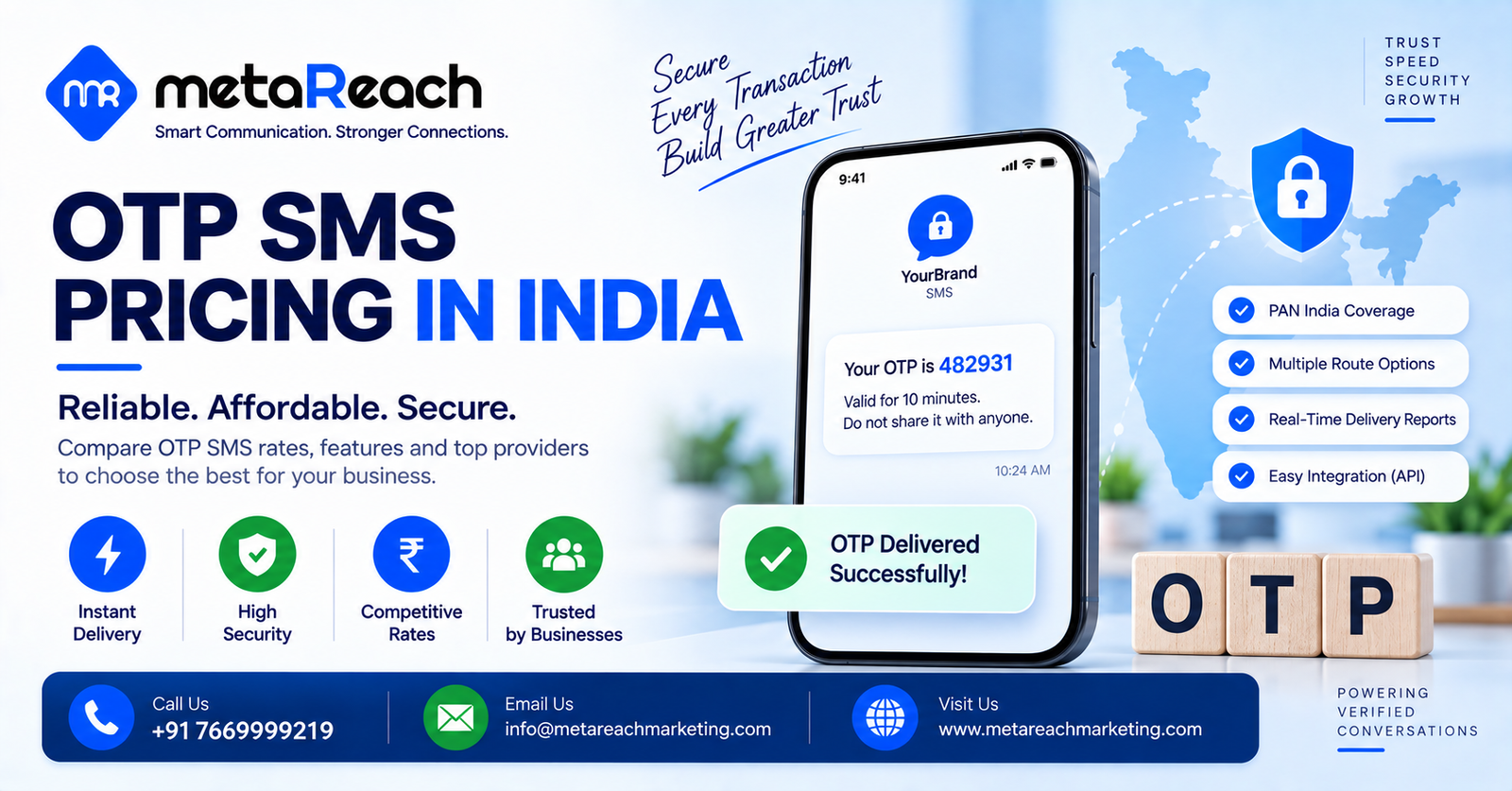
That’s why it’s worth comparing providers on the full package rather than the headline number alone. A detailed breakdown of current OTP SMS rates in India is a useful starting point, since it lays out what a flat, all-inclusive rate should cover — DLT registration, API access, delivery reporting, and route failover — instead of charging extra for each of those separately.
What a Fair OTP SMS Rate Looks Like Right Now
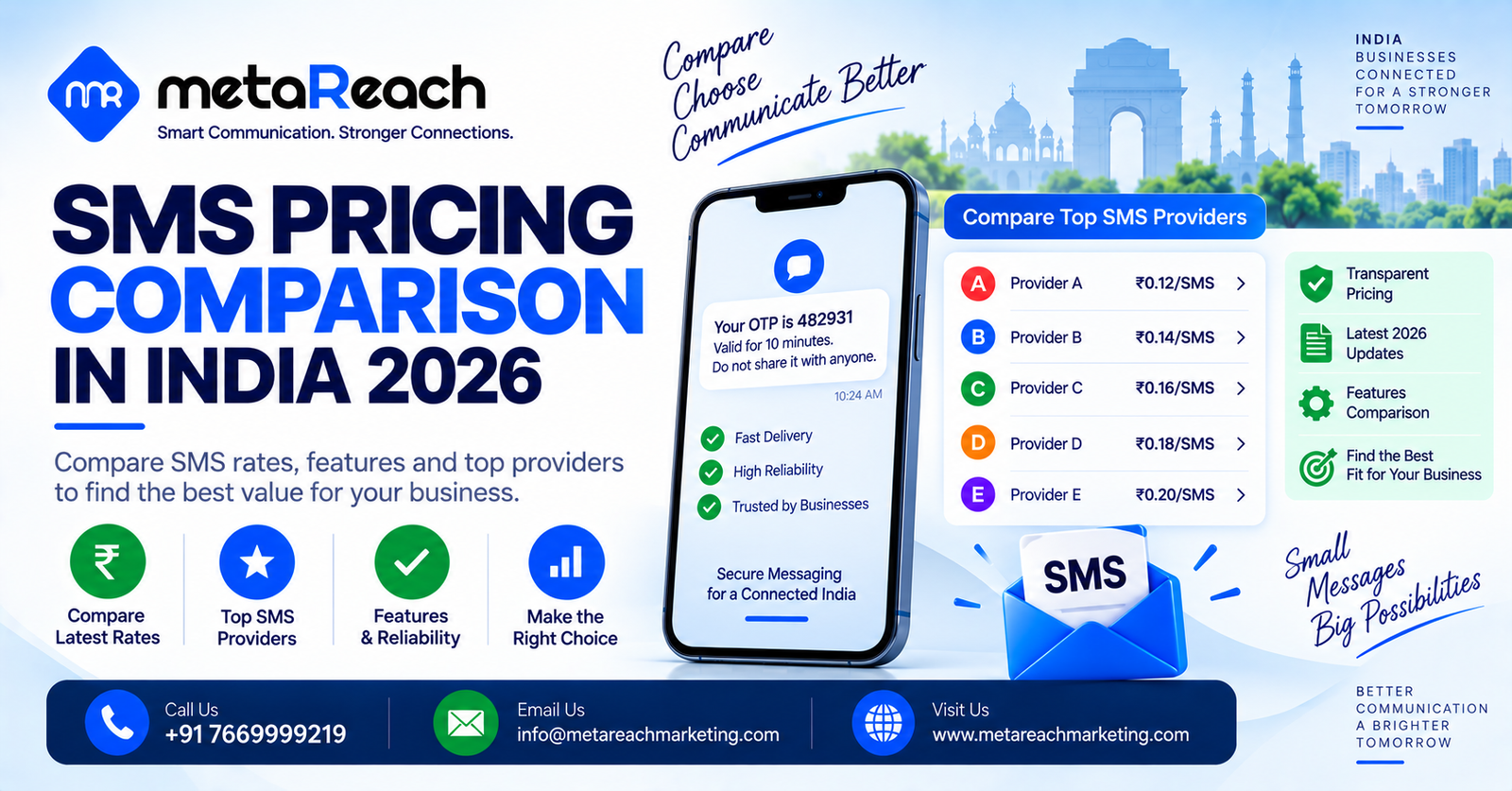
As of 2026, a flat rate in the range of roughly ₹0.12 per delivered OTP has become a realistic benchmark for Indian businesses sending anywhere from a few thousand to tens of thousands of messages a month. The key phrase there is “per delivered” — a well-structured plan only bills for OTPs that actually reach the recipient’s handset, not for attempts that fail due to network issues or unreachable numbers. Plans typically scale by volume rather than by feature, meaning a small business and a mid-sized one pay the same per-message rate; the difference shows up in support level, dedicated account management, and options like WhatsApp or voice OTP fallback for higher-volume enterprise use.
For businesses that haven’t reviewed their gateway pricing in a while, it’s worth checking whether DLT registration, sandbox testing, and delivery dashboards are bundled in, or billed as add-ons elsewhere. These are the line items that quietly inflate a bill that looked cheap on paper.
DND Exemption and Delivery Speed: The Two Non-Negotiables
OTP messages fall under TRAI’s transactional category, which means they’re exempt from India’s Do Not Disturb registry — a properly DLT-registered OTP should reach a customer’s phone regardless of their DND status. If a provider’s OTPs are getting blocked on DND numbers, that’s usually a sign of an incomplete or incorrect DLT setup, not a limitation of OTP messaging itself.
Speed is the other factor businesses tend to underestimate until it becomes a problem. Delivery within three to five seconds is achievable on all four major Indian networks — Jio, Airtel, Vi, and BSNL — when a provider maintains direct carrier connections and automatic failover to a backup route. Anything consistently slower than that, especially during peak hours, points to a routing setup that hasn’t been built for reliability at scale.
Questions to Ask Before Switching Providers
Before signing up with any OTP SMS provider, it helps to get clear answers on a handful of practical points: Is the rate truly flat across volume tiers, or does it increase as usage grows? Is DLT registration included, or charged separately? What happens to failed messages — are they billed or free? Is there a REST API with sandbox access for testing before going live? And is there a fallback channel, such as WhatsApp or voice OTP, if the primary SMS route is delayed?
Providers that can answer all of these clearly, and back it up with a transparent pricing page rather than a “contact sales for a quote” wall, tend to be the ones worth trialling first.
Getting Started Without Overcommitting
Most reliable OTP SMS providers in India now offer a free trial with sandbox credits, which is the simplest way to test actual delivery speed and reliability on your own user base before paying anything. It’s worth running that test across a full business day, including peak hours, rather than a handful of messages sent in isolation — that’s the only way to see how failover and network coverage actually behave under real conditions.
Companies exploring their options can review Meta Reach Marketing, a Noida-based communication platform that handles DLT registration, API integration, and OTP delivery for businesses across banking, e-commerce, healthcare, and fintech. Their OTP SMS pricing page lays out the current flat-rate plans, feature comparisons, and FAQs in one place, which makes it easier to benchmark against whatever you’re paying today.
In a market where OTP failures translate directly into lost logins and abandoned payments, the right pricing conversation isn’t really about shaving a paisa off the per-message rate — it’s about making sure every OTP you send actually arrives, on time, without hidden charges eating into the savings later.