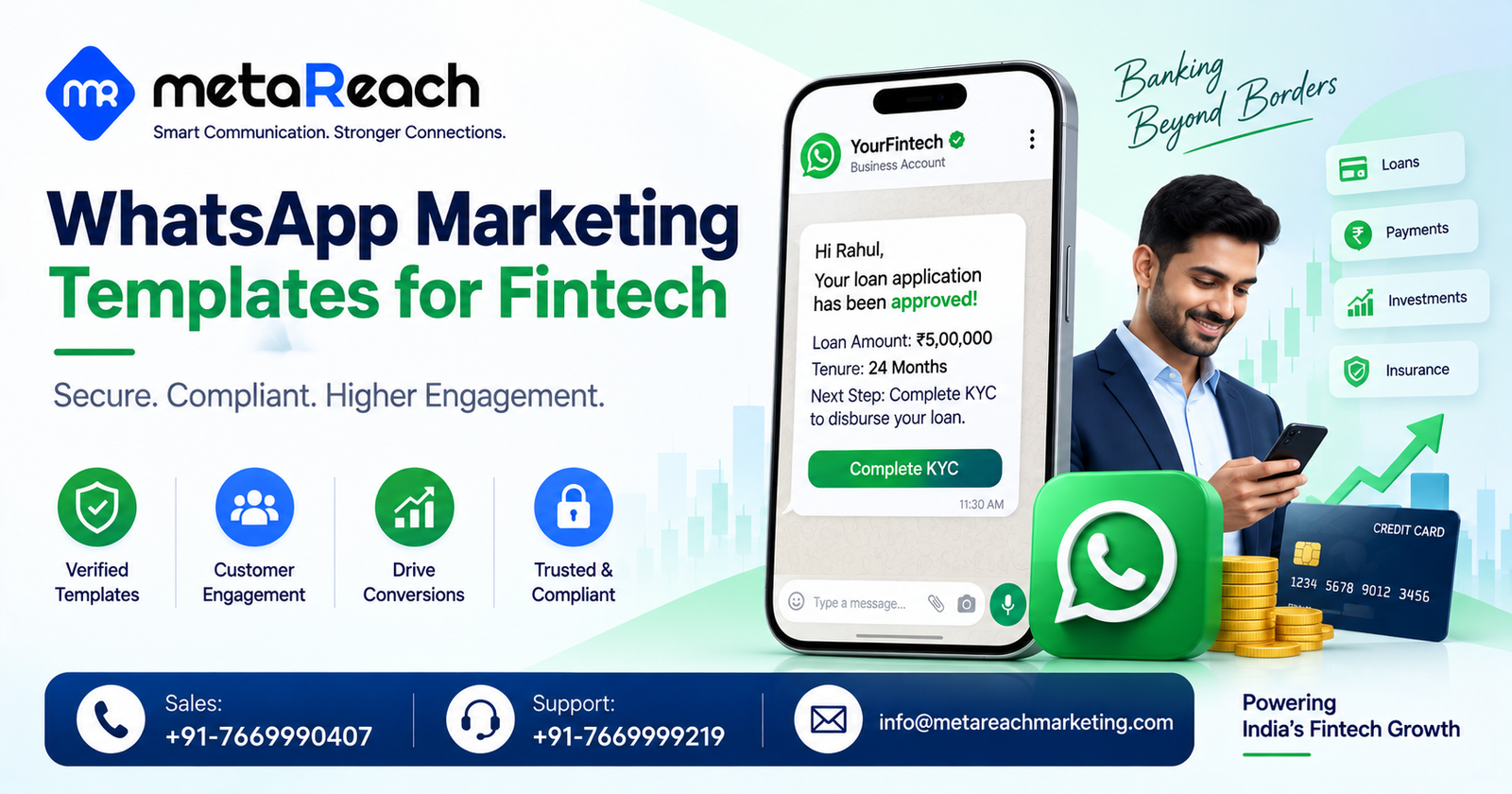
Ask any fintech marketing team about their WhatsApp campaigns and you’ll usually hear a version of the same complaint: a template that seemed perfectly reasonable got rejected, and nobody on the team could quite explain why. It’s a common frustration, and it’s rarely about the platform being unreasonable — it’s almost always a case of a well-meaning message running into one of Meta’s fairly specific formatting or compliance rules. For fintech businesses in particular, where every message deals with money, KYC, or account access, getting this WhatsApp template approval process right isn’t a nice-to-have — it’s the difference between a communication channel that scales and one that keeps getting blocked mid-campaign.
Why WhatsApp Even Matters This Much for Fintech
It’s worth pausing on why fintech companies are pushing so hard into WhatsApp in the first place. Most customers check the app dozens of times a day, and messages sent through it get opened at a rate that email and SMS simply can’t match. For time-sensitive fintech communication — a payment reminder, an OTP, a KYC deadline — that difference in attention isn’t a marginal improvement, it’s the entire point. Add end-to-end encryption into the mix, which matters enormously in a category where trust and data security are constantly under scrutiny, and it’s easy to see why digital wallets, lending apps, and neobanks have all converged on WhatsApp as a primary communication channel rather than a secondary one.
The Approval Process Exists for a Reason, Even When It’s Annoying
It’s tempting to see Meta’s template review process as an obstacle, but it functions as a genuine quality filter, and in fintech specifically that filter matters more than in most other industries. A poorly worded or overly aggressive promotional template sent by a lending app could easily look like a phishing attempt to a wary recipient — and given how common financial scams have become, that skepticism is entirely justified. The approval process forces a level of discipline that ends up protecting the sender as much as the recipient: brands that go through it properly tend to build a reputation for clear, predictable, non-spammy communication, which compounds into real trust over time.
The Small Rules That Cause Most Rejections
Most template rejections come down to a handful of avoidable technical mistakes rather than anything about the message’s actual content or intent. Starting or ending a template with a placeholder tends to trip reviewers up. Mixing two languages in one submission is a common misstep for teams operating in both English and Hindi. Shortened links, vague promotional language like “win big” or “free gift,” and templates that try to serve two purposes at once — say, a payment reminder bundled with a cross-sell — all tend to get flagged. None of these are complicated to avoid once a team knows about them, but they trip up first-time submitters constantly, and each rejection adds days to a campaign timeline that fintech marketing calendars often can’t afford to lose.
What Actually Gets Approved Quickly
The templates that sail through review tend to share a few traits: a single, clear purpose, realistic sample values for every placeholder, plain and professional language rather than marketing-speak, and full links rather than shortened ones. A payment reminder that simply states the amount, the due date, and a clear call to action tends to get approved far more smoothly than one that also tries to upsell a different product in the same message. Fintech teams that treat each template as a single-job tool — one template per use case, kept simple and specific — generally spend far less time fighting rejections than teams trying to cram flexibility into a single multipurpose template.
Why Most Fintechs End Up Working With a Specialist
Given how many small, easy-to-miss rules govern WhatsApp templates, it’s not surprising that most fintech teams eventually bring in a partner who deals with this daily rather than trying to relearn the rulebook from scratch every quarter. A good WhatsApp Business API provider doesn’t just submit templates — they structure the message before submission specifically to avoid the common rejection triggers, manage the ongoing quality rating that Meta tracks per account, and handle the API integration that lets approved templates actually plug into a fintech’s existing systems for real-time sending. Reviewing how a team that’s worked through this WhatsApp template approval workflow for fintech businesses repeatedly structures its process is a reasonable way to judge whether a provider actually understands the space or is just reselling generic API access. For fintech companies also managing SMS, RCS, or voice alongside WhatsApp, MetaReach Marketing runs these channels together under one DLT-compliant setup for clients across India.
The Bottom Line
WhatsApp template approval isn’t difficult once a fintech team understands the handful of rules that actually matter, but it’s easy to underestimate how much a handful of avoidable mistakes can slow down a campaign that’s meant to be live in days, not weeks. Businesses that approach templates with discipline — one clear purpose per message, realistic sample data, plain language, and patience during review — tend to build a WhatsApp channel that customers trust and engage with consistently. In an industry where every message touches money, that trust is worth far more than the few extra hours it takes to get a template right the first time.