Picture a customer calling a business at 9 p.m. with a simple question — checking an order status, confirming an appointment, or asking about a bill. No one answers. They hang up, frustrated, and maybe they call a competitor instead. This scenario plays out thousands of times a day across growing businesses, and it’s exactly the gap that IVR (Interactive Voice Response) technology was built to close.
What IVR Actually Does
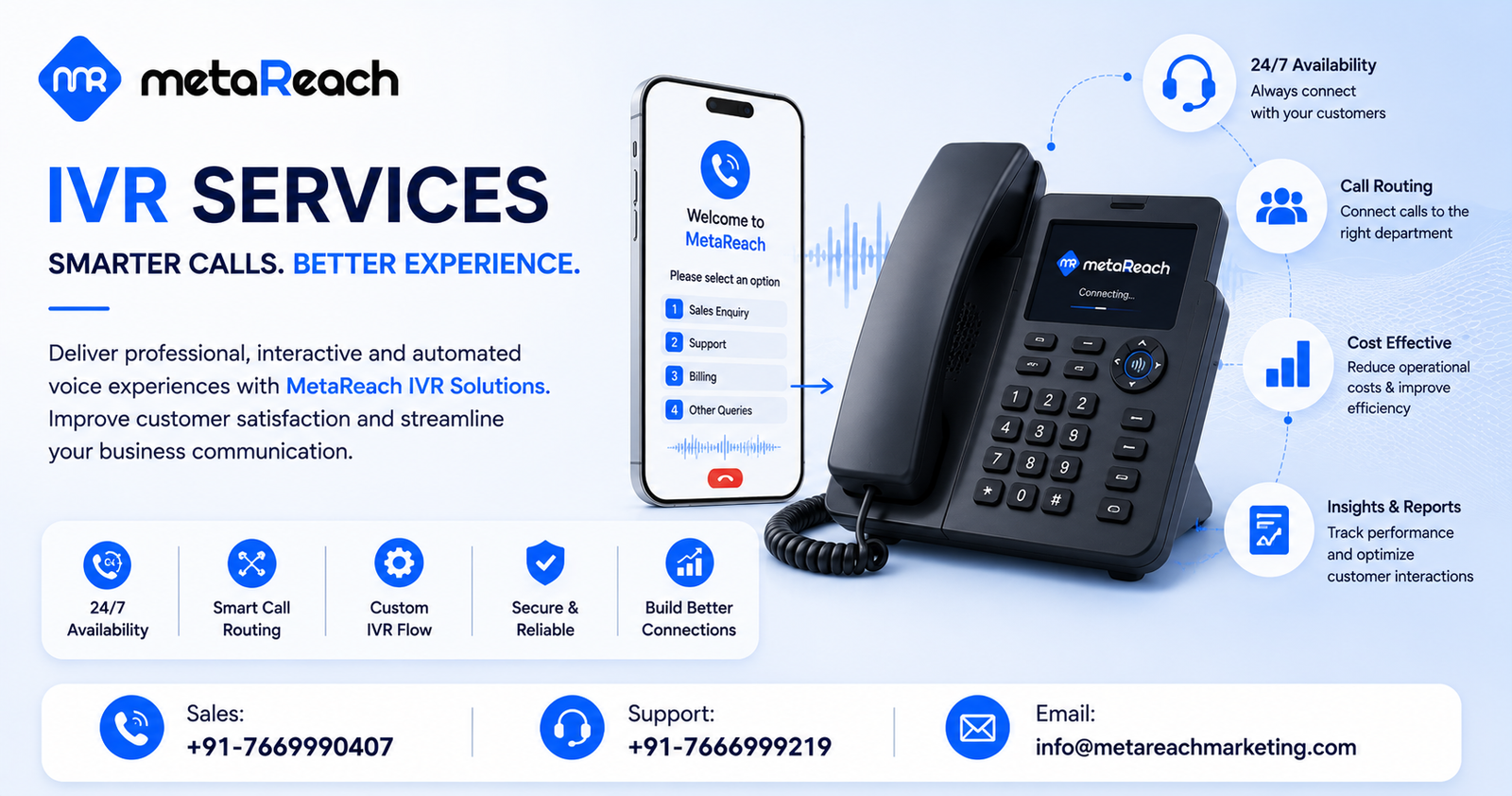
An IVR system is an automated phone setup that answers incoming calls, plays a menu, and routes the caller based on keypad presses or spoken input — all without needing a live agent for every single call. A caller might press 1 for sales, 2 for support, or 3 for billing, and land directly with the right department or get the information they need automatically. It sounds simple, but the effect on a business’s call handling is significant: no more missed calls outside office hours, no more customers stuck on hold for a receptionist who’s already on another line.
The Real Cost of Not Having One
Businesses that rely purely on human receptionists or a small support team run into an obvious ceiling — a person can only handle one call at a time. During peak hours, callers wait, get frustrated, and sometimes abandon the call entirely, taking their business elsewhere. Outside business hours, calls simply go unanswered. Companies that deploy IVR typically report a 40 to 60 percent reduction in call-handling costs, largely because routine, repetitive queries — order status, account balance, appointment confirmation — get resolved automatically, freeing human agents for the conversations that actually need judgment and empathy.
Where IVR Makes the Biggest Difference
Healthcare providers use IVR for appointment booking, OPD queue management, and lab report notifications, letting hospitals handle hundreds of daily calls without pulling receptionists away from in-person patients. Real estate developers route campaign-driven enquiries straight to the right sales agent based on which project a caller is interested in, with lead data flowing directly into their CRM. Banks and NBFCs use outbound IVR for EMI reminders and inbound IVR for balance checks and card activation, often eliminating the need for a dedicated call centre seat just for routine queries. E-commerce brands lean on it for order tracking and return requests, and logistics companies use it for delivery rescheduling — letting a customer press a key to reschedule instead of speaking to anyone at all.
Beyond Basic Call Routing
Modern IVR platforms go well beyond a simple “press 1 for sales” menu. Integration with CRM systems means a returning customer can be recognized and greeted appropriately, based on their history with the business. Multilingual menus let a business serve callers in their preferred regional language rather than forcing everyone through English or Hindi alone. Built-in analytics track call patterns, peak volumes, and common queries, giving a business the data it needs to actually improve its service rather than guessing. And because IVR systems handle unlimited concurrent calls, a spike in inbound volume — say, during a promotional campaign or a billing cycle — doesn’t overwhelm the system the way it would overwhelm a small human team.
Choosing the Right IVR Setup
Not every business needs the same complexity. A single-level menu is often enough for a small operation with two or three departments, while larger businesses with multiple locations, languages, or service lines benefit from multi-level menus with nested routing. Pairing an IVR system with a toll-free number tends to increase inbound call volume further, since it removes the cost barrier for the caller entirely. MetaReach Marketing’s IVR service covers exactly this range — smart call routing, multilingual menus, CRM integration, and toll-free number pairing — with setup typically live within 24 to 48 hours and no hardware required on the business’s end.
It’s also worth thinking about IVR as one half of a bigger loop rather than a standalone tool. When it’s paired with outbound messaging — a bulk SMS notifying a customer that their order has shipped, or a WhatsApp update confirming an appointment — the inbound IVR menu becomes the natural place for that same customer to call back with a follow-up question. SMS delivers the message; IVR handles whatever response it triggers. Businesses that set up both channels together tend to close far more of these interaction loops than those relying on either channel in isolation.
The Bottom Line
IVR isn’t just a large-enterprise tool anymore. Small and mid-size businesses across India are seeing measurable returns from automating their routine call handling — fewer missed calls, faster resolutions, and support teams that spend their time on conversations that genuinely need a human touch. As call volumes grow, an IVR system scales without the business needing to hire and train more people just to keep pace, which makes it one of the more straightforward investments a growing company can make in its customer experience.
Businesses evaluating IVR alongside other communication channels — Bulk SMS, WhatsApp Business API, RCS messaging, or voice broadcasting — can explore the full range of services offered by Meta Reach Marketing, a Noida-based enterprise communication agency serving 500+ businesses across India.