

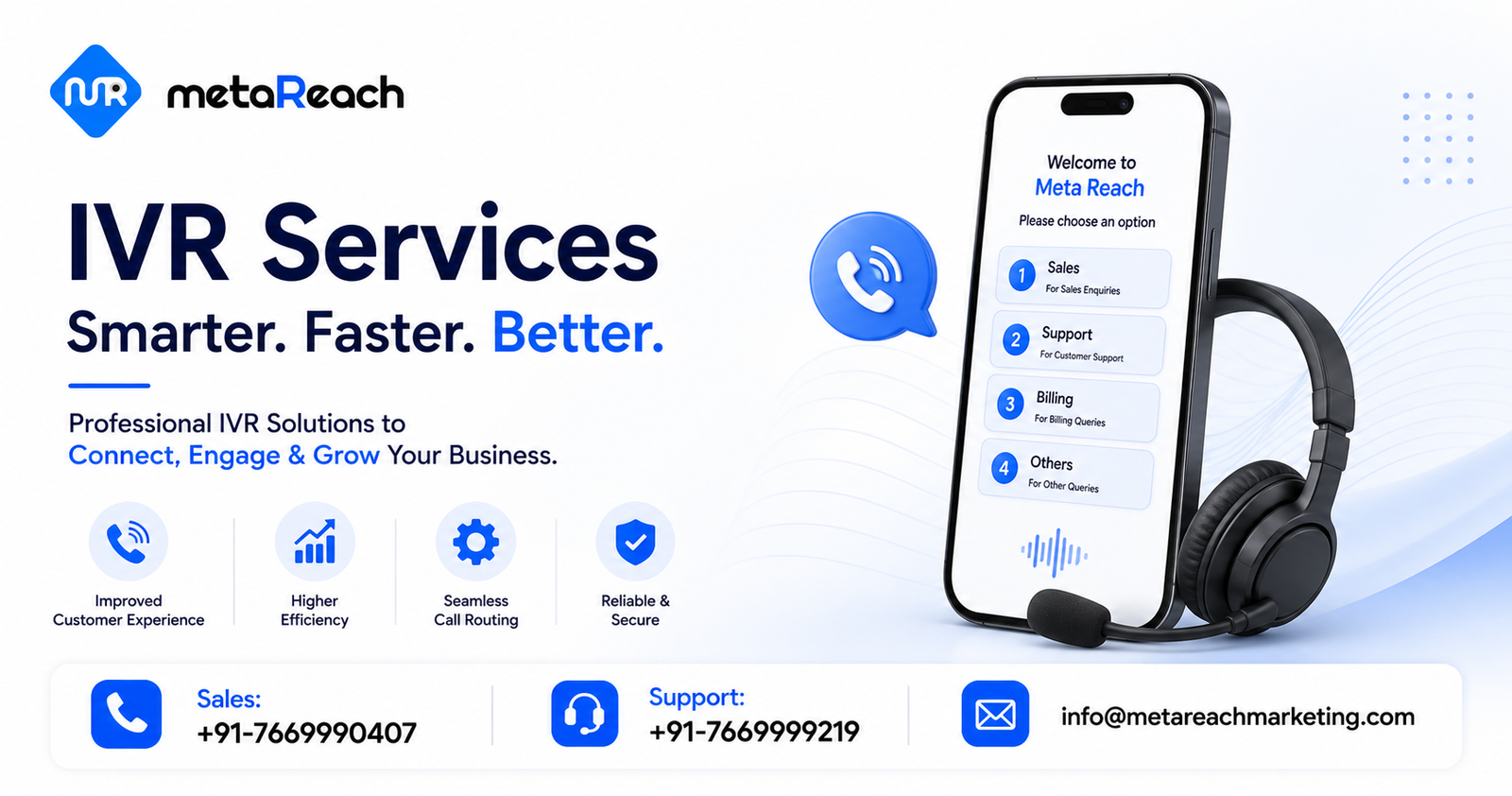
In a year dominated by chatbots, WhatsApp automation, and AI-driven support, it’s easy to assume the humble phone call has become an afterthought. It hasn’t. For a huge share of Indian customers — especially anyone dealing with a bank, a hospital, a delivery issue, or an urgent booking — picking up the phone is still the fastest way to get a real answer. The businesses that get this wrong aren’t losing to a competitor with better technology; they’re losing to whoever simply answers the phone first.
That’s the entire premise behind Interactive Voice Response, or IVR: an automated system that answers every incoming call instantly, routes it correctly, and never puts a customer through a busy tone or an endless ring.
What Actually Changes When You Add IVR
The most obvious benefit is availability — a well-configured IVR system runs 24 hours a day, seven days a week, without needing a receptionist on a night shift. But the more meaningful shift is in call handling capacity. A single receptionist or agent can only take one call at a time; an IVR system routes dozens of simultaneous calls at once, meaning no customer ever hears a busy signal during a peak hour or a promotional campaign spike. Businesses that deploy it properly typically report a substantial cut in call-handling costs, simply because routine queries — order status, appointment booking, balance checks — get resolved without ever needing a live agent.
The other underrated benefit is consistency. A caller at 2 AM gets exactly the same accurate information as a caller at 2 PM — no variation based on which agent happened to pick up, no information gaps between shifts.
It Looks Very Different Across Industries
A hospital uses IVR very differently from a real estate developer. A clinic might route patients between appointment booking, lab report status, and billing queries, handling hundreds of daily calls without pulling front-desk staff away from patients standing in front of them. A real estate developer running a billboard or digital campaign uses IVR to instantly route hundreds of daily enquiries to the right project and the right sales agent, with lead data synced straight into a CRM. An NBFC might lean on outbound IVR for EMI reminders and inbound IVR for account queries, resolving the vast majority of routine calls without a large seated call centre. The common thread across all of these isn’t the technology itself — it’s that each business mapped IVR to its actual call patterns instead of buying a generic, one-size-fits-all setup.
Getting the Menu Design Right Matters More Than the Tech
The single biggest mistake businesses make with IVR isn’t a technical one — it’s over-engineering the menu. Nested sub-menus that go four or five layers deep frustrate callers far more than a simple two-level structure, and a caller who hangs up in frustration is a lost enquiry regardless of how sophisticated the backend routing was. This detailed breakdown of IVR services in India walks through exactly what determines setup and running cost — menu depth, concurrent call channels, CRM integration complexity, and recording storage — which is useful context before agreeing to any provider’s pricing sheet, since IVR is rarely a flat-rate service and the real cost depends heavily on how a business actually plans to use it.
It’s also worth checking whether a provider designs the call flow around your actual departments and query patterns, or hands over a generic template regardless of what kind of business you run. The former tends to cut average call duration and improve first-call resolution; the latter usually just moves the frustration from hold music to a confusing menu.
IVR Works Best as Part of a Bigger System
On its own, IVR handles the call. Paired with a toll-free number, it removes the cost barrier that stops hesitant customers from calling at all. Paired with SMS or WhatsApp, it becomes part of a complete outreach loop — a text alert drives the call, and the call routes instantly to resolution instead of a missed connection. Communication providers that manage IVR, toll-free numbers, bulk SMS, and WhatsApp Business API together — like MetaReach Marketing — tend to design these pieces to work as one connected system rather than separate purchases that a business has to stitch together itself.
A missed call is rarely just one missed call — it’s a customer who often doesn’t try a second time. Getting IVR right isn’t really about the technology at all; it’s about making sure that when someone reaches for the phone, your business is the one that actually answers.