There’s a familiar pattern among Indian businesses sending SMS for the first time. The campaign is built, the customer list is ready, everyone hits send — and nothing happens. No error message, no bounce notification. The messages simply vanish. Nine times out of ten, the culprit is the same thing: DLT registration was either skipped, incomplete, or set up incorrectly.
DLT — Distributed Ledger Technology — is TRAI’s mandatory framework for regulating commercial SMS in India. It exists to control spam and fraud, and every business sending promotional, transactional, or service messages has to register on it. That much most people eventually learn. What catches businesses off guard is how many ways there are to get it wrong even after registering.
Why “I Registered” Doesn’t Always Mean “I’m Compliant”
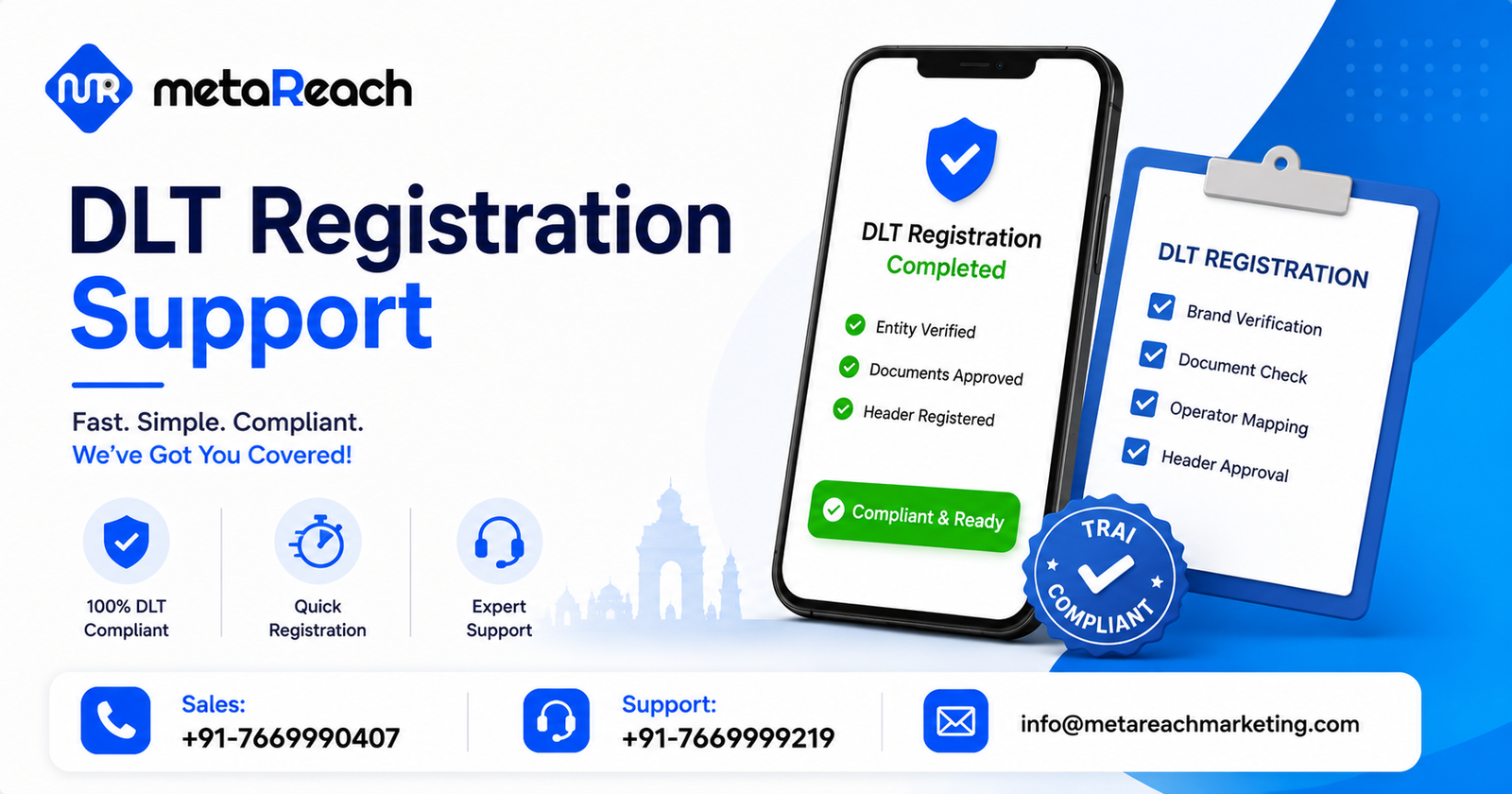
DLT registration isn’t a single step — it’s three linked stages. First, a business registers as a Principal Entity and receives a PE ID. Then it registers a Sender ID, the six-character header that appears as the sender name. Finally, every individual message template has to be registered and mapped correctly to that PE ID and Sender ID. Miss the connection between any two of these, and messages get blocked at the network level — with no error thrown back to explain why.
This is where most of the silent failures happen. A business registers their entity, gets a PE ID, feels done — and then forgets to update that PE ID inside their SMS gateway’s API settings. Every message from that point gets rejected at the operator level, template approval or not.
The Mistake That Kills the Most Campaigns: Wrong Message Category
TRAI recognises four message categories — Transactional, Service Implicit, Service Explicit, and Promotional — each with its own consent rules and delivery windows. A lot of businesses assume any order update or appointment reminder counts as “transactional,” when in current practice that category is effectively reserved for bank OTPs. Most everyday business alerts actually fall under Service Implicit instead. Register a template under the wrong category, and TRAI’s system rejects it outright, or worse, approves it and then silently filters it later.
Promotional messages carry an additional layer of risk: they cannot legally reach numbers registered on the national DND registry unless the subscriber has given explicit digital consent through TRAI’s Consent Acquisition process. Skip that check, and every promotional SMS to a DND number is dropped without any notification — the business just sees a campaign with an inexplicably low delivery rate.
What Getting DLT Right Actually Looks Like
Done correctly, entity registration, Sender ID approval, and template registration can be completed the same day — but done independently, one step at a time across a telecom operator’s portal, it usually takes anywhere from five to ten business days, longer if there are document errors or category mismatches along the way. A structured DLT registration and compliance guide that walks through document requirements, category rules, and the common rejection reasons upfront saves most of that back-and-forth, since the majority of delays come from avoidable mistakes rather than genuine complexity.
Compliance Doesn’t End at Registration
DLT compliance isn’t a one-time checkbox. Consent records need refreshing, DND status needs pulling regularly, and registrations can lapse quietly if not monitored — with the same silent-blocking effect as never registering at all. Businesses running fintech, healthcare, or e-commerce campaigns also need to layer India’s DPDP Act consent requirements on top of DLT consent, since the two frameworks are separate and both need to be satisfied.
None of this is meant to discourage SMS as a channel — it remains one of the most reliable ways to reach customers in India. It just means compliance has to be treated as an ongoing responsibility, not a one-time form submission.
Meta Reach Marketing is a Noida-based messaging agency that has handled DLT compliance for over 500 businesses across India, running entity, Sender ID, and template registration in parallel so most clients are fully compliant within hours instead of weeks — and staying ahead of category, consent, and DND rule changes so campaigns don’t quietly break months after launch.
Final Thought
Most businesses only take DLT seriously after a campaign has already failed silently — a missed OTP, a promotional blast with near-zero delivery, an entire Sender ID blocked without warning. Getting the registration and category classification right before launch, rather than debugging it after customers have already been affected, is the difference between SMS working reliably and SMS quietly not working at all.