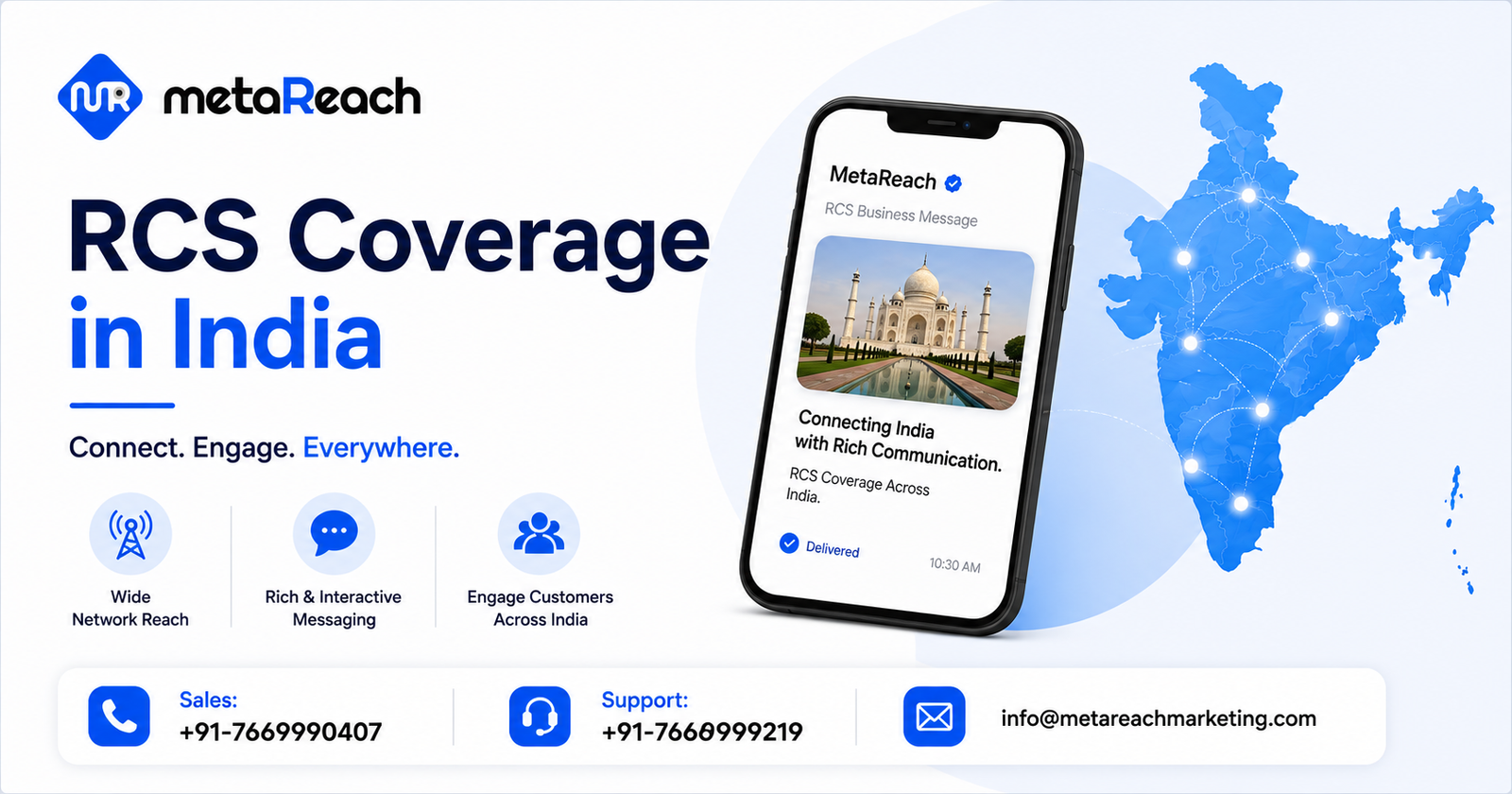
If you have been hearing the term “RCS” thrown around in every marketing meeting lately, you are not imagining things. Rich Communication Services, or RCS, is quietly becoming the biggest shift in business messaging since WhatsApp Business API launched in India. But before any brand commits budget to it, there is one question that decides whether the channel will actually work: does RCS reach my customers?
That question sounds simple, but the answer depends on operator support, device compatibility, and city-level rollout — three variables that most businesses never check until after they have already launched a campaign and watched it underperform.
India’s RCS Landscape Has Matured Fast
Just three years ago, RCS in India was patchy at best. Today, all three major telecom operators — Jio, Airtel, and Vodafone Idea — have rolled out full RCS Business Messaging support, together reaching well over a billion mobile connections. Android has carried most of that growth, since Google Messages ships as the default app on the vast majority of Android phones sold here. And with Apple finally bringing native RCS to iPhones through iOS 18, even the historically closed Apple ecosystem is now part of the conversation.
This matters because rich messaging — verified sender badges, interactive buttons, images, and carousels — converts noticeably better than a plain SMS. But that advantage only shows up if the message actually reaches the customer in RCS format. Otherwise you are paying for a premium channel and getting SMS-level results.
Where Businesses Usually Get It Wrong
The most common mistake is assuming RCS coverage works the same way across every city and every network. In reality, coverage in India operates at the operator level rather than the city level — a Jio, Airtel, or Vi customer can receive RCS anywhere from Mumbai to a Tier 3 town, as long as their handset and app support it. The real gaps show up with BSNL users, older Android phones, iPhones running iOS 17 or earlier, and pockets of rural India with weaker connectivity.
None of this means RCS should be skipped. It means every serious campaign needs a fallback plan built in from day one, so contacts who cannot receive RCS still get the message as a standard SMS instead of being dropped from the campaign entirely.
A Clear Way to Check Before You Launch
For brands that want the full operator-by-operator, city-by-city, and device-by-device breakdown before committing budget, this detailed RCS coverage guide for India walks through exactly which networks, cities, and phones support RCS in 2026 — along with how automatic SMS fallback keeps delivery at 100% even where RCS isn’t available yet.
It’s the kind of resource worth bookmarking if RCS is even on your radar for the next two quarters, because operator coverage keeps expanding and what wasn’t viable six months ago often is today.
The Bigger Picture: Messaging Strategy, Not Just One Channel
RCS shouldn’t be evaluated in isolation. It sits alongside SMS, WhatsApp Business API, voice, and email as part of a wider customer communication stack, and the right mix depends on your audience, budget, and industry. Agencies that specialise in this space — handling everything from DLT-compliant SMS to RCS rollouts and WhatsApp campaigns under one roof — tend to make the transition far less painful than piecing it together with multiple vendors.
Meta Reach Marketing is one such Noida-based agency that has been running enterprise messaging and digital marketing campaigns for over a decade, working across SMS, RCS, WhatsApp, IVR, and SEO for 500+ businesses pan-India. Their team handles the operational side — carrier onboarding, brand verification, and fallback routing — so businesses can focus on the campaign itself rather than the plumbing behind it.
Final Thought
RCS in India is no longer an experimental channel — it’s a mainstream one, backed by all major operators and now supported on iPhones too. But “available” and “guaranteed to reach every customer” are two different things. Before you shift budget toward RCS, take the fifteen minutes to check operator, device, and fallback coverage properly. It’s a small step that saves a lot of wasted spend down the line.