Most businesses set their SMS budget the same way: pick a round number, see how far it goes, adjust next month. It works, eventually, but it wastes the first two or three months figuring out something that’s actually calculable in about ten minutes if you know which numbers to plug in.
Bulk SMS pricing in India isn’t complicated once you separate it into its actual components. The confusion usually comes from mixing up three things that are genuinely different: the per-message rate, the one-time compliance cost, and the message mix your business actually needs. Once those are separated, the budget writes itself.
Start With Message Type, Not Message Count
The single biggest budgeting mistake is treating all SMS as one bucket. Promotional messages — offers, sales, announcements — are restricted to daytime hours and blocked entirely for DND-registered numbers, which is the overwhelming majority of Indian mobile users today. Transactional and OTP messages work around the clock and reach every number, DND or not, because they’re not considered marketing under TRAI’s framework.
This distinction changes your effective reach more than it changes your price. A business that assumes its promotional SMS will reach its entire customer list is usually wrong — DND registration alone can cut that reach by more than half in many customer segments. Budget for transactional and OTP volume based on actual transaction counts, and budget promotional volume based only on your non-DND segment, not your full database.
The One-Time Cost That Trips Up First-Time Senders
Every business sending commercial SMS in India needs DLT registration before a single message can legally go out. This isn’t optional and it isn’t a provider-specific requirement — it’s a TRAI mandate, and the telecom-side fee for it is fixed regardless of who you sign up with. What varies wildly is whether your SMS provider bills you an additional service fee just to walk you through that same registration process.
For a business budgeting its first three months of SMS spend, this one-time line item can quietly account for a meaningful chunk of the total. A
detailed breakdown of bulk SMS pricing in India is worth reviewing before finalising a provider, specifically to check whether DLT setup is bundled into onboarding or billed as a separate charge — that distinction alone can shift your effective first-quarter cost significantly.
Build Your Estimate Around Your Actual Business Cycle
A retail brand’s SMS volume isn’t flat across the year — it spikes hard around festive seasons and dips in the months between. A healthcare provider’s volume is close to flat because appointment reminders don’t follow a seasonal pattern. A coaching institute sees sharp spikes around admission cycles and exam-result windows. Budgeting a flat monthly number across all twelve months, regardless of industry, almost always either overestimates the quiet months or underestimates the peak ones.
The more useful approach is to map your expected sends against your actual annual calendar — order confirmations tied to your sales cycle, appointment reminders tied to patient volume, fee-due alerts tied to your academic calendar — and multiply each bucket by the correct per-message rate for that message type. This gives a realistic monthly range instead of a single guessed number that’s wrong most months of the year.
Why Flat-Rate Pricing Simplifies This More Than It Looks
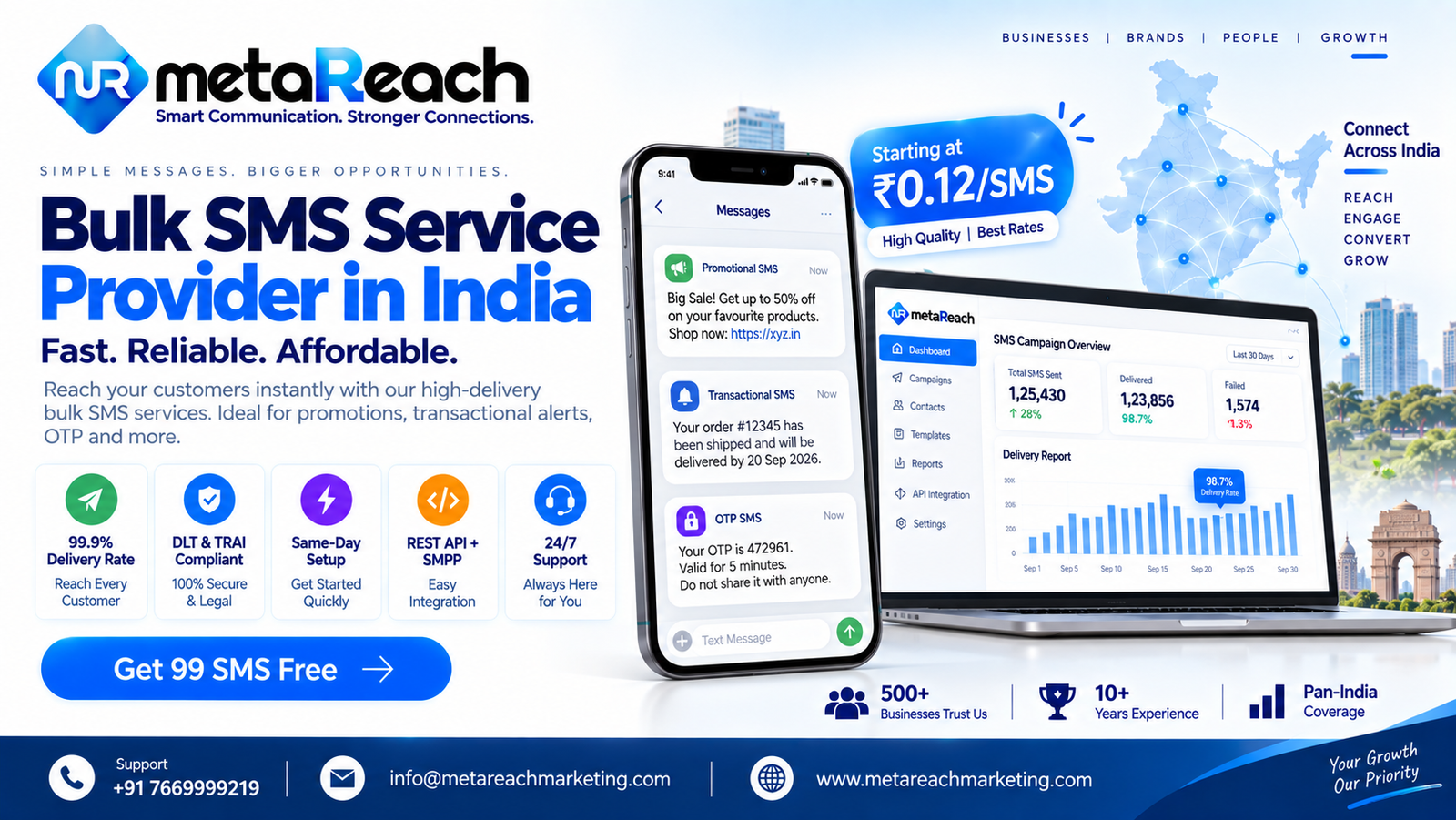
Tiered pricing structures sound appealing on paper — send more, pay less per message — but they make budgeting genuinely harder for a growing business, because your effective rate keeps shifting as your volume crosses each threshold. A flat per-message rate across every volume band removes that variable entirely. Whether a campaign sends two thousand messages or two lakh, the math stays identical, and forecasting next quarter’s spend becomes simple multiplication instead of a tier-chasing exercise.
This matters most for seasonal businesses whose volume genuinely swings month to month. A flat-rate structure means a quiet January and a packed October cost exactly what the message count says they should — no surprise tier jump, no renegotiation needed halfway through a festive campaign. Providers built around this model, such as
MetaReach Marketing, make it possible for a business to budget once at the start of the year and trust that number through every seasonal swing without recalculating each time volume shifts.
A realistic SMS budget doesn’t need to be complicated. Separate your message types, account for the one-time compliance cost honestly, map volume against your real business calendar instead of a flat guess, and pick a pricing structure that doesn’t punish you for growing. Do that once, properly, and the monthly guesswork disappears for good.
A Quick Sanity Check Before You Commit
Before locking in a monthly SMS budget, run it against two simple checks. First, does the number account for a realistic peak month, not just an average one — a Diwali sale or an admission season can double normal volume overnight, and a budget with no room for that spike either gets abandoned mid-campaign or forces a rushed renegotiation. Second, does the estimate separate the recurring per-message cost from the one-time setup cost, so next month’s number doesn’t accidentally include a charge that should never repeat. Businesses that run both checks before their first invoice almost never get an unpleasant surprise on their second one.