A consumer electronics retailer in Pune ran a Diwali sale campaign last year through plain SMS. The offer had product images, a discount code, and a store locator link — none of which SMS could actually display. Customers had to tap a shortened URL, wait for a page to load, and then hunt for the discount code buried in a paragraph of text. Click-through was underwhelming. When the same retailer repeated the campaign this year using RCS, the images, buttons, and locator map appeared directly inside the chat thread, and redemptions nearly doubled. That gap between what SMS can show and what a modern customer expects is exactly why RCS messaging is gaining ground with Indian brands.
RCS, or Rich Communication Services, is often described as “SMS with an upgrade,” but the difference in practice is closer to comparing a text file to an app. The question most businesses face isn’t whether RCS is useful — it clearly is — but which provider can actually deliver it reliably across Indian telecom networks and device types. This article covers what RCS does, why it matters for Indian businesses specifically, and how to pick a provider without overpaying for features you won’t use.
What RCS Messaging Actually Offers Over SMS
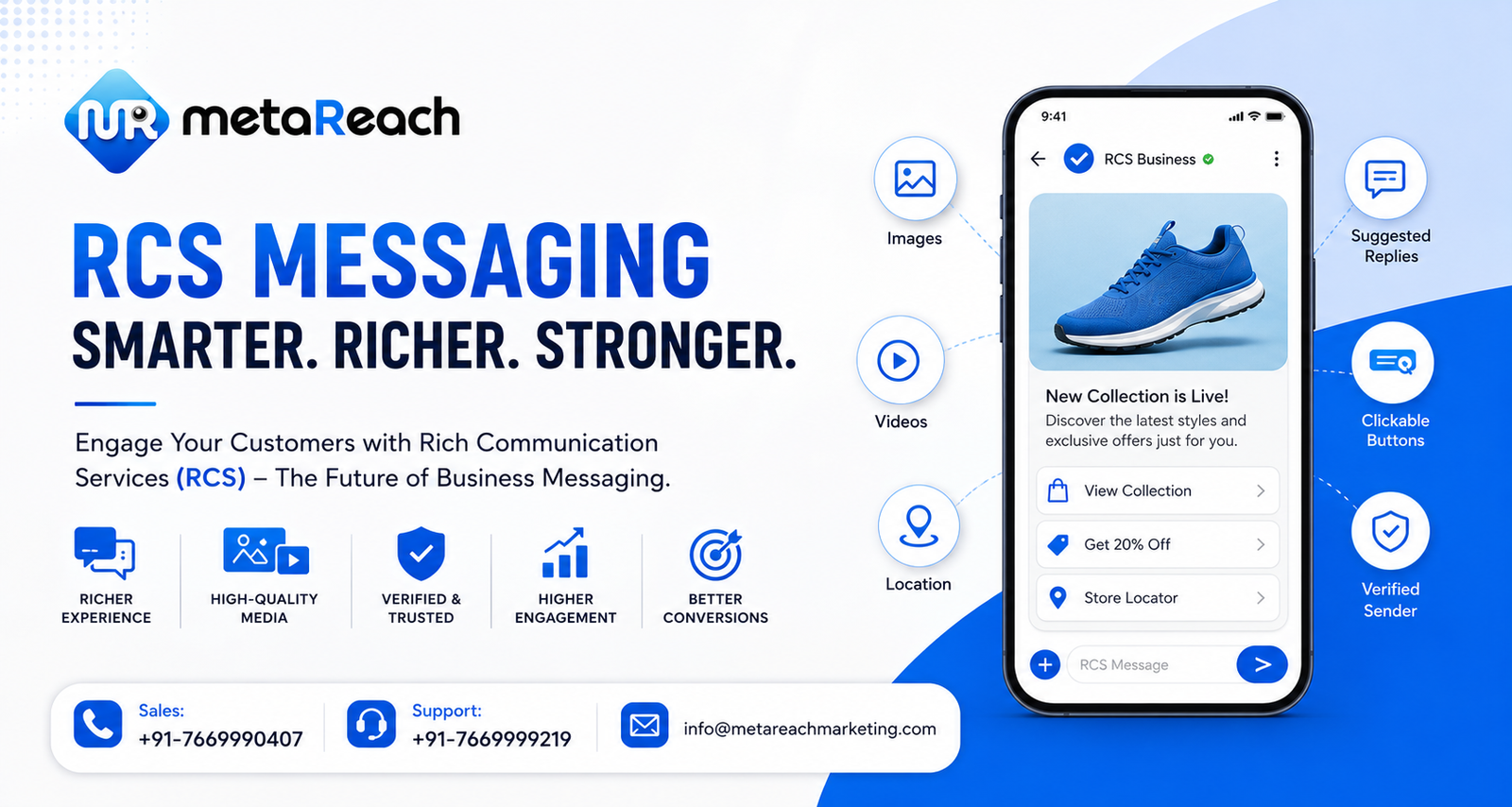
Unlike SMS, which is capped at 160 characters of plain text, RCS supports images, carousels, suggested-reply buttons, read receipts, and verified sender branding — all inside the native messaging app, with no extra app download required on Android devices. A customer sees your logo, your brand colour, and a verified badge instead of an unfamiliar ten-digit number.
This matters commercially because it closes the gap between email-style rich content and SMS-style universal reach. A well-set-up RCS Messaging Services account lets a business send a product catalogue, a payment button, and an order-tracking map in a single message thread, something neither plain SMS nor WhatsApp (without a Business API) handles the same way.
Why This Matters More in the Indian Market
India has one of the largest Android user bases in the world, and RCS is built into the default messaging app on most Android phones — meaning reach without requiring the customer to install anything new. That’s a meaningful advantage in tier-2 and tier-3 markets where data usage is watched carefully and customers are less likely to download a separate business app just to receive updates.
- Verified sender profiles reduce the fraud and phishing suspicion that plagues generic SMS from unknown numbers.
- Rich cards and carousels let a single message double as a mini storefront, useful for D2C and retail campaigns.
- Read receipts give marketing teams actual engagement data instead of guessing from click-through alone.
A Bengaluru-based fintech app used RCS for loan repayment reminders with an embedded “Pay Now” button. Because the button opened directly to a payment page without leaving the chat, on-time repayments improved compared to their earlier SMS-with-link approach, where several customers simply never clicked through.
How to Choose an RCS Messaging Services Provider
Carrier and Device Coverage
RCS depends on telecom operator support, and coverage isn’t universal yet across every carrier and device combination in India. Ask a prospective provider what percentage of your target audience’s devices and carriers actually support RCS today, and what happens to the rest — this is where fallback routing becomes important.
Automatic Fallback to SMS
Since RCS adoption is still growing, a dependable provider should automatically fall back to SMS when a recipient’s device or network doesn’t support rich messaging, so campaigns don’t simply fail to deliver. Meta Reach Marketing Pvt Ltd builds this kind of fallback into its RCS setup, so a single API call still reaches the customer even if RCS itself isn’t available on their end.
Verified Sender Branding
Getting a verified business profile approved involves documentation and brand review by Google. A provider experienced with this process in India can shorten what would otherwise be a frustrating back-and-forth over logo formats and business proof.
Analytics and Reporting
Delivery reports, read receipts, and button-click data should be visible in a dashboard your marketing team can actually use, not buried in a raw API log that only a developer can interpret.
Getting Started Without Overcommitting
Businesses new to RCS don’t need to switch everything over at once. A practical approach is running one campaign type — order updates or payment reminders tend to work well as a first test — through metareachmarketing.com or a comparable provider, measuring delivery and read rates against your existing SMS numbers, then expanding to catalogues and two-way conversational flows once the basics are working. Visit Website to see how the onboarding and fallback setup is typically structured before committing to a full rollout.
Frequently Asked Questions
Does RCS messaging cost more than SMS?
Generally yes, since RCS carries richer content and verified branding, but providers usually price it per conversation or per message tier rather than a flat SMS rate. It’s worth comparing against the engagement lift before assuming it’s not cost-effective.
Do customers need to install an app to receive RCS messages?
No. On most Android devices, RCS works through the default messaging app that’s already installed, so there’s nothing extra for the customer to download.
What happens if a customer’s device doesn’t support RCS?
A properly configured provider automatically falls back to standard SMS for that recipient, so the message still gets delivered even without rich features.
Conclusion
RCS messaging gives Indian businesses a way to send richer, more trustworthy, and more measurable messages without asking customers to install anything new. The gap between a generic SMS blast and a verified, image-rich RCS message is increasingly visible in engagement numbers, especially for retail, BFSI, and travel use cases.