Every RCS messaging provider in India will describe itself as fast, reliable, and enterprise-grade, which makes almost every sales page sound identical from the outside. The real differences only surface once a business asks a handful of specific, practical questions that go beyond the general feature list every platform advertises. Getting clear answers to these questions before committing to a provider is what actually determines whether a business’s first RCS campaign goes live in hours or gets stuck in a multi-week onboarding queue.
Question One: Is Google Brand Verification Handled In-House?
Every legitimate RCS sender needs to go through Google’s brand verification process to earn the verified sender badge that shows a business’s actual name and logo inside a message. Some providers manage this verification directly as part of their own onboarding process, while others route it through a third party or leave much of the coordination to the client. The difference matters enormously in practice, since a provider handling verification in-house can typically resolve back-and-forth requests or documentation issues quickly, while a provider dependent on an external party for this step often introduces delays measured in weeks rather than hours, purely due to the added communication layer.
Question Two: Who Actually Manages TRAI DLT Registration?
DLT registration through TRAI is mandatory for RCS messaging in India, exactly as it is for bulk SMS, and this is not a step any provider can legally skip regardless of how quickly they claim to activate a campaign. What varies is whether a provider’s own team handles entity registration, sender ID approval, and template submission directly, or whether this gets outsourced to a separate compliance partner. In-house DLT handling generally means fewer miscommunications and faster resolution when a template gets rejected on a first attempt, which is a common occurrence for any business new to RCS regardless of which provider they choose.
Question Three: What Is the Real Setup Time, Not the Advertised One
Nearly every RCS provider advertises ‘quick setup’ somewhere on its website, but the actual range across the industry varies from a few hours to several weeks depending on how streamlined a provider’s internal verification and DLT process genuinely is. This gap matters enormously for a business trying to launch a campaign around a specific date, a festival sale, a product launch, an admission deadline, since a provider quoting weeks rather than hours can mean missing the exact window a campaign was built around. It is worth asking a prospective provider for a specific, committed timeline in writing, rather than accepting a vague ‘quick’ or ‘fast’ claim without a concrete number attached to it.
Question Four: Does Automatic SMS Fallback Actually Work, or Is It Just a Feature on Paper
Not every device and network combination supports RCS, and a meaningful share of any Indian contact list will not receive the rich message format regardless of which provider is used. Without genuine, automatic SMS fallback, that share of a contact list simply never receives anything at all, which for a promotional or time-sensitive campaign represents a real, avoidable loss of reach. This feature should not require manual configuration by the business every time; it should trigger automatically and immediately whenever RCS delivery is not possible. It is worth specifically testing this behaviour during any trial period rather than taking a provider’s word for it, since the difference between advertised and actual fallback reliability only becomes clear under real-world testing.
For a full side-by-side comparison of India’s leading RCS messaging providers evaluated against exactly these criteria, along with pricing and real client results, this comparison of top RCS messaging providers in India breaks down setup speed, DLT handling, and feature coverage across the market in detail.
Question Five: Is There a Real Person Available When Something Breaks on Launch Day
A campaign launch day is exactly when things are most likely to need urgent attention, whether that is a template suddenly showing rendering issues on a specific device or a delivery rate that looks lower than expected. Whether a business can reach a dedicated, knowledgeable account manager directly at that moment, versus being routed into a generic support ticket queue with an unclear response time, makes a real difference to how a launch day actually goes. It is worth asking directly during evaluation who specifically handles support, what the realistic response time is during a genuine emergency, and whether that contact remains consistent throughout an engagement rather than rotating unpredictably.
Why These Five Questions Matter More Than a Feature Checklist
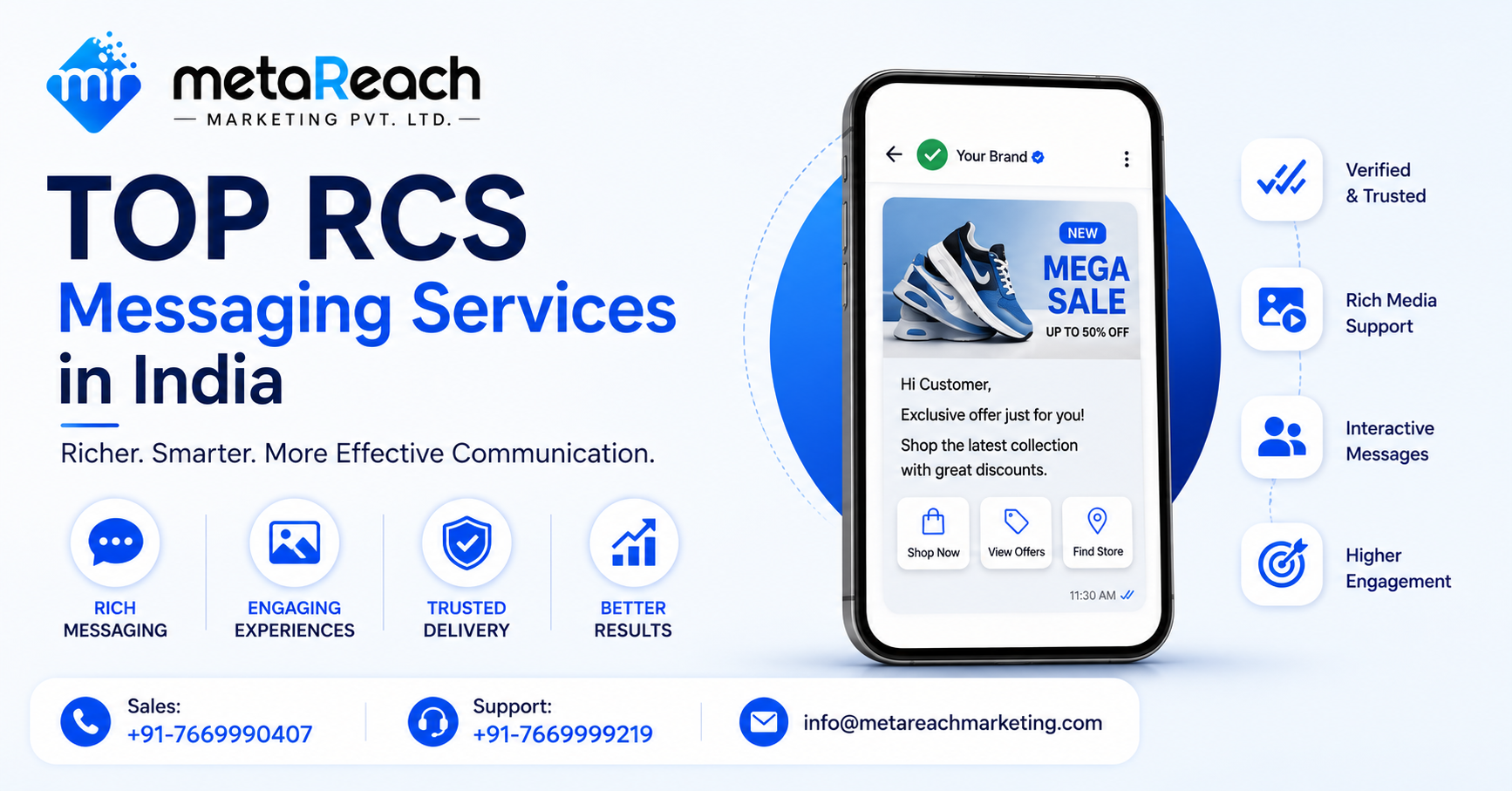
Rich media, verified sender badges, and interactive buttons are now table-stakes features that essentially every serious RCS platform in India offers in some form. What actually separates providers in practice is the operational reality behind those features: how quickly verification and compliance actually clear, whether fallback genuinely protects full reach, and whether support shows up when a business needs it most. A business evaluating providers should weight these operational questions considerably more heavily than a side-by-side feature list, since two platforms with an identical feature set can produce dramatically different real-world experiences depending on how well each one executes behind the scenes.
Businesses across India evaluating RCS providers against these five specific criteria, in-house verification, in-house DLT handling, genuine fast setup, reliable automatic fallback, and real human support, can explore what MetaReach Marketing offers as a direct-integration RCS platform built around exactly these operational fundamentals.
In short, choosing an RCS provider in India comes down to operational execution far more than feature comparison, since nearly every serious platform now offers similar core capabilities on paper. Asking specifically who handles verification and DLT registration, getting a concrete rather than vague setup timeline, confirming fallback actually works under real testing, and understanding exactly who responds when something needs urgent attention are the five questions that reveal what a provider is genuinely like to work with, well before a business commits to a contract.