Most businesses sign up for a bulk SMS plan once, based on whatever volume they expect at the time, and then simply keep paying that same rate for years, even as their actual sending volume grows well past the original tier. Providers rarely proactively offer a better rate on their own, since there is no real incentive for them to reduce a bill a business is already paying without complaint. A business that understands how SMS pricing tiers actually work, and knows what genuinely gives it leverage in a renegotiation conversation, can often secure a meaningfully better rate simply by asking at the right time, in the right way.
Why Providers Have Real Room to Negotiate, Even When They Don’t Advertise It
Published rate cards typically represent a provider’s standard, non-negotiated pricing, but the actual cost structure underneath allows meaningful flexibility for higher-volume or longer-term commitments, since a provider’s own cost per message tends to decrease as its network relationships and infrastructure investment get spread across more traffic. This means a business sending genuinely high volume, or willing to commit to a longer contract term, usually has real room to negotiate below the published rate, even if a provider’s public pricing page shows no indication that this flexibility exists. The published number is a starting point for most providers, not a fixed floor.
What Actually Gives a Business Leverage in This Conversation
A business asking for a better rate purely because it wants one has very little actual leverage. A business that can point to concrete, verifiable usage data, several months of consistent sending volume, a clear growth trajectory, or a specific upcoming campaign that will meaningfully increase monthly send volume, has a genuinely stronger negotiating position. Providers respond far more readily to a data-backed request showing real, demonstrated volume than to a general ask for a discount, since the former represents a business case the provider can evaluate concretely rather than a vague request they have no real basis to act on.
Why Competing Quotes Are Worth Gathering Even If You Don’t Plan to Switch
Requesting a genuine quote from one or two competing providers, even from a business with no real intention of switching, provides useful, current market context for a renegotiation conversation with an existing provider. A business that can reference a specific, real competing rate has considerably more leverage than one negotiating purely on principle, since the existing provider now has a concrete number to respond to rather than an abstract request for a lower price. This approach works best when genuine, not used as an empty bluffing tactic, since providers can often tell the difference between a business seriously considering alternatives and one making an idle threat with no real intention behind it.
Why Timing the Conversation Matters More Than People Expect
A renegotiation conversation initiated right before a contract renewal date, or right after a business has demonstrated a genuine jump in sending volume over a sustained period, tends to land more effectively than one initiated at a random point mid-contract with no clear trigger. Providers are generally more motivated to retain a client at renewal time than to proactively offer better terms in the middle of an ongoing agreement, simply because the risk of losing the account becomes concrete and immediate at that specific moment rather than theoretical.
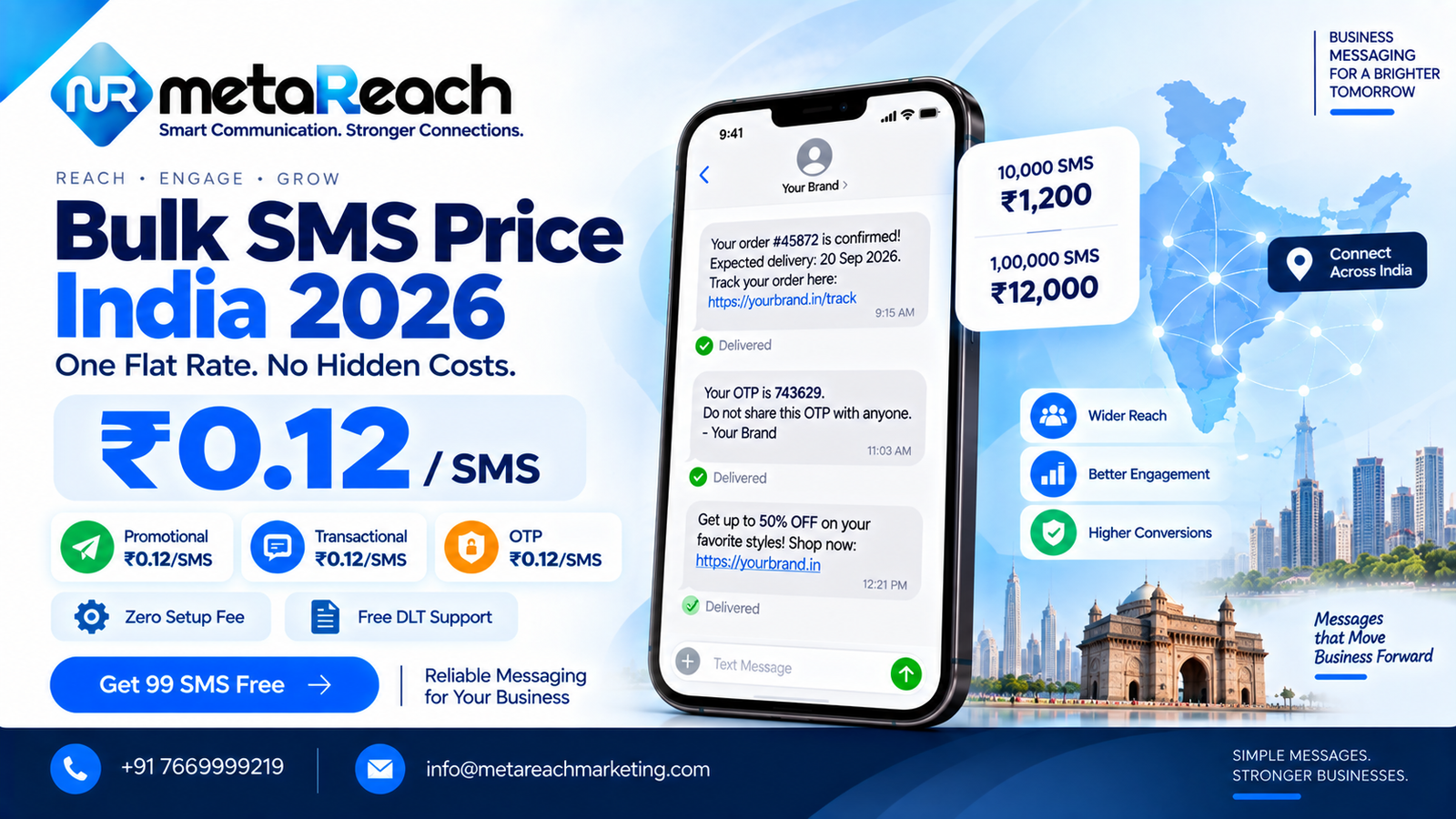
For a full, transparent rate card covering promotional, transactional, and OTP SMS pricing at every volume tier in India, useful as a baseline reference for any negotiation conversation, this bulk SMS price page for India lays out current published rates across every tier in detail.
What to Ask for Beyond Just a Lower Per-Message Rate
A better per-message rate is not the only concession worth negotiating. A business with growing volume might also reasonably ask for waived or reduced setup fees for any additional services being added, extended validity on unused message credits, priority support response commitments written into the agreement rather than left informal, or a locked-in rate that protects against a future price increase for a defined contract period. Businesses that negotiate only on the headline per-message number sometimes leave meaningful value on the table across these other terms, which a provider may be more willing to concede than a straightforward rate cut.
Why This Is Worth Revisiting Periodically, Not Just Once
A rate negotiated successfully at one point in a business’s growth does not remain optimal forever. As volume continues to increase, or as market rates shift with new providers entering or existing ones adjusting their pricing, a rate that felt like a genuine win a year ago may no longer reflect the best available terms. Building a habit of revisiting pricing every six to twelve months, rather than treating a single successful negotiation as a permanently solved problem, keeps a business’s SMS costs aligned with its actual scale and the current state of the market rather than a snapshot from whenever the last conversation happened to take place.
Businesses across India with growing SMS volume looking for transparent pricing and genuine flexibility to negotiate as usage scales can explore what MetaReach Marketing offers, with published rates that serve as a fair, honest starting point for any conversation about volume-based pricing.
In short, better bulk SMS pricing is rarely handed to a growing business automatically; it usually has to be asked for, backed by real usage data and reasonable market context, and timed around a genuine trigger like renewal or a documented volume increase. Businesses that treat their SMS rate as a fixed, unchangeable number often pay considerably more than they need to over time, while those who periodically revisit and renegotiate their pricing tend to keep their costs aligned with their actual scale as the business grows.