Before any business commits budget to RCS messaging India, the first question that should come up isn’t about features or pricing — it’s whether the technology will actually reach the audience the business is trying to message. Rich, interactive cards mean nothing if half your contact list is on a network or device that doesn’t support them. Fortunately, the coverage picture in India has matured significantly, but it still pays to understand exactly where the gaps are.
Where Network Coverage Actually Stands
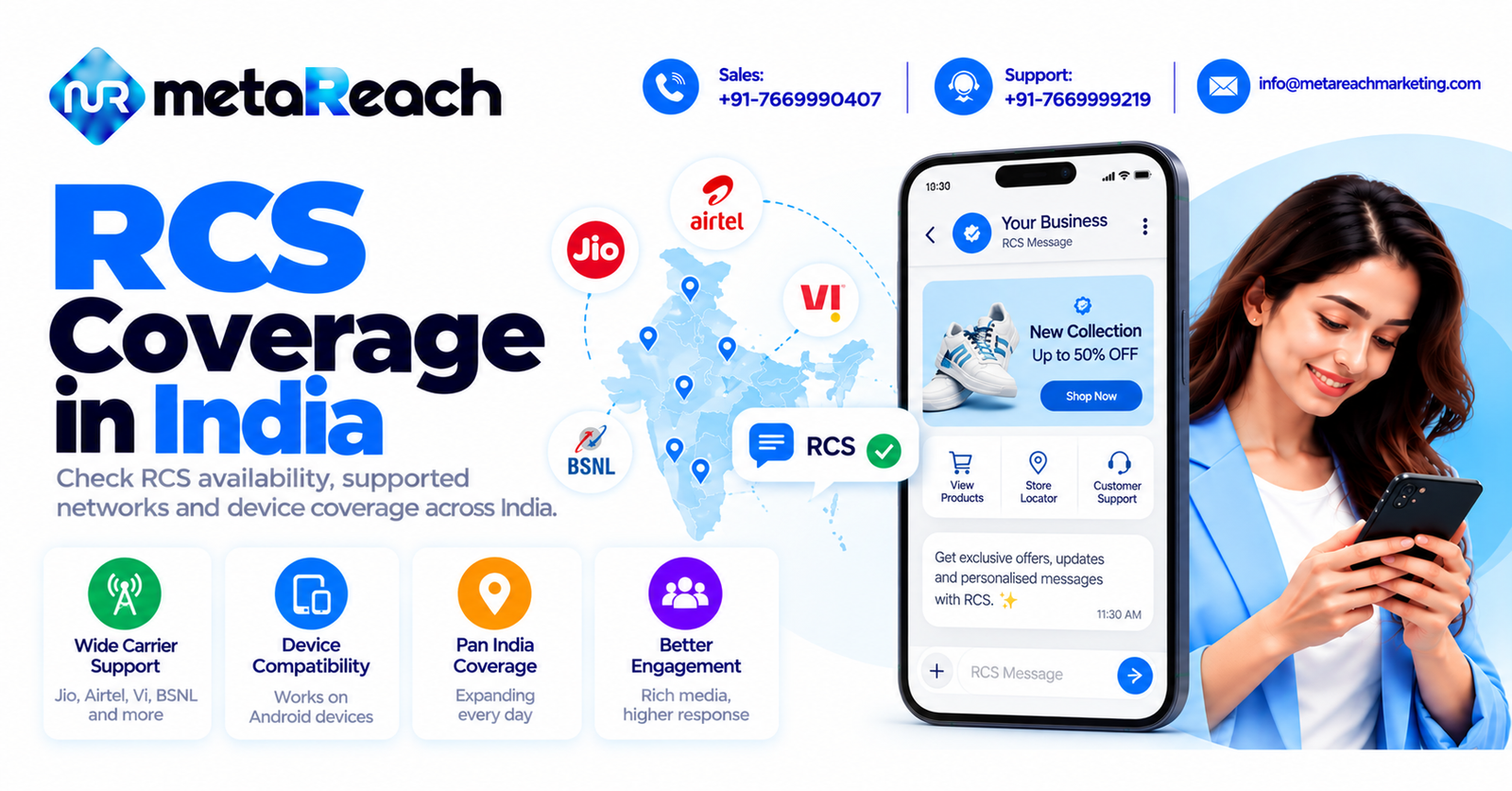
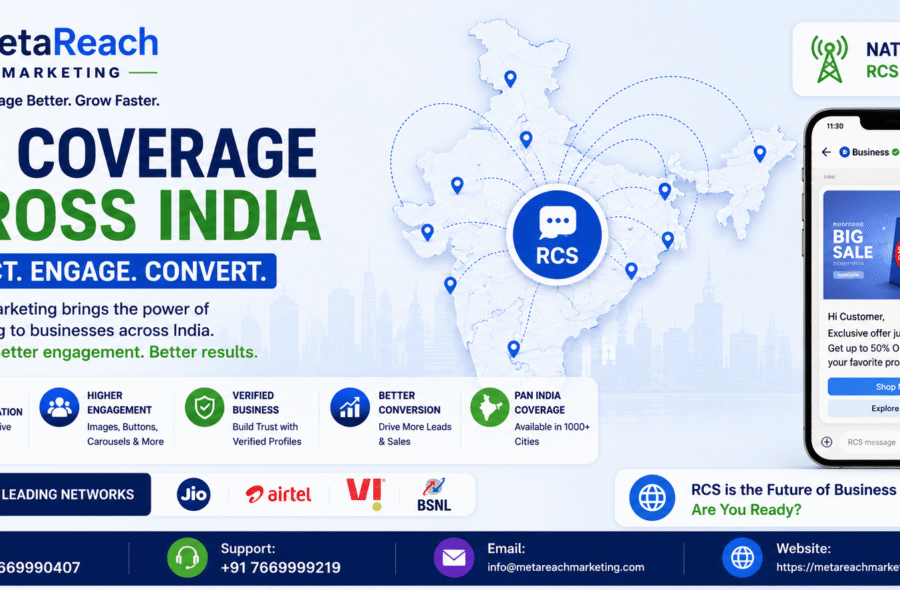
India’s three major telecom operators — Jio, Airtel, and Vi — all support RCS Business Messaging today, which puts the country among the stronger RCS markets globally. Jio was the earliest mover, enabling RCS back in 2021, with Airtel and Vi following shortly after. BSNL remains the exception, with only partial rollout concentrated in select metro areas rather than a nationwide presence. For any campaign built around RCS coverage in India, this operator-level support is really the foundation everything else builds on, since RCS availability depends far more on which network a customer uses than on which city they happen to be in.
City Coverage Isn’t the Real Constraint Anymore
It used to be common to think about RCS in terms of metro versus non-metro availability, but that framing is increasingly outdated. Coverage today works at the operator level rather than the city level — if a customer has a Jio, Airtel, or Vi connection along with Google Messages installed, they can receive RCS messages whether they’re in a metro hub or a smaller Tier 2 town. The genuine gap that remains is concentrated in Tier 3 and rural areas, where network infrastructure and Android penetration are still catching up, rather than being tied to any particular city boundary.
Device Support: Android Leads, iPhone Is Catching Up
- Android 5.0 and above, running Google Messages as the default SMS app, is RCS-ready out of the box — this covers the vast majority of smartphones sold in India.
- Popular brands across Samsung, OnePlus, Xiaomi, Realme, Vivo, Oppo and Google Pixel all support RCS on recent models.
- Apple added native RCS support starting with iOS 18 in September 2024, bringing verified sender badges and basic rich features to iPhone, though full interactive-card parity with Android is still developing.
- Older devices on either platform, and any phone without internet access at the moment of delivery, simply won’t receive RCS — which is exactly why a fallback mechanism matters.
Why SMS Fallback Is the Detail That Actually Matters
Coverage gaps are not a flaw in RCS as a channel — they’re a normal part of any technology still completing its rollout. What separates a well-built RCS business messaging India implementation from a risky one is whether the platform automatically falls back to plain SMS when RCS delivery isn’t confirmed, so that contacts without a compatible device or network still receive the message in some usable form. For a detailed breakdown of exactly which networks, cities and devices are supported right now, and how fallback delivery is typically handled, MetaReach’s RCS coverage guide for India lays out the operator-by-operator and device-by-device picture in detail, which is worth reviewing before assuming RCS alone will reach your entire contact list.
A Practical Way to Evaluate Readiness
Before launching an RCS campaign, it helps to ask three honest questions about your own audience: are most of your customers on Android, are they primarily on Jio, Airtel or Vi rather than BSNL, and does your contact list include a meaningful share of Tier 3 or rural numbers? If the answers lean favourably, RCS is very likely ready to perform well for your business today. If there are notable gaps in any of these areas, that’s not necessarily a reason to skip RCS entirely — it’s a reason to make sure whatever platform you choose handles the fallback layer properly rather than silently dropping the messages that don’t qualify.
The Bottom Line
RCS coverage in India has reached a point where it can genuinely support large-scale business messaging, but coverage is never the same as guaranteed delivery to every single contact. The businesses getting consistent results are the ones working with providers who treat fallback delivery as a built-in part of the system rather than an afterthought. Agencies such as MetaReach Marketing that publish detailed, operator-specific coverage data rather than vague national claims make it far easier to evaluate honestly whether RCS is ready for your specific audience before you commit a campaign budget to it.